
Local guide
Exterior cleaning in Homestead: the complete guide
Cleaning a Homestead property means cleaning a lot of property
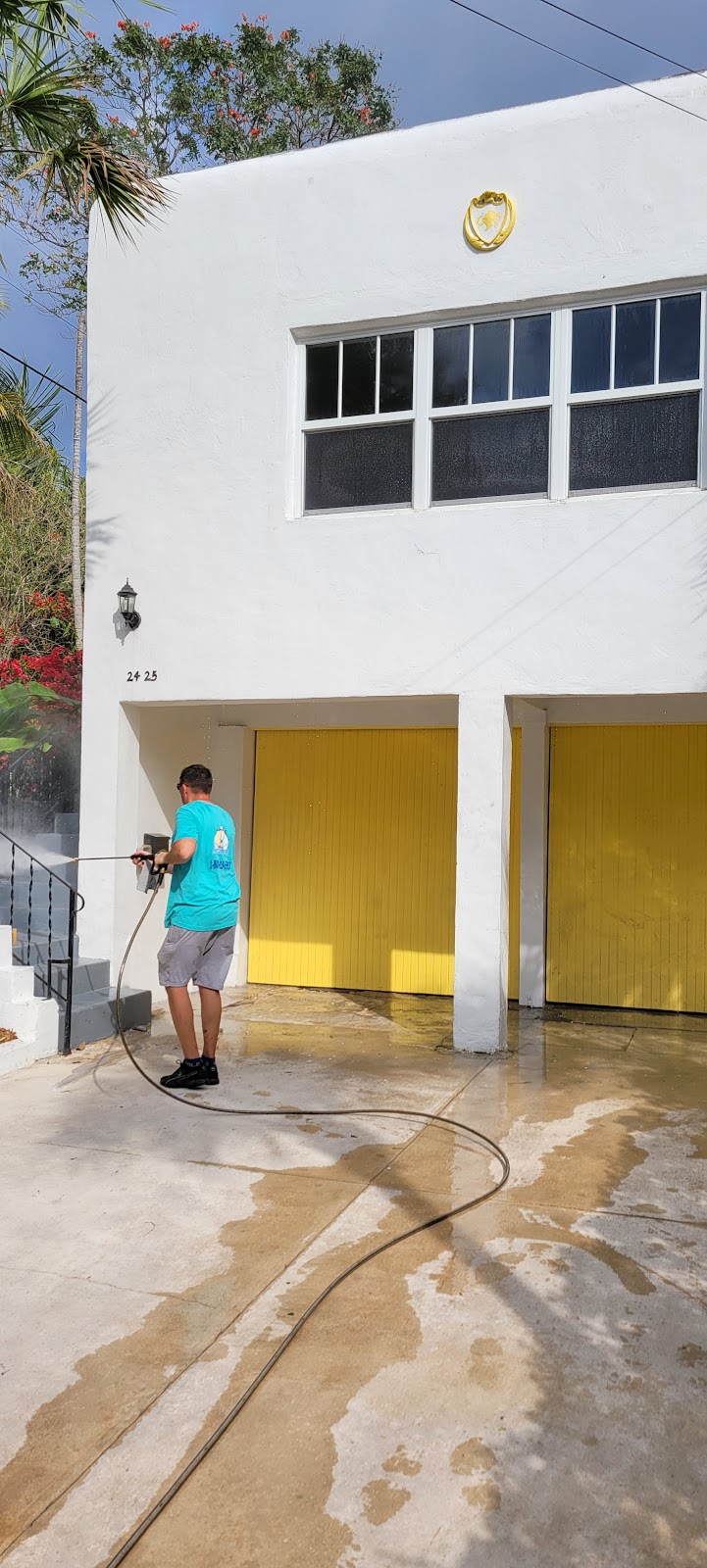
Homestead is one of the few corners of Miami-Dade where the land still shapes the house instead of the other way around. Drive south of the Turnpike's end and the lots open up: quarter-acre and half-acre parcels in the tract subdivisions off Campbell Drive and Palm Drive, ranch-style CBS homes with long straight driveways, and out past Krome Avenue into the Redland, working acreage with metal barns, shade houses, and packing structures scattered across nursery ground. The exterior-cleaning job here is simply bigger than it is up in the condos and townhome rows of central Miami — more concrete, more roof, more wall, more perimeter. That scale is why a driveway or a house wash out here is quoted by the surface, not by a menu price, and why recurring maintenance usually makes more sense than a one-time blast every few years.
What makes Homestead genuinely different from the rest of our service area, though, isn't the size of the lots. It's the air. This is the only part of Miami where you're cleaning against active farmland, and that changes what lands on your surfaces and how it sticks.
The Redland dust problem nobody warns new residents about
Everywhere in Miami fights humidity, algae, and salt. Homestead fights all of that plus one thing the coastal neighborhoods don't: agricultural soil in the air. The Redland's fields, groves, and nurseries sit on exposed marl and limestone-rich dirt, and during the dry season — roughly November through April — plowing, harvesting, tractor traffic, and steady wind lift a fine red-brown grit that drifts for miles and settles on everything downwind. On its own it's just dust. The problem is what happens when the first rain or a heavy dew hits it: the mineral fines bond into stucco pores, paver joints, and roof texture, and a light dusting turns into a stubborn stain that a garden hose won't touch.
That's the mechanism behind a lot of what Homestead homeowners read as "my house just looks tired." A north-facing stucco wall in Coral Gables greens up from algae; the same wall in the Redland greens up and grays with bonded soil film. It takes the right cleaning solution and a true soft wash — not just water — to lift both at once without driving the grit deeper into the finish. If you live within a mile or two of open fields or a nursery, this is the single biggest reason your exterior needs cleaning more often than a friend's place closer to US-1.
Post-Andrew housing stock, and why the roof is the tell
Hurricane Andrew flattened much of Homestead in 1992, and the rebuild reshaped the city's roofline. A large share of the housing here went up in the mid-1990s and after — which means a lot of the roofs are now well into or past the age where black streaking takes hold and where the underlying material has had decades of Florida sun. Two things follow from that:
- The streaks are usually Gloeocapsa magma, the cyanobacteria that feeds on limestone filler in shingles and spreads across the broad, low-slope roofs common on Homestead ranch homes. It has to come off with a soft wash. High pressure strips shingle granules and cracks or dislodges barrel tile, and it voids the manufacturer's warranty — a real cost on a roof that may already be aging.
- Newer roofs deserve gentler treatment, not rougher. On homes built in the Floribbean and Mediterranean-influenced styles that dominate Homestead's post-Andrew subdivisions, the concrete and clay tile is the expensive, character-defining surface. Cleaned correctly with low pressure and the right chemistry, it comes back to color and stays clean for years. Cleaned wrong, it's a repair bill.
If you're not sure how old your roof is or what it's made of, a look tells us how to treat it. The method follows the surface, every time.
Downtown masonry and the older core
Not all of Homestead is new. The historic downtown around Krome Avenue and Flagler holds original masonry and painted-block storefronts and homes going back to the early 1900s — some of the oldest continuously standing structures in south Miami-Dade. These take the gentlest hand of anything we clean. Vintage mortar, soft brick, and old painted block will not survive aggressive pressure; the goal is to lift decades of grime, exhaust film, and biological growth while preserving the surface and the paint. That's low-pressure soft washing with carefully chosen solutions, and it's exactly the wrong place for a contractor who owns one setting.
Farm-adjacent and commercial surfaces
Homestead's economy runs on agriculture and the traffic it generates, and that shows up in the exterior work. Properties near the U-Pick farms and fruit stands off SW 344th and the produce corridors deal with things you don't see in the suburbs: fruit and juice staining on walkways, heavy-vehicle tire marks and hydraulic drips on aprons and loading areas, and the metal skins of barns, cold-storage buildings, and shade-house frames that streak with rust and algae. On the commercial side — the plazas and storefronts along Krome Avenue and the US-1 corridor, warehouses, and multi-property sites — the priorities are clean entryways, safe non-slip walkways, and building faces that read as maintained to customers. We handle both, with the pressure and chemistry each surface actually needs.
How often should a Homestead property be cleaned?
There's no universal answer, but Homestead's dust exposure pushes the interval shorter than the Miami average, especially through the dry-season dust months. As a working guide:
- Driveways, walkways, and pool decks: annually for most homes; every six to nine months on heavily shaded lots or those close to open fields, where soil film and organic growth rebuild fast.
- Roof soft wash: typically every 18 to 36 months, sooner if streaks reappear early — common on the broad, low-slope roofs near farmland.
- House wash (stucco/CBS walls): yearly is a safe default; north and shaded elevations may want it sooner.
- Screen enclosures, fences, and long perimeter walls: yearly, since the full run traps dust, webbing, and algae along big Homestead lots.
- Glass: salt air drifts inland from Biscayne Bay and Homestead's hard water (around 11 grains per gallon, the hardest of any major Florida city) leaves calcium spotting, so exterior glass benefits from a couple of cleanings a year.
A recurring maintenance plan almost always beats waiting for a surface to look bad — it's cheaper per visit, it keeps growth from ever getting a foothold, and it means the property is camera-ready year-round instead of only right after a big clean.
Timing it around hurricane season
Homestead lives with the memory of a direct hit, and the practical lesson holds: a clean roof sheds water and clear gutters drain away from the foundation instead of overflowing toward it. Season runs June 1 through November 30, which makes April and May the smart pre-storm window to get the roof soft-washed and the gutters cleared of palm fronds and Redland debris before the first storms line up. Do it before the season, not during it.
The Moppey approach in Homestead
We treat the surface, not just the stain. Real pressure only where concrete and pavers can take it; soft washing everywhere protection matters — roofs, stucco, screens, historic masonry, and painted surfaces. We know how this specific climate works on a Homestead property: the dry-season farm dust that bonds into your finishes, the humidity and daily summer rain that grow the algae, the salt drifting in from the bay, and the hard water that spots your glass. Residential or commercial, one home or a multi-property site, you get the right method the first time — no damage, no streaks, no shortcuts. We're insured with a certificate of insurance available on request, we back our work with a 48-hour re-wash guarantee, and we're happy to show before-and-after photos. Hablamos Español.
Want a number for your specific property? Call Moppey Spottless Clean Pros at +1 877-754-5614 for a free, no-pressure quote — most requests are answered the same day, sized to what we're actually cleaning.