Moppey Spottless Clean Pros
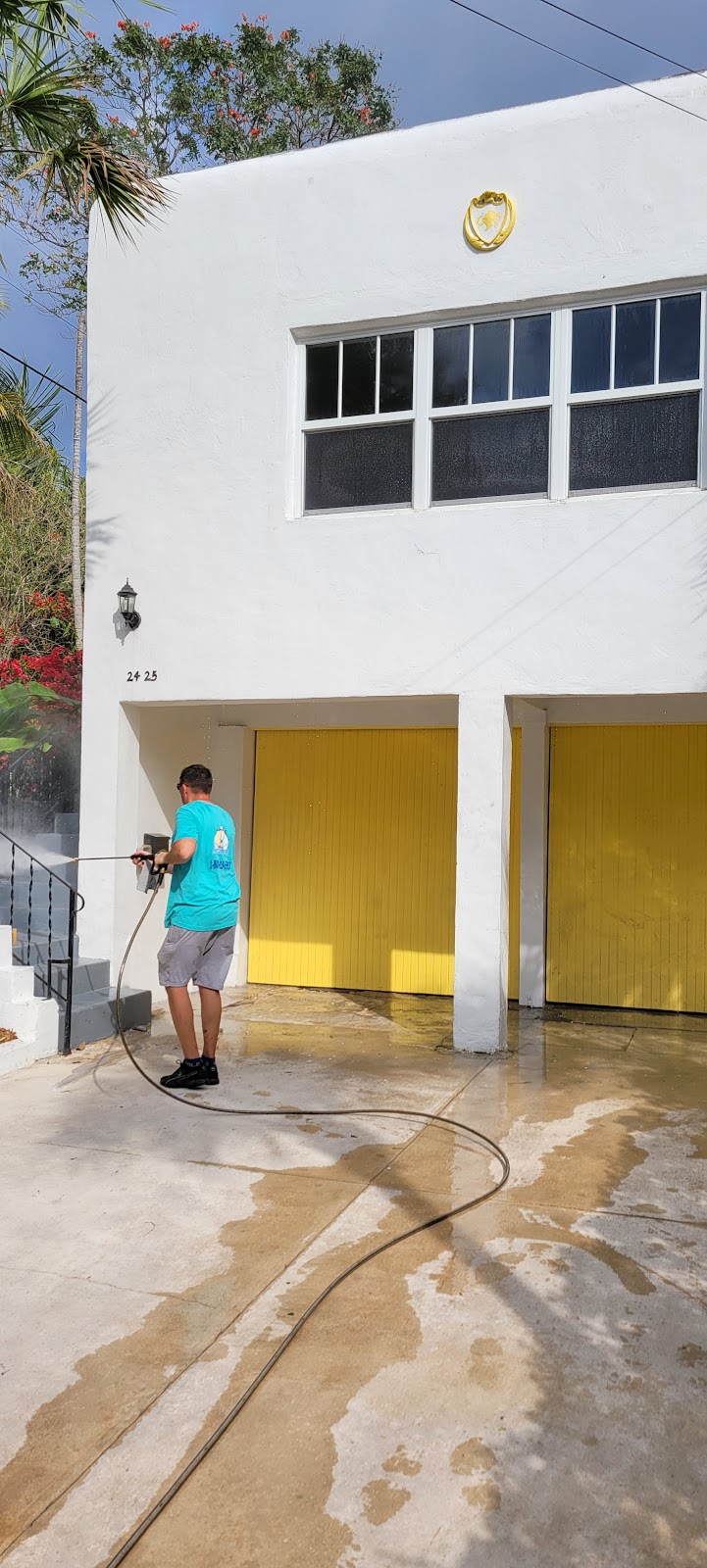
Soft washing a white fence in Miami to remove mildew

Rated 5★ · 43 reviews

Fence Cleaning Miami, FL

Bring your vinyl, wood or composite fence back to its original color with soft washing that lifts mildew and green algae instead of blasting it in.

Serving Miami & surrounding South Florida

Rated 5★ · 43 reviewsFully InsuredResidential & CommercialSoft Wash SafeHablamos Español

The Miami problem

Why fence cleaning matters in Miami

Your fence runs the length of your yard at eye level, so the green film on the shaded side and the black speckling along the bottom rail are impossible to ignore. In Miami that buildup is not dirt you can hose off. It is living mildew and algae feeding on the constant shade, humidity and afternoon rain, and it grows back fast when it is only rinsed instead of treated.

We clean fences the way the material actually asks to be cleaned. Vinyl, aluminum, wood, composite and chain-link each react differently to pressure and solution, and treating them all the same is how panels end up faded, furred or streaked.

The goal is simple. The green and black lift off, the original color comes back, and nothing on the fence gets damaged in the process. No gouged wood grain, no chalky vinyl, no zebra stripes left behind.

What’s included

What our fence cleaning covers

  • Full inspection of both sides plus posts, rails, caps and gate hardware to spot loose panels or rot before we start
  • Pre-rinse and plant protection for the grass, beds and landscaping growing right up against the fence line
  • Soft-wash application of a mildewcide solution that kills algae and mold at the root instead of just rinsing the surface off
  • Low-pressure or brush cleaning calibrated to the material: vinyl, aluminum, wood, composite or chain-link
  • Focus on the shaded, sprinkler-facing and ground-contact zones where green and black buildup is always worst
  • Cleaning of both the street side and the yard side so the whole panel matches
  • Careful rinse-down and a final walk of the run with you to confirm the color came back evenly
  • Optional add-on: cleaning the matching gate, pergola posts or fence-mounted planters in the same visit

Our method

How we clean it safely

Fence cleaning is a soft-wash job, not a pressure job. We apply a hypochlorite-based mildewcide solution that breaks down the algae, mold and mildew biologically, let it dwell, then rinse at low pressure so the buildup washes away without force. Because the solution does the killing, the green does not simply grow back in a few weeks the way it does after a plain water rinse. For wood and composite we adjust the mix and often finish with a soft brush along the grain; for vinyl and aluminum we keep pressure low so the finish stays smooth and even.

Before any solution goes on, we pre-wet and protect the plants, sod and beds crowded against the fence, and we control overspray so nothing downwind gets hit. Gates, latches and post caps get checked and worked around. If a panel is already loose, split or rotting we tell you rather than power through it and make it worse. Every fence gets the right pressure for its material, so you get color back with no damage, no furring and no streaks.

Soft wash vs pressure wash

A fence should be soft washed, not pressure washed. High pressure furs and splinters wood, chalks and dents vinyl, and only knocks the surface algae off while leaving the roots to regrow within weeks, so we clean with a mildewcide solution and low-pressure rinse instead.

Best for

Who this service is for

  • Vinyl and PVC privacy fences that have gone green or gray on the shaded side
  • Wood fences and pickets showing black mildew, moss and gray weathering
  • Composite and aluminum fencing that needs color restored without chalking
  • Chain-link and pool-cage-adjacent fencing coated in algae from sprinkler spray
  • Homeowners prepping a fence line before selling, painting, staining or re-sealing
  • HOA and property-management runs where every panel needs to match street-side

Miami surface insight

Miami fences live in the perfect storm for algae and mildew. Year-round humidity, a long rainy season and lawn sprinklers that hit the bottom rails several times a week keep the base of the fence damp almost constantly, and the shaded north and east faces rarely dry out. That is why the green film and black speckling always show up worst along the ground-contact zone and on the side that never sees direct sun. Rinsing it only resets the clock; a soft-wash mildewcide treatment actually clears it and keeps it clearer far longer in this climate.

Insured — COI on request
Plant-safe soft washing
Before & after photos
Satisfaction guarantee

In-depth guide

Fence Cleaning in Miami: the complete guide

Fence cleaning in Miami is really five different jobs

The phrase "fence cleaning" hides how different the work actually is from one property to the next. A white vinyl privacy fence, a cedar picket, a wrought-iron estate gate, a coastal aluminum run and a chain-link dog yard all wear the same Miami climate very differently, and the mistake that ruins fences here is treating them the same way. A careful professional starts by identifying the material and its finish, then matches the chemistry and the pressure to it. That single decision is the difference between a fence that looks new and a fence that comes out furred, chalked, streaked or corroded.

What unites every fence in South Florida is the biology. The green film and black speckling are not dirt. They are living colonies of algae, mildew and mold feeding on the constant humidity, the long May-through-October rainy season and the daily hit of lawn-sprinkler spray along the bottom rail. The same Gloeocapsa magma cyanobacteria that streaks Miami roofs also colonizes shaded fence panels. Because it is alive, a plain water rinse only knocks off the surface layer and leaves the roots to regrow within weeks. The right fix is a low-pressure soft wash with a hypochlorite-based mildewcide that kills the growth biologically, so it stays clear far longer.

How each fence material should actually be treated

  • Vinyl and PVC: The most common privacy fence in Miami and the easiest to damage with a pressure wand. High PSI dents, dulls and permanently chalks the finish. It gets a soft-wash solution, a soft-bristle agitation on stubborn panels, and a low-pressure rinse. Done right, the original bright white or tan comes all the way back with a smooth finish.
  • Wood (cedar, pine, cypress): Wood is porous and directional. Too much pressure furs the grain, raises splinters and gouges the soft summer wood between the harder grain lines. We use a gentler mildewcide mix and often finish by brushing along the grain. Wood that has gone silver-gray from UV can be brightened with an oxalic-acid wood treatment that neutralizes graying and tannin bleed before any stain or sealer goes on.
  • Aluminum and wrought iron: These are where Miami's coastal chemistry bites. Salt air puts the coastline in the ISO C5-M "very high" corrosivity band, and it rusts unprotected metal and etches coatings faster than inland climates. Aluminum ornamental fencing is soft-washed to protect its powder coat; wrought iron gets rust spots knocked back and the base cleaned so any repaint or rust converter bonds to clean metal.
  • Composite: Composite resists rot but oxidizes and hazes over time and holds mildew in its texture. It is soft-washed at low pressure. A pressure wand can blast the surface layer and leave a permanently blotchy, worn look, so pressure is kept off it entirely.
  • Chain-link: The algae clings to the galvanized weave and the concrete or wood posts. It cleans well with a mildewcide soak and a rinse; we watch the zinc coating and any privacy slats, which fade and get brittle in the UV.

The step-by-step of a proper fence wash

The visit follows a deliberate order, and most of the value is in the prep that a rental-machine approach skips entirely:

  1. Inspect both sides — panels, posts, rails, caps and gate hardware — to flag loose boards, split pickets, rot or rusted fasteners before any water touches them.
  2. Protect the landscaping. In Miami almost every fence has grass, hedges or garden beds crowded right up against it. The sod and beds get pre-wet so they are saturated with clean water before any solution is applied, and overspray is controlled so nothing downwind gets hit.
  3. Apply the mildewcide solution to the shaded, sprinkler-facing and ground-contact zones where buildup is always worst, and let it dwell so it kills the algae at the root rather than just loosening the surface.
  4. Clean at the right pressure for the material — brush or low-pressure rinse — working both the street side and the yard side so the whole panel matches.
  5. Rinse down the fence and the plants again, then walk the run with you to confirm the color came back evenly with no streaks.

The Miami problems this solves that generic guides miss

Beyond the everyday green film, a few local issues turn up on fence lines specifically:

  • Efflorescence on masonry and stone. Many Miami properties use concrete-block, stucco or coral/travertine wall sections as part of the fence line. The chalky white haze that blooms on them is efflorescence — mineral salts pushed to the surface by moisture, not mildew — and it has to be treated with the correct approach before any sealing, not simply washed off, or it comes right back.
  • Hard-water and irrigation staining. Miami draws from the limestone Biscayne Aquifer and has the hardest water among major Florida cities, roughly 11 grains per gallon. Sprinklers running against a fence leave mineral crusting and, where they hit metal, rust runs. Those need targeted treatment, not just more pressure.
  • Salt corrosion near the water. On barrier-island and bayfront properties, salt accelerates rust on iron and pitting on aluminum. Cleaning the salt and biological film off regularly is genuine corrosion maintenance, not just cosmetics.
  • Hurricane-season timing. The season runs June 1 through November 30, and the ideal pre-storm cleaning window is April and May. A clean, inspected fence is one where you have already spotted the loose posts and rotten rails that become projectiles in a storm.

Sealing, staining and the right sequence

Cleaning is step one of any refinishing project, and the order matters. Stain, paint or sealer bonds to clean, sound material — apply it over mildew and algae and you seal the growth in, where it keeps spreading under the finish and lifts it off within a season. A proper soft wash strips the biological film and grime first. Then the fence has to dry completely — often two to three days for wood in Miami humidity — before any finish goes on. Wood decks and fence sections here generally need re-sealing every one to two years because UV and rain break the sealer down fast. Sequencing the clean before the seal, and giving it real dry time, is what makes the finish last.

Professional soft wash versus a rental pressure washer

The rental machine at the home-improvement store is built to deliver high PSI, and high PSI is exactly the wrong tool for most fences:

  • It only removes surface algae and leaves the living roots, so the green is back in weeks.
  • It furs and splinters wood, dents and chalks vinyl, blotches composite, and strips powder coat off aluminum.
  • It drives water and solution into the wrong places and skips the plant-protection and dwell-time steps that make a soft wash actually work.
  • The classic "zebra stripe" of light and dark bands comes from an inconsistent freehand wand pass — a soft wash rinsed evenly does not leave them.

A careful professional brings the mildewcide chemistry, the material knowledge, the plant-safe process and the insurance to work on your property. Moppey carries liability and workers-comp coverage with a certificate of insurance available on request, documents work with before-and-after photos, and backs the result with a 48-hour re-wash guarantee.

Signs your fence is ready for a cleaning

  • Green or gray film on the shaded north and east faces, or black speckling creeping up from the bottom rail.
  • The fence looks noticeably darker or dingier than when it was installed, even after rain.
  • Slippery or slimy panels near sprinkler heads or in constant shade.
  • You are about to sell, paint, stain or re-seal, and want the finish to bond and last.
  • Rust runs on metal fencing, or a chalky white bloom on block or stone wall sections.

How often, and keeping it clean

Most Miami fences do well with a cleaning once a year. Heavily shaded runs, or ones taking daily sprinkler spray, can green up in six to nine months and are good candidates for a recurring maintenance plan that keeps the buildup from ever baking in. Small habits help between visits: aim sprinkler heads away from the fence, keep hedges trimmed a few inches off the panels so air can dry them, and rinse salt off coastal metal after storms. Recurring service is almost always cheaper than a heavy first-time restoration, because you are removing a thin film instead of years of embedded growth.

Cost comes down to the material, the total linear footage of the run, how heavy the buildup is, and access — a tight side yard or a tall estate fence takes longer than an open front run. Because those factors vary so much fence to fence, an honest number comes from a look at the actual fence rather than a guess. Send Moppey the fence type and rough linear footage and get a fast, free quote, most answered the same day. Call +1 877-754-5614 to set it up.
Recent work

Real Moppey results

Soft washing a white fence in Miami to remove mildew
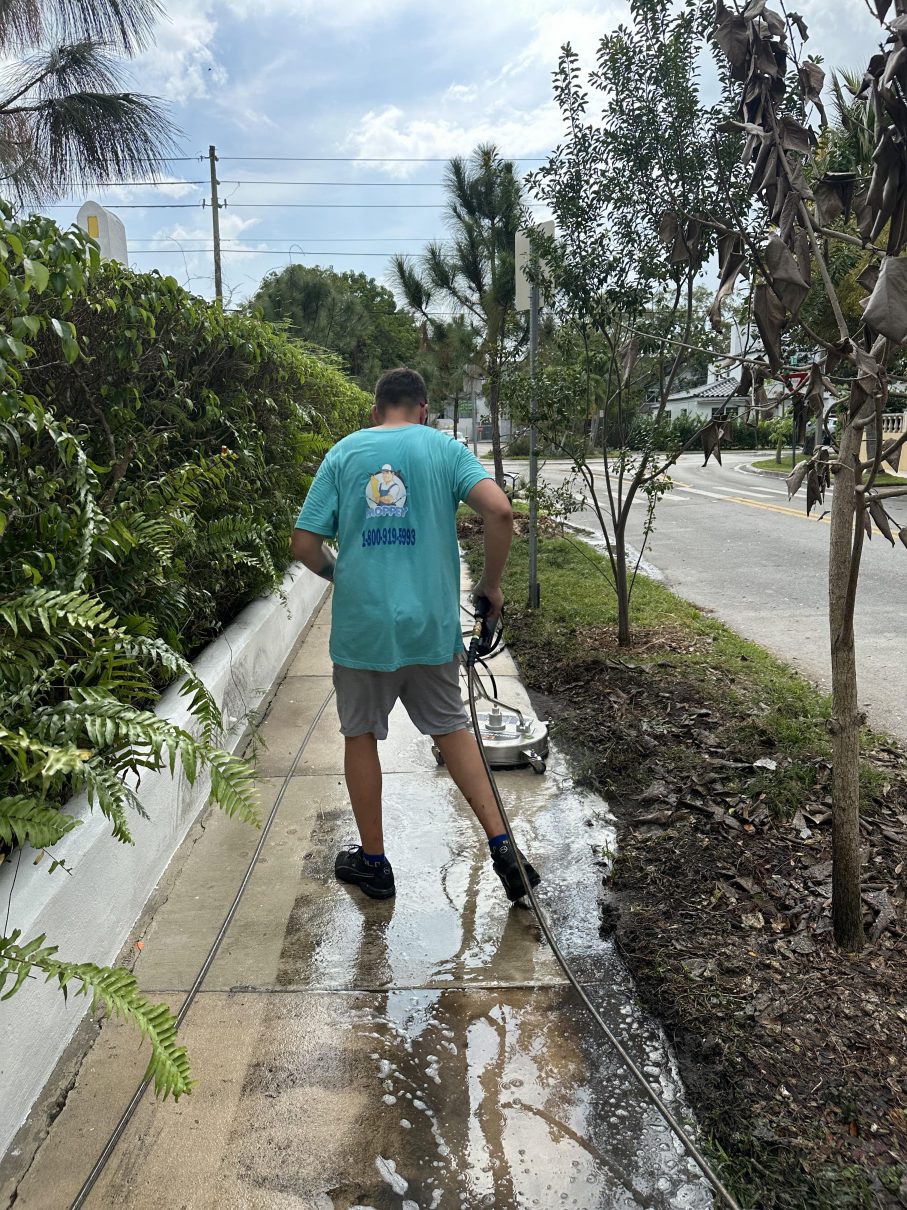
Moppey technician pressure washing a Miami walkway with a surface cleaner
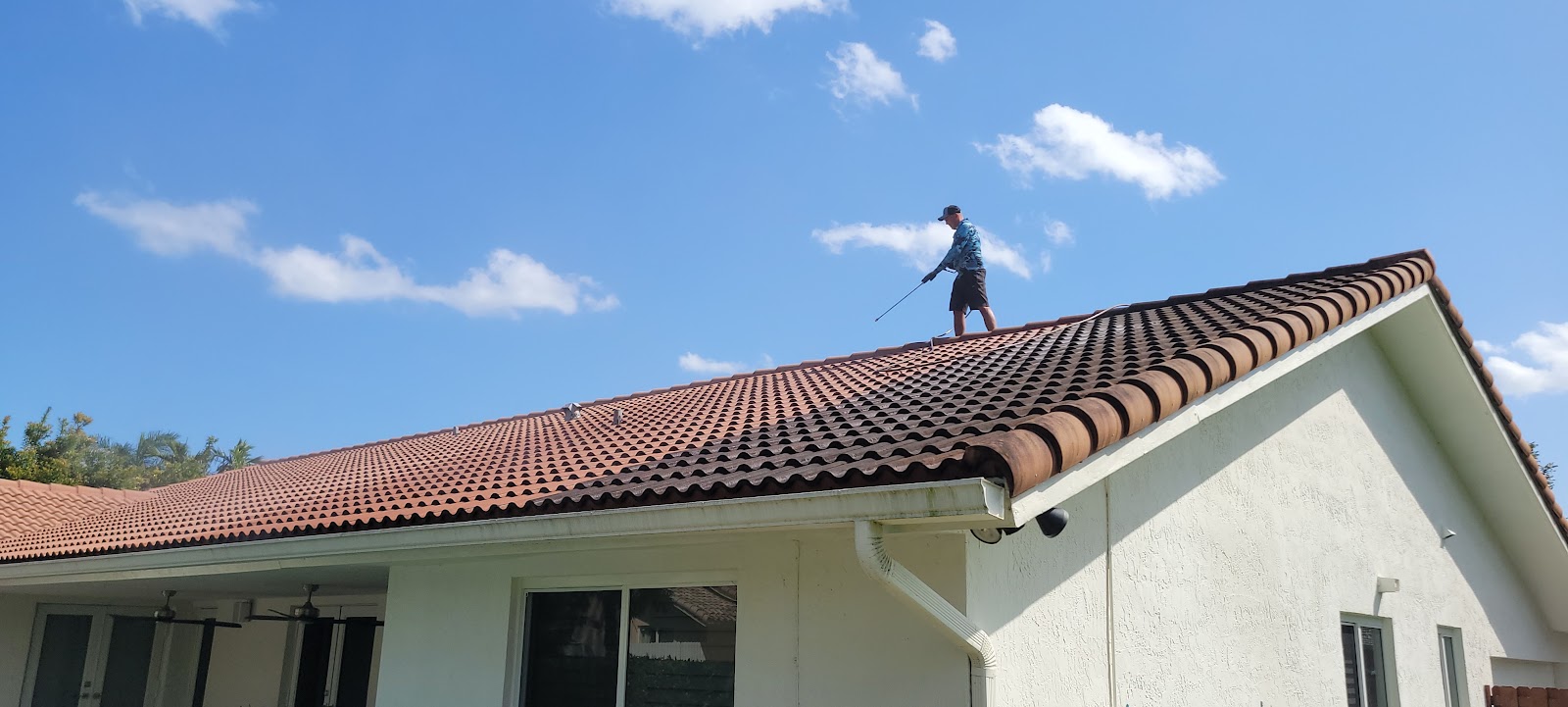
Soft washing a Miami barrel-tile roof
Freshly cleaned Miami driveway

Social proof

What customers say

I had a very last-minute request to clean my roof that I thought needed to be changed, but I was amazed with the work quality the Moppey team provided. It appears our roof only needed a good cleaning — it looks like new! Excellent customer service. I definitely recommend Moppey.
Audrius G.Roof Cleaning Verified Google review
100% recommend! I was only going to have my windows cleaned but they did such a good job I also included my patio and the driveway. They are very precise with every detail.
Jaime L.Windows • Patio • Driveway Verified Google review
Wonderful experience dealing with Moppey Spotless Clean Pros. Very professional and their pricing was extremely competitive. Will definitely use them again and recommend to my family and friends!
Melissa SanchezExterior Cleaning Verified Google review

Good to know

Fence Cleaning FAQs

It can, which is why we do not pressure wash fences. High pressure chalks and dents vinyl and furs or splinters wood, and it only removes surface algae while the roots regrow. We use a low-pressure soft wash with a mildewcide solution instead, so the buildup lifts off and the material stays intact.

Because a plain water rinse only removes the top layer of algae and mildew, leaving the living roots behind to regrow, and Miami's humidity and daily sprinkler spray speed that regrowth up. Our solution kills the growth at the root, so the fence stays clean noticeably longer than after a rinse.

We clean both sides by default so the whole panel matches, but if only the yard-facing or shaded side is bad we can focus there. The north and east faces and the bottom rails almost always need the most work, and we spend the time where the buildup actually is.

Yes, and it's the right order. A soft-wash cleaning strips the mildew, algae and grime so stain or paint bonds to clean material instead of trapping growth underneath. Let the fence dry fully after we clean it before you apply any finish.

We pre-wet and rinse the sod, beds and landscaping crowded against the fence line and control our overspray to protect them. Plant protection is a standard part of every fence job, not an add-on, because in Miami almost every fence has something growing right up against it.

Yes. We clean multi-property and community fence lines so every panel matches street-side, and we carry the liability and workers-comp coverage that HOAs and property managers require before crews work on the grounds. Ask for a quote on the full linear footage.

Most fences here benefit from a cleaning once a year, though heavily shaded fences or ones that get constant sprinkler spray can green up in six to nine months. Cleaning it ahead of your rainy-season or pre-sale timeline keeps it from getting to the point where the buildup is baked in.

It depends on the material, the length of the run and how heavy the buildup is, so we give you a free quote rather than a guessed number. Send us the fence type and rough linear footage and we'll get you a fast free quote, most answered same day.

It makes it more important to clean regularly. Miami's coastline sits in the ISO C5-M very-high corrosivity band, so salt accelerates rust on wrought iron and pitting on aluminum. Cleaning the salt and algae film off is genuine corrosion maintenance, not just cosmetics. On iron we knock back rust spots so any repaint or converter bonds to clean metal, and on aluminum we soft wash to protect the powder coat.

That is efflorescence, not mildew. It is mineral salt pushed to the surface of concrete block, stucco or coral and travertine wall sections by moisture moving through the masonry. It has to be treated with the correct approach and, importantly, dealt with before any sealing, or it blooms right back through. We identify it on-site and treat it differently from the algae and mold we soft wash off the rest of the fence.

Often, yes. The gray is UV weathering and surface oxidation, not permanent damage in most cases. Beyond the standard mildewcide soft wash, wood responds to an oxalic-acid brightening treatment that neutralizes the graying and any tannin bleed and brings back a warmer, more natural tone. If you plan to stain afterward, this is the ideal prep, and the wood needs to dry fully first.

Before is better. The season runs June 1 through November 30, and April and May are the ideal pre-storm cleaning window. Cleaning early gets the fence inspected while you have time to spot loose posts, split rails or rotted boards that could become projectiles in a storm, and it clears the algae before the heaviest rainy months feed a fresh bloom.

Yes, and it is efficient to bundle them since fence, cage and pool-deck areas often share the same algae problem from sprinkler spray and shade. We soft wash the screen enclosure and adjacent fencing with material-appropriate pressure so the screen mesh and frame are not damaged. Ask for a combined quote and we will price the full scope in one visit.

Constant sprinkler spray on the bottom rail is one of the biggest reasons Miami fences green up fast, and Miami's hard water leaves mineral crusting on top of that. Our mildewcide treatment keeps the growth off far longer than a rinse would, but aiming the sprinkler heads away from the fence and trimming hedges back for airflow will stretch the clean noticeably. A recurring plan is the easiest way to stay ahead of a sprinkler-fed fence.

Yes. Composite and PVC resist rot but oxidize, haze and hold mildew in their texture, so they get a low-pressure soft wash only. Using a pressure wand on them can blast the surface layer and leave a permanent blotchy look. Wood is porous and directional, so it needs a gentler mix and brushing along the grain to avoid furring. Matching the method to the material is exactly what keeps either one from being damaged.

Get your free fence cleaning quote

Tell us what needs cleaning and we’ll help you choose the right service — from roof stains and driveway grime to windows, patios, balconies and commercial walkways.

Fast free quotes — most answered same day · Hablamos Español

Call NowGet QuoteDirections