In-depth guide
Pool Deck Cleaning in Miami: the complete guide
Pool deck cleaning in Miami is a surface-reading job, not a power contest
A pool deck in Miami lives in the harshest micro-climate on your property. It stays wet from splash-out, sits in humidity that rarely drops below the dew point, and takes direct sun that bakes sunscreen, chlorine, and body oils into porous stone. That combination grows a living green film of algae and mildew, and it darkens the joints between pavers into black lines. The mistake that ruins Miami decks is treating this as a job for raw pressure. The right answer is reading the surface, matching the chemistry and the pressure to that specific material, and lifting the growth out of the pores instead of blasting the stone apart.
This guide goes underneath the basics. It walks through how each common Miami deck material is actually treated, what a professional visit looks like step by step, the honest factors that move the cost, how often a Miami deck really needs attention, and where a rented machine will cost you more than it saves. If you already know your deck is green and slick, skip to the bottom and call for a free quote.
Every Miami deck material needs a different hand
"Pool deck" is a category, not a surface. The single most important thing a professional does is identify what is under your feet before the first drop of water hits it, because each material fails in a different way when it is cleaned wrong.
- Travertine and marble. Soft, porous, and everywhere in Coral Gables, Pinecrest, and Palmetto Bay. High pressure strips the honed face, opens the pores, and etches the stone so algae comes back faster the next season. These are soft-washed at low pressure with a plant-safe hypochlorite solution that kills the growth chemically, then flushed.
- Concrete pavers and brick pavers. Hundreds of individual units held by sand joints. Brick tolerates more pressure than travertine, but blasting either one craters the joint sand and destabilizes the field. These take a controlled clean plus re-sanding.
- Kool Deck and painted or textured concrete. That cool-to-the-touch acrylic-cement coating common on older Miami pools chips and flakes if you hit it with a turbo nozzle. It is soft-washed and rinsed at low pressure, never bladed.
- Coral rock, keystone, and shellstock coping. Miami's signature stone. Extremely porous and irregular, so it holds algae deep and demands solution-first cleaning, not mechanical scouring.
- Exposed aggregate and stamped concrete. Durable, but the texture traps organic staining. A shrouded surface cleaner delivers an even pass without the striping you get free-handing a wand.
- Screened lanai and enclosure floors. These stay shaded and damp, so they green up fastest and are the number-one repeat problem in Miami.
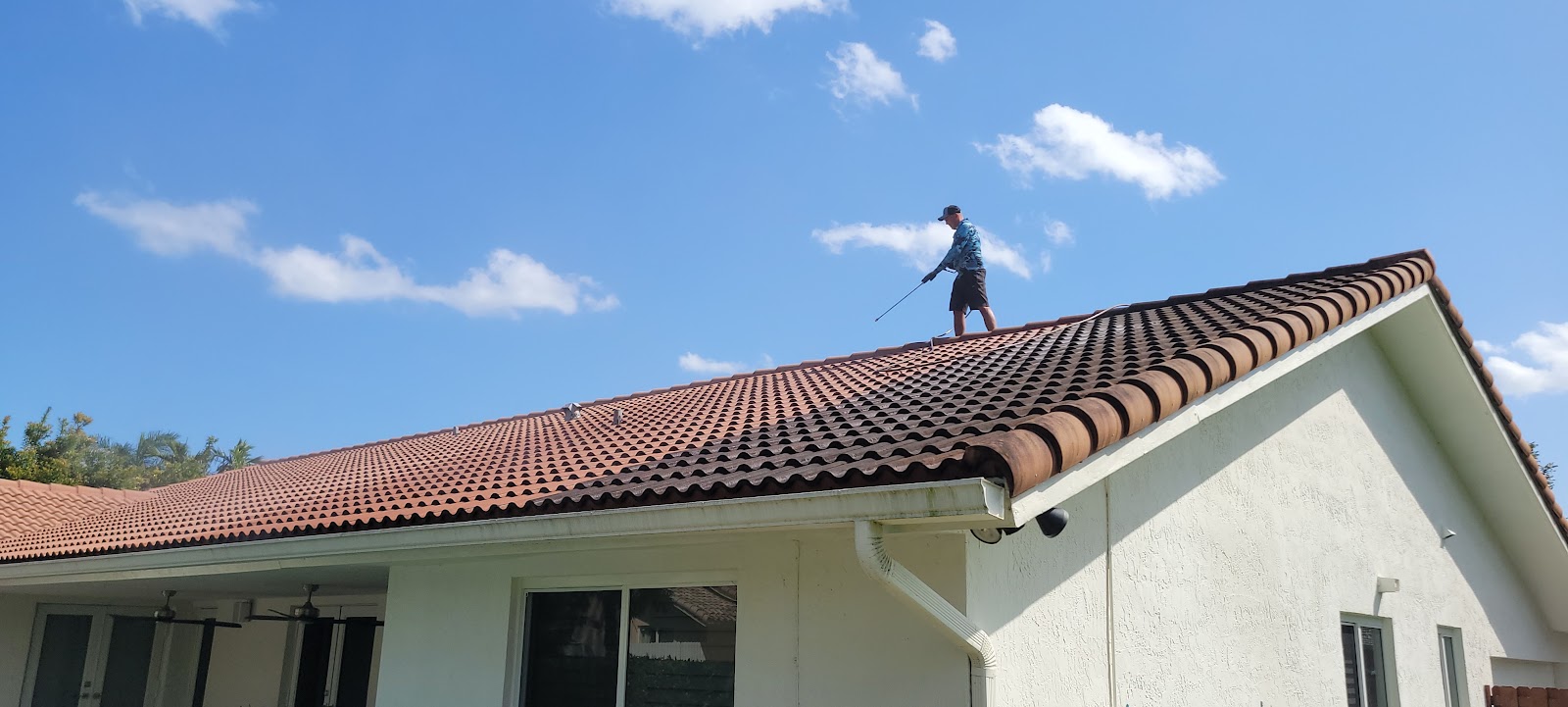
The reason this matters is chemistry as much as pressure. On living organic growth (algae, mildew, mold, and the Gloeocapsa magma cyanobacteria that also streaks roofs), a measured sodium hypochlorite solution kills the organism at the root. Pressure alone only pushes the green around and leaves spores in the pores to regrow. This is why serious deck work is a soft-wash-first discipline, with mechanical pressure reserved for hardy concrete and only through an even surface cleaner.
What a professional pool deck cleaning actually looks like
A proper visit is methodical, and knowing the sequence tells you whether the crew at your house is doing it right.
- Surface read and spot test. The tech identifies the material, checks the condition of the joints and any existing sealer, and spot-treats concentrated stains like rust from patio furniture, leaf tannin, or oxidized metal before the general pass.
- Protect and contain. Coping, waterline tile, pool equipment, and screen frames are shielded. Landscaping beds get pre-wetted, and rinse is controlled so cleaning solution and lifted debris stay off plants and out of the pool water.
- Apply the right solution. For stone, pavers, and coral rock, a diluted plant-safe hypochlorite mix goes down and dwells so it can kill the algae and mildew biologically rather than just wetting the top.
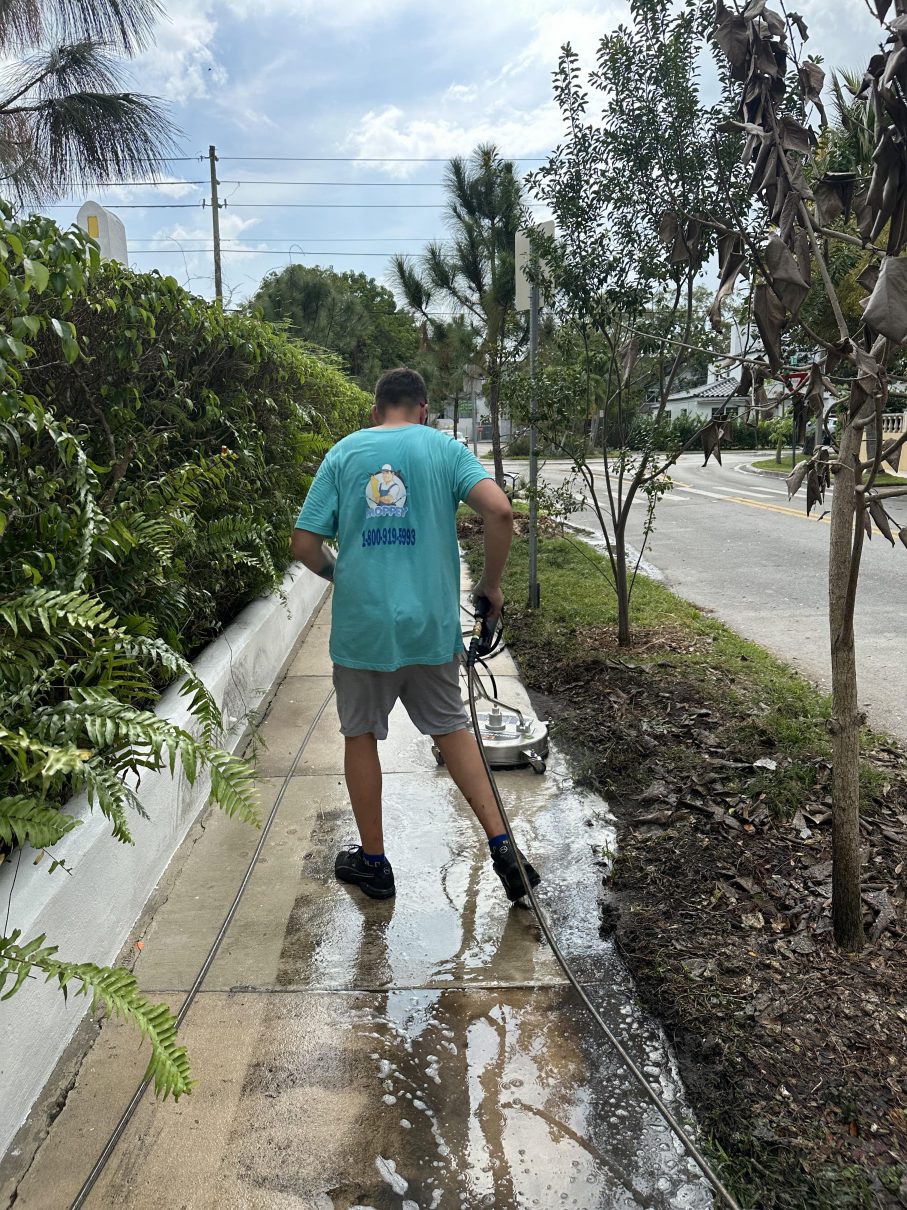
- Clean to the material. Soft rinse for travertine, marble, Kool Deck, and coral rock; a shrouded surface cleaner at controlled pressure for tough concrete and stamped surfaces; hand detailing on edges, coping seams, and tight corners so the clean runs border to border.
- Flush the joints. The black lines between pavers are where the buildup actually lives, so the joints are cleaned out, then re-sanded on request to keep the field locked.
- Neutralize and final rinse. The whole deck is rinsed so it dries evenly with no residue, no streaks, and no chemical film near the water.
- Assessment. You get an honest read on efflorescence, joint condition, and whether the deck is due for a reseal.
The Miami problems this service actually solves
South Florida is a worst-case environment for exterior stone, and a good pool deck clean is really solving four local problems at once.
- The green film that never fully dries. Humidity, splash-out, and screen shade keep the surface damp, so algae and mildew colonize porous stone continuously. This is the slick, dull green most people call about.
- Slippery stone as a genuine safety hazard. A thin biofilm on wet travertine or sealed pavers is the exact reason people lose their footing at the pool. Removing it restores the natural traction of the surface. This is the highest-stakes reason to clean a deck.
- Efflorescence, the white chalky haze. Miami's limestone Biscayne Aquifer water and mineral-rich stone push salts up through pavers and travertine as a white bloom. It must be treated before any sealing. Seal over it and the deck can cloud within about six months.
- Salt and coastal wear. Homes in Key Biscayne, Miami Beach, and the barrier islands sit inside the most aggressive marine corrosion zone there is (ISO C5-M). Airborne salt keeps re-depositing on stone and rusting nearby railings and screen frames, so coastal decks need more frequent attention than inland ones.
What drives the cost of a pool deck cleaning
There are no flat prices here, and anyone quoting one sight-unseen is guessing. The cost is a function of real variables, and understanding them helps you get an accurate quote and avoid surprises.
- Square footage and layout. A simple rectangular surround is faster than a wrapping deck with steps, planters, and a spa.
- Surface type and softness. Travertine, marble, Kool Deck, and coral rock require slower, solution-first soft washing, which takes more care and dwell time than blasting a concrete slab.
- Condition and neglect level. A deck cleaned yearly is a maintenance pass. A deck that has gone black over three seasons needs heavier treatment and sometimes multiple applications.
- Joint and grout work. Whether the joints need re-sanding, and how much sand has washed out, adds labor.
- Access. Screened enclosures, second-floor decks, tight side-yard entry, and high-rise or HOA settings that require proper liability and workers-comp coverage all affect the job.
- Add-ons. Efflorescence treatment and resealing are separate steps from cleaning, and whether your deck needs them changes the scope.
Moppey gives fast, free quotes and looks at the actual deck before pricing it, so what you are told matches what you get.
How often to clean a Miami pool deck, and how to hold the results
Cadence depends on shade, tree cover, enclosure, and how close you are to the water, but there are real rhythms for South Florida.
- Open, sunny inland decks: a thorough clean once or twice a year usually stays ahead of the algae.
- Screened lanais and heavily shaded decks: these green up fastest and often want attention two or three times a year.
- Coastal decks near the bay or ocean: salt and constant moisture push them toward the more frequent end.
- Before hurricane season (roughly April to May): it is the smart pre-storm window, because a clean, well-drained deck and clear surrounding surfaces handle the wet season better, and it pairs naturally with gutter clearing before the June 1 to November 30 season.
To hold results between visits: rinse the deck with fresh water after heavy pool use to dilute chlorine and sunscreen residue, sweep off palm fronds and leaf litter before they stain, keep screen enclosures rinsed so shade areas dry faster, and stay on a reseal cycle. Most Miami travertine and paver decks benefit from a fresh seal every one to two years, always applied only to a fully clean, dry deck with efflorescence already treated. A recurring maintenance plan is the cheapest way to never let a deck reach the black, slippery stage in the first place.
Professional soft washing versus a rental machine or DIY
The rental-machine route is where most Miami deck damage originates, and it is worth being blunt about why.
- Pressure without chemistry does not kill algae. A rented washer removes the visible top layer but leaves living spores in the pores, so the green returns in weeks. Professionals kill it biologically with a controlled hypochlorite soft wash, which is why the clean lasts.
- Turbo nozzles destroy soft surfaces. Free-handing a wand or spinning a turbo tip across travertine, marble, or Kool Deck etches lines, opens the stone, and blows out joint sand, and that damage is permanent.
- Containment near a pool is a skill. Getting cleaning solution off your landscaping and out of the pool water, and protecting equipment and coping, is not something a first-timer manages well. Done wrong you affect your pool chemistry and your plant beds.
- The striping problem. Even on concrete, a hand-held wand leaves a patchy zebra pattern. An even, professional result comes from a shrouded surface cleaner run at one consistent pressure.
Related methods sit on a spectrum. Full-pressure washing belongs on driveways and hardy concrete flatwork; soft washing at under 500 PSI with the correct solution belongs on stone, pavers, Kool Deck, and coral rock. A pool deck almost always lives on the soft-wash end. The professional advantage is not a bigger machine, it is knowing which end of that spectrum your specific deck sits on.
Signs your pool deck needs cleaning now
- The stone has a green, gray, or black tint, especially in shaded and screened areas.
- It feels slick or slippery underfoot when wet.
- The joints between pavers have turned black or are growing weeds and moss.
- A white chalky haze (efflorescence) is blooming through the surface.
- Coping and coral-rock edges look darkened or stained.
- The deck no longer matches the color it was when installed, or looks dull and tired even after you hose it.
If two or more of those are true, the deck is past the point a garden hose will fix. Moppey cleans pool decks, lanais, and travertine surrounds across Miami and South Florida with the right method for the surface, plant-safe chemistry, careful containment around your water and landscaping, before-and-after photos, and a 48-hour re-wash guarantee. No damage, no streaks, no shortcuts. Call Moppey at +1 877-754-5614 for a fast, free quote. Hablamos Español.