In-depth guide
Soft Washing in Miami: the complete guide
The complete guide to soft washing in Miami
Soft washing is not "gentle pressure washing." It is a fundamentally different way of cleaning an exterior — one built on chemistry, dwell time, and low-volume application rather than mechanical force. In a climate like South Florida's, where the real problem on most surfaces is living growth rather than loose dirt, understanding that distinction is the difference between a clean that lasts a year and a clean that fails by the next rainy season. This guide goes past the basics to explain how the process actually works on a Miami property, what it costs you when it is done wrong, and how to tell a real soft-wash operation from a company that simply turned the pressure down.
What soft washing actually does at the surface
A pressure washer removes what it can physically knock loose. Soft washing removes the organism itself. The two are not interchangeable because the thing staining most Miami exteriors — the black roof streaks, the green stucco film, the gray shadow on a north-facing fence — is alive. It has roots that sink into the pores of the material. Blast the visible layer off with 3,000 PSI and the colony underneath is still there, ready to bloom again within a few months.
A proper soft wash works in three stages:
- Apply. A cleaning solution built around sodium hypochlorite, blended with surfactants that help it cling and penetrate, is applied at low pressure — under about 500 PSI, closer to a garden hose than a machine. The surfactant is what keeps the solution on a vertical wall or a sloped roof long enough to work instead of running straight off.
- Dwell. The solution is given time to sit and break down the cell structure of the algae, mold, mildew, and lichen. This is where the real cleaning happens. There is no scrubbing and no blasting — the chemistry does the work while the crew protects the surroundings.
- Rinse. A gentle, low-pressure rinse carries the dead growth and the solution away. Because the colony is killed at the root rather than skimmed off the top, the surface stays clean far longer than any pressure rinse can manage.
That "kill at the root" step is the entire point. It is why a soft-washed roof in Miami can go a couple of years before streaks return, while a pressure-rinsed one is streaking again by the next wet season.
The Miami problems soft washing is built to solve
South Florida sits in the highest-density algae zone in the country, and that is not a marketing line — it is a climate fact that shows up on every property here.
- Roof streaking from Gloeocapsa magma. The dark stains running down Miami roofs are a cyanobacteria that feeds on the crushed limestone filler baked into asphalt shingles. It is not dirt and it will never rinse off in the rain. Left alone, its dark pigment makes the roof absorb heat and drive up cooling costs, and it can shorten a 20-to-25-year roof to 12 to 15. High pressure "fixes" it for a month while stripping the granules that protect the shingle — which is why every roofing manufacturer specifies low-pressure soft washing instead.
- Mold and algae on stucco. Miami's constant humidity and daily rain grow organic film on stucco and painted walls faster than almost anywhere. Stucco is porous and etches easily, so it has to be washed under roughly 500 PSI with a hypochlorite solution rather than blasted.
- Salt air on the coast. Near the water, properties live in a coastal ISO C5-M corrosion environment. Salt accelerates the breakdown of paint, siding, and sealants and feeds surface grime. Regular soft washing keeps that buildup from becoming permanent staining.
- Shaded properties. Under heavy tree cover — think Coconut Grove or older Coral Gables lots — algae takes hold on fences, walls, and the north slopes of roofs first and returns fastest. These properties benefit most from a maintenance rhythm rather than a one-off clean.
What the process looks like on your property
A real soft wash is a careful, staged visit, not a quick spray-and-go. On a typical Miami home it runs roughly like this:
- Walkthrough and assessment. A good crew identifies what is actually on each surface — algae, mildew, lichen, moss, or plain grime — because the solution strength is calibrated to the growth and the material. This is also where you get an honest read on whether a surface even needs soft wash or would be better served by pressure.
- Landscape protection. Before any solution goes up, the plants, shrubs, and grass in the wash zone are saturated with water so they cannot absorb the solution. Fixtures, outlets, screens, and delicate trim get masked.
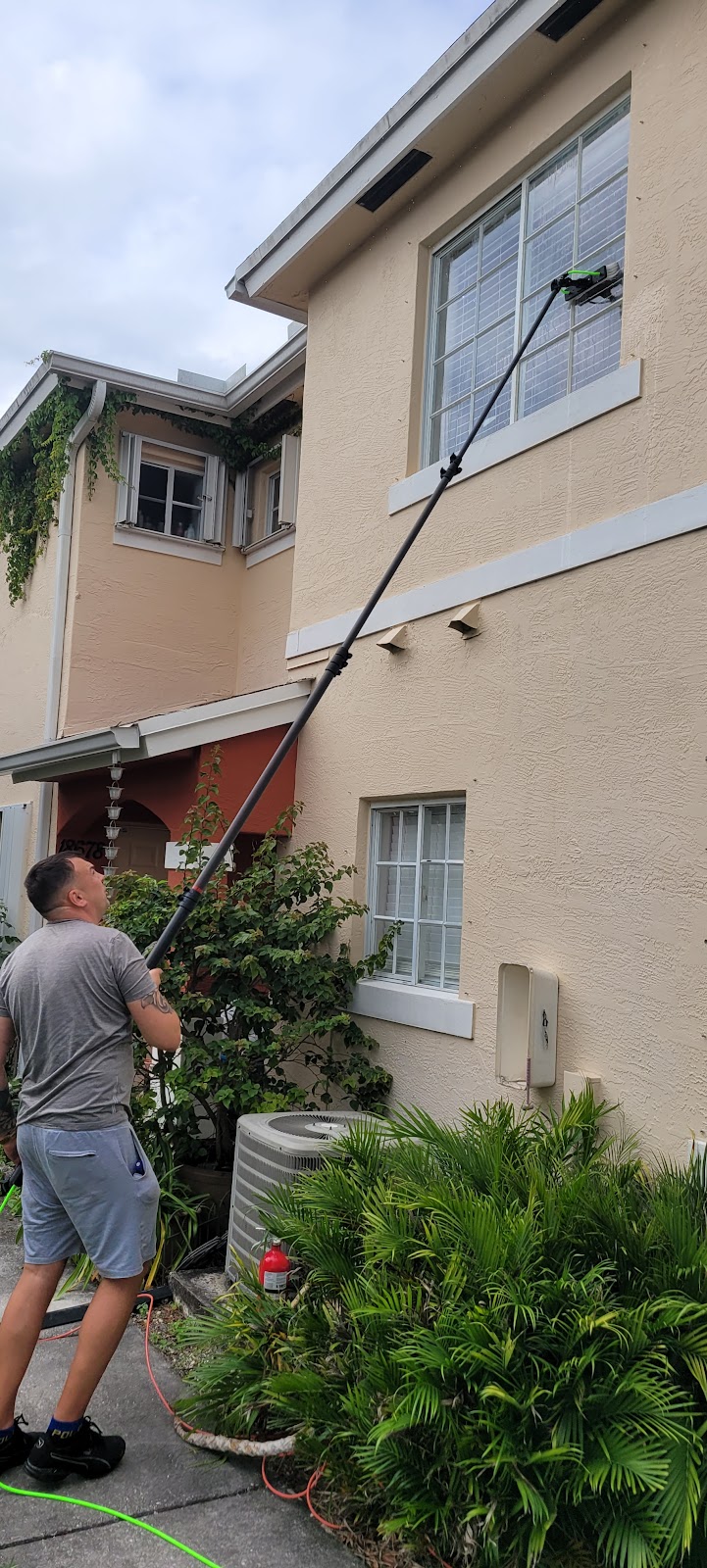
- Application and dwell. The solution is applied low and even, from the ground or with equipment that reaches a two-story roofline or a long fence run without ever loading damaging force onto the surface. It is left to work.
- Rinse and neutralize. A low-pressure rinse clears the surface, and the landscaping gets rinsed and neutralized again so nothing is left coated.
- Final check. The crew confirms the result is even and streak-free, with no residue left behind. Reputable operators back this with a re-wash guarantee if anything is missed.
The surfaces soft washing handles — and how each is treated
Soft washing is the correct method for any surface that is either soft, coated, or covered in living growth. In Miami that covers most of a property above the ground:
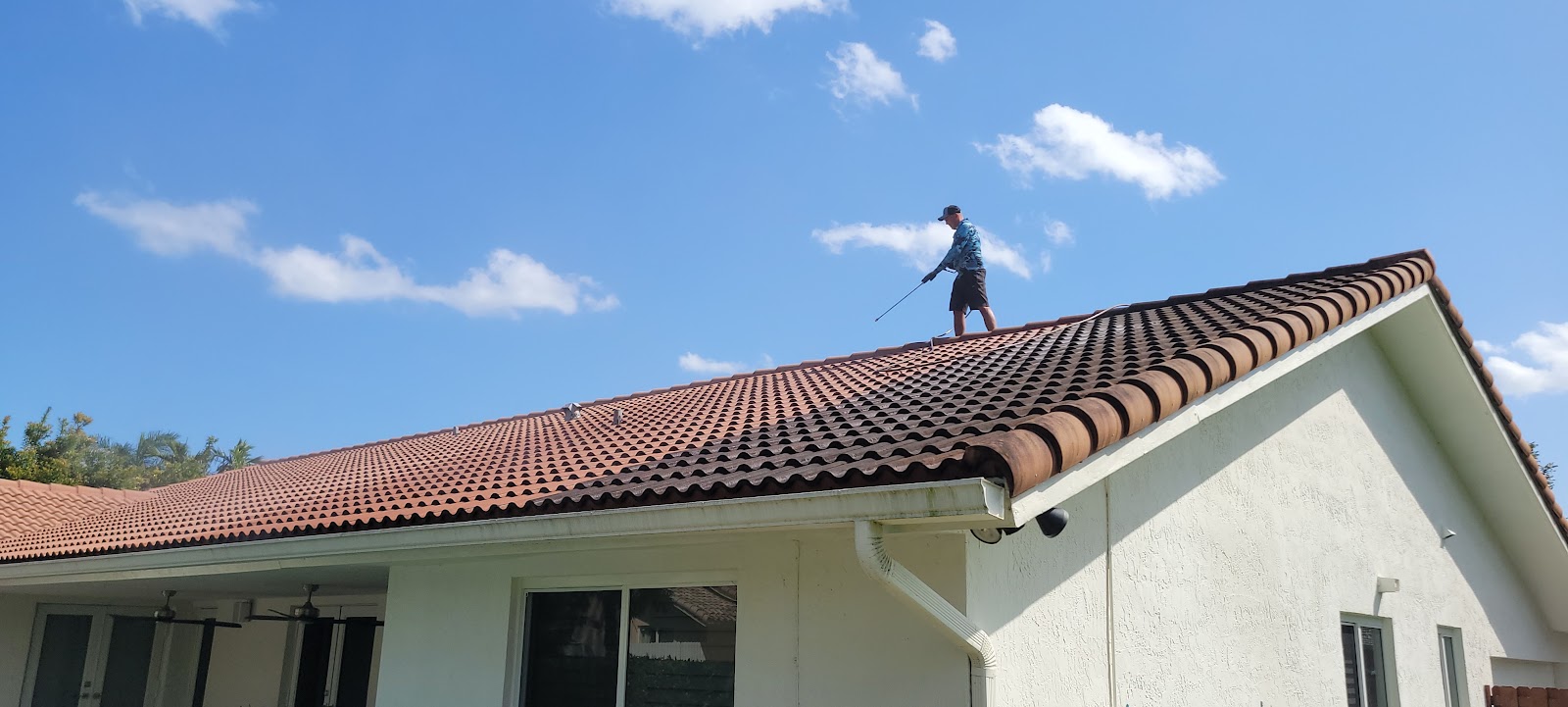
- Roofs — tile, shingle, and metal. Low pressure only; the solution lifts the streaks while granules and tile stay put.
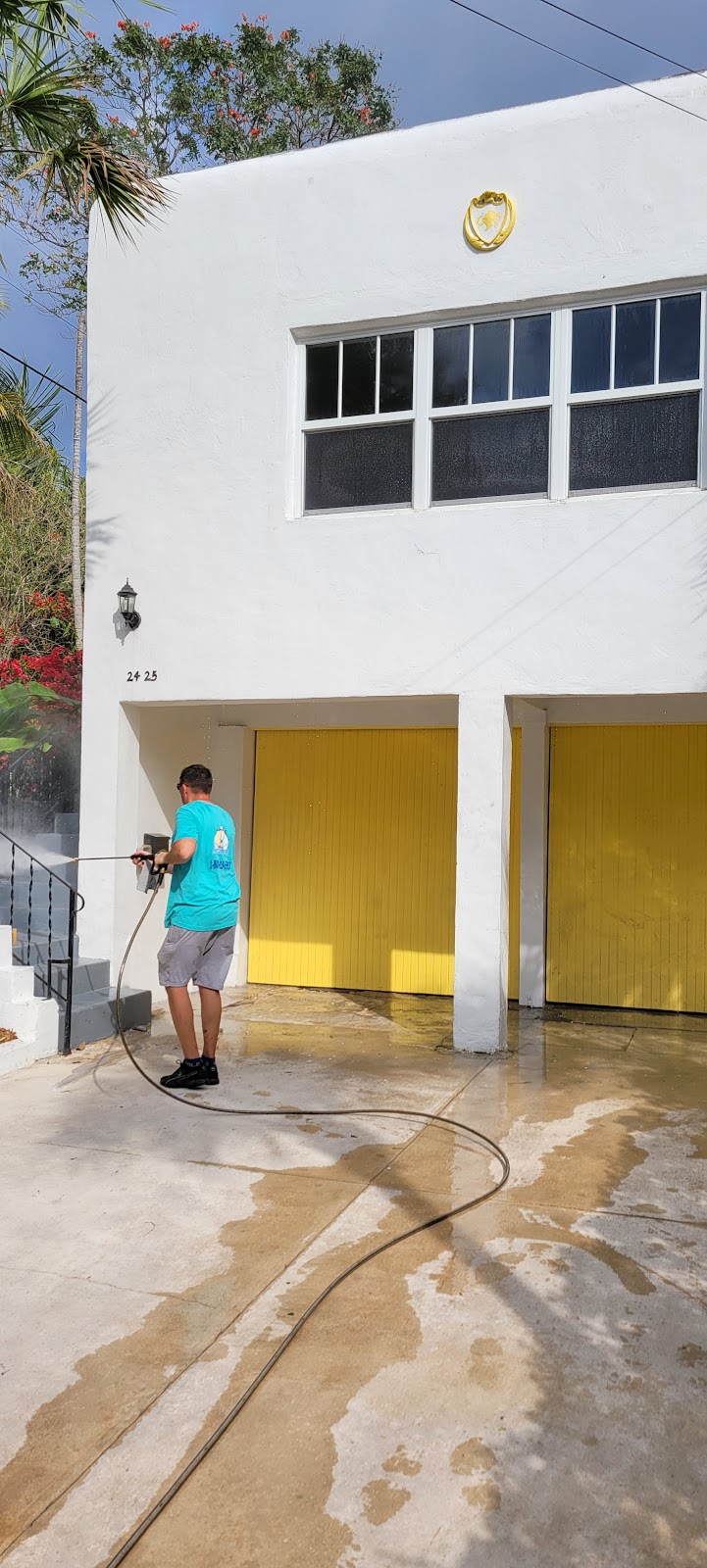
- Stucco and painted walls — washed under about 500 PSI to lift mold and algae without etching the surface or driving water behind the paint.
- Vinyl, aluminum, and Hardie siding — the solution reaches into seams and textured panels that a pressure stream would only skim.
- Wood and vinyl fences — clears the heavy green film on the shaded side and the gray of weathering without splintering wood or cracking vinyl.
- Screen enclosures, pool cages, and awnings — delicate framing and fabric that high pressure would tear or deform.
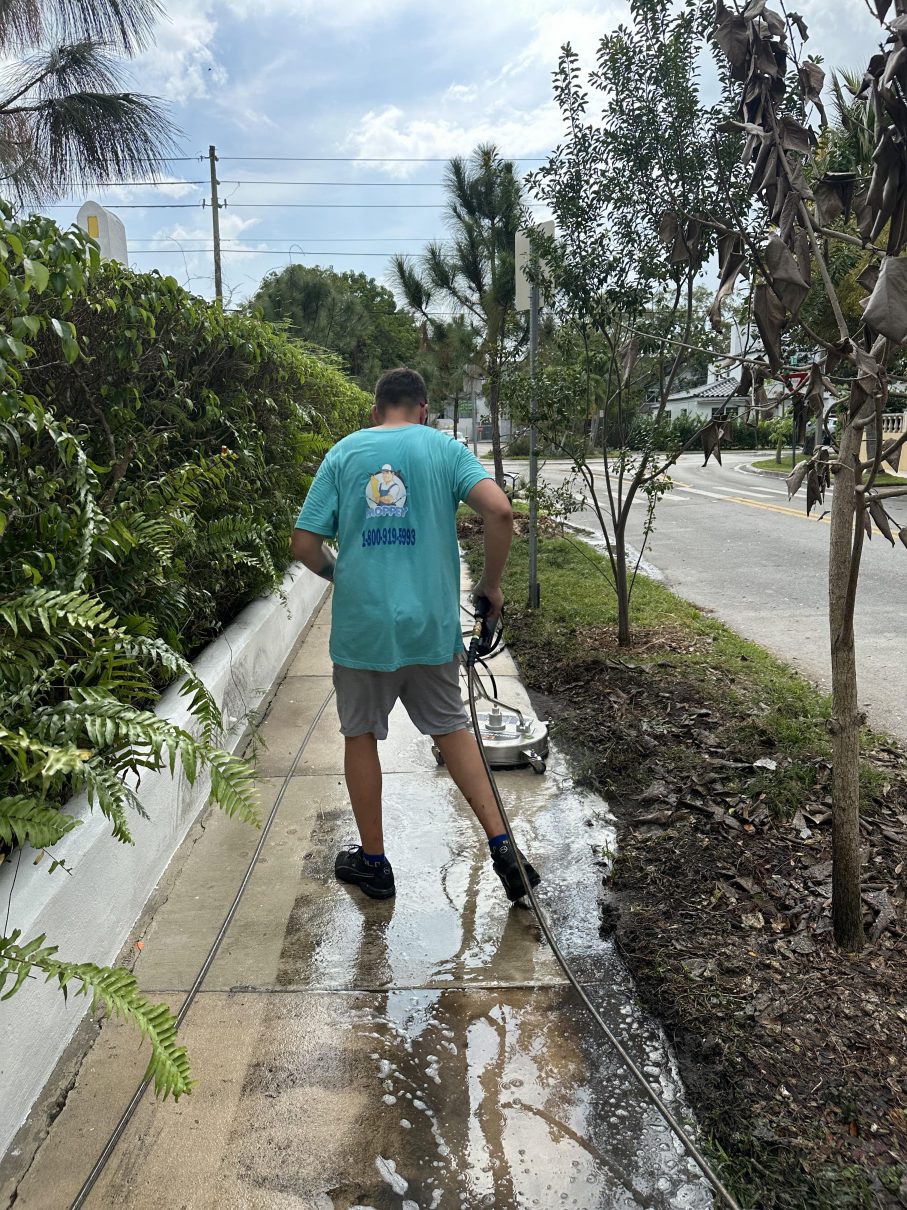
Hard, durable surfaces — concrete driveways, sidewalks, and pavers — are the exception. Those earn high pressure, often with a surface cleaner, and are handled as pressure washing rather than soft wash. The skill is knowing which surface belongs to which method, and using the right one every time.
What drives the cost of a soft wash
There is no honest flat price for soft washing a home, because the variables are real and they differ from property to property. What a careful company weighs when quoting:
- Size and number of surfaces. A single fence run is a different job from a full house-and-roof package.
- Surface type and material. Roofs, coated surfaces, and delicate framing take more care and protection than a plain stucco wall.
- Condition and severity of growth. A lightly filmed wall cleans fast; a roof with years of thick lichen and heavy streaking needs more solution and more dwell time.
- Access and height. Two-story rooflines, high-rise units, and buildings needing fall protection require more equipment and the insurance to back it.
- Landscape complexity. Dense, mature landscaping around the work zone takes more time to protect and neutralize properly.
The right approach is a free walkthrough and a transparent quote based on what is actually there — not a number pulled off a web page before anyone has seen the surface.
How often to soft wash in Miami, and keeping the results
Because growth returns as long as the climate stays warm and wet — which in Miami is year-round — soft washing is a maintenance practice, not a one-time fix. As a general rhythm:
- Stucco, siding, and painted walls — every one to two years keeps growth from taking hold, and it is always worth doing before a repaint so the new coat goes onto a clean surface.
- Roofs and shaded fences — as soon as algae reappears, which varies with tree cover and sun exposure.
- Before hurricane season — April and May are the ideal pre-storm window. A clean roof sheds water the way it is designed to; a mold-laden one holds moisture and adds weight during a storm.
Recurring maintenance plans exist for exactly this reason: they keep growth from ever getting a foothold, which makes each visit lighter and the property consistently clean rather than swinging between filthy and freshly washed.
Soft wash versus pressure washing versus DIY
The single most common — and most expensive — mistake is treating every exterior with a pressure washer. On a roof, high pressure blows the protective granules off shingles and voids most warranties on contact. On stucco it etches and cracks. On wood and vinyl it splinters and gouges. The damage is often invisible the day it happens and shows up months later as accelerated wear.
DIY soft washing carries its own risks. The hypochlorite chemistry is unforgiving: too strong and it scorches landscaping or lightens paint, too weak and the growth survives. Applied without proper landscape saturation and neutralizing rinses, it kills plants. Applied from a ladder on a two-story roofline without the right equipment and insurance, it is a genuine safety hazard. A careful professional brings calibrated chemistry, reach equipment that keeps force and foot traffic off the surface, and the liability and workers-comp coverage that a rental machine and a Saturday afternoon simply do not.
Signs your Miami property needs a soft wash
- Black streaks running down the roof, especially on north-facing slopes.
- A green or gray film creeping up stucco, siding, or a shaded fence.
- Growth that came right back within months of a previous pressure rinse.
- A repaint on the horizon — the surface should be clean and biologically dead first.
- Screen enclosures, awnings, or pool cages darkening with mildew.
If any of those sound like your property, soft washing is almost certainly the right method rather than pressure. The honest way to be sure is a walkthrough. Moppey offers a free, no-pressure quote across Miami and South Florida — insured, with a COI on request and a 48-hour re-wash guarantee behind the work. Call +1 877-754-5614 for a free assessment, and we will tell you straight whether a surface needs soft wash, pressure, or nothing at all. Hablamos Español.