
Local guide
Exterior cleaning in Little Havana: the complete guide
What exterior cleaning in Little Havana actually involves
Little Havana is dense, old, and built close to the street. The neighborhood runs roughly from the Miami River south to SW 8th Street, and from the edge of downtown west toward 37th Avenue. Inside that footprint you have a stock of buildings that mostly predates modern exterior cleaning equipment: masonry-block apartment houses, wood-frame cottages, small stucco duplexes and fourplexes, and the corridor of Calle Ocho storefronts. Cleaning here is less about horsepower and more about knowing which surface you are standing in front of, because the wrong nozzle on an 80-year-old wall does damage you cannot un-do.
Two things shape almost every job in this neighborhood. First, the buildings are close together, which means shaded walls, narrow side yards, and slow-drying surfaces that grow algae faster than an open suburban lot ever would. Second, a huge share of the property here is income property — duplexes, fourplexes, and small apartment buildings owned by landlords or held by families across generations. That changes what "clean" needs to accomplish: it has to protect the building, satisfy tenants and code, and hold up between visits without a big budget. We plan our work around both realities.
The surface problems most Little Havana crews get wrong
Beyond the obvious stucco-and-storefront work, a few specific issues come up on nearly every block here, and they are the ones cheaper operators tend to skip or handle badly.
- Efflorescence on masonry-block walls and concrete. That chalky white bloom on the base of a block wall or a poured foundation is not dirt and it will not pressure-wash off. It is mineral salt migrating out of the masonry as moisture moves through it — extremely common on the older CBS (concrete block stucco) construction that fills East Little Havana. It has to be treated with the right acidic solution and rinsed, not blasted. Just as important, if you seal a driveway or wall while efflorescence is still active, you trap the problem under the sealer. We treat it first, then seal.
- Rust bleed and metal staining. Salt-laden Miami air corrodes exposed metal — old railings, window bars (rejas), awning frames, downspouts, rebar tie-ins — and the runoff leaves orange rust stains streaking down stucco and concrete. Pressure alone smears it. Rust needs a dedicated remover applied and dwelled, not a stronger tip.
- Graffiti and sticker residue. In a walkable, high-traffic district, tags and flyer glue land on roll-down gates, dumpster enclosures, and side walls. The removal method depends entirely on the surface underneath — a painted mural wall, raw block, and a metal gate each need a different approach so you lift the paint without ghosting the surface.
- Screen enclosures and pool cages. The screened patios and Florida rooms behind many of these homes trap pollen, mildew, and that grey film on the mesh and frame. Screen needs low pressure and a gentle detergent; a pressure tip tears the mesh and bends the spline out of its channel.
Roofs, gutters, and the flat-roof reality here
A lot of Little Havana's older apartment buildings and additions have flat or low-slope roofs rather than the pitched barrel-tile you see out west. Flat roofs hold standing water and organic debris longer, so they streak and grow biological film fast, and they need a soft-wash approach with careful containment because runoff has nowhere to shed. On the pitched-shingle homes, the black streaking is the same Gloeocapsa magma cyanobacteria found across South Florida, and the rule is the same: low pressure only, because a high-PSI blast strips protective granules and voids the shingle warranty.
Gutters matter more here than people expect. The neighborhood is full of mature shade trees and royal palms, and shed palm fronds and seed pods clog downspouts fast. On tightly-spaced lots, an overflowing gutter dumps water straight against the foundation or into a neighbor's wall. Clearing gutters is not glamorous, but on these older buildings it protects the masonry and the interior — and it is the single most valuable thing to do before hurricane season.
Windows and glass on the coast side of the aquifer
Miami has the hardest tap water among major Florida cities — around 11 grains per gallon, pulled from the limestone Biscayne Aquifer. On a rinse-and-air-dry job, that hardness leaves calcium and magnesium spotting baked onto the glass, and it is the reason a "clean" window can look worse a week later. We account for the water on glass work so spotting does not set in. Storefront glass along Calle Ocho and side-street commercial buildings also picks up exhaust film and cooking haze that ordinary washing streaks rather than removes; that comes off with the right pre-treatment, not more elbow grease.
The landlord, duplex, and small-association angle
Because so much of Little Havana is multi-unit income property, a big part of our work here is not a single homeowner — it is a landlord who wants a fourplex to show well between tenants, a family maintaining a duplex they have owned for decades, or a small condo or apartment association keeping the common walkways, entry facade, and shared driveway presentable. For those owners:
- We provide a certificate of insurance (COI) on request. Associations and property managers usually need one on file before any work starts, and we keep that simple.
- We work off photos for quotes. Absentee and out-of-state owners can text us pictures of the building and get a free quote without meeting on site.
- We set up recurring maintenance. In this climate, algae and street grime come back. A scheduled soft-wash of the facade and a periodic driveway and walkway clean keeps a rental looking cared-for and stops buildup from ever getting bad enough to need aggressive cleaning.
Preservation matters more here than in newer Miami
Parts of East Little Havana sit in a designated historic district, and even where they do not, the character of the original 1920s and pre-war building stock is the whole point of the neighborhood. That is not a marketing line for us — it dictates method. Original stucco, lime-based finishes, painted wood trim, and decorative masonry details are soft and often already patched or cracked. The correct approach is always the gentlest one that works: soft washing under roughly 500 PSI with a hypochlorite solution that kills mold and algae at the root, plant-safe chemistry rinsed off the landscaping, and pressure reserved only for the hard flatwork — concrete, pavers, and sidewalks — that can actually take it.
Timing your cleaning around the Miami calendar
The smartest window to clean in Little Havana is April and May, ahead of the June 1 to November 30 hurricane season. Going into storm season with a clean roof, clear gutters, and unclogged downspouts means water sheds and drains the way it should instead of backing up against these older walls. After the season, a fall or winter clean pulls off the biological growth the wet months always leave behind. For most homes here, once a year keeps the building ahead of the mold and algae; shaded walls, coastal-facing glass, and busy storefronts want it more often.
One method for each surface — and a guarantee behind it
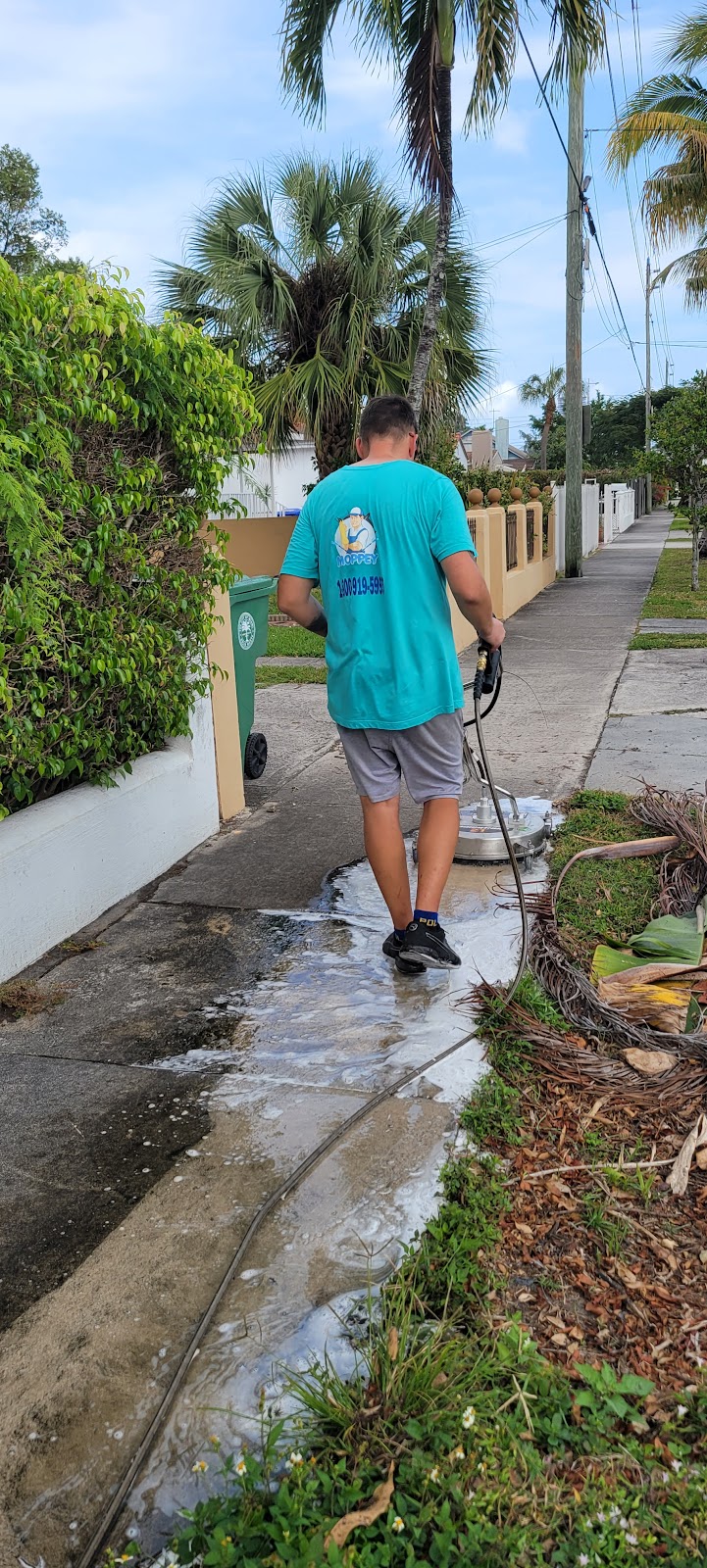
The through-line for every Little Havana property is the same: match the method to the surface. Soft wash the stucco, the painted wood, and the roof. Bring real pressure only to concrete, pavers, and public sidewalks. Treat efflorescence and rust as the chemistry problems they are, not something to overpower. We show before-and-after photos, walk the finished property with you, and back the work with a 48-hour re-wash guarantee, so if something needs another pass we come back. No invented prices — cleaning cost depends on the surface, the size, and the condition, and we give you a free, honest quote up front.
If you own a home, a rental, or a storefront in Little Havana and want it cleaned the right way, call Moppey Spottless Clean Pros at +1 877-754-5614 for a free quote. Hablamos Espanol.