
Local guide
Exterior cleaning in Midtown Miami: the complete guide
Exterior Cleaning in Midtown Miami: A Ground-Up Guide
Midtown Miami is one of the few neighborhoods in the city that was built almost entirely from scratch, and it shows in the exterior-cleaning problems it hands us. The whole district sits on the old Florida East Coast Buena Vista rail yard — a freight and storage site that stayed industrial from the 1890s until Midtown Equities assembled the parcels in the early 2000s. Everything you see today, from the towers along Midtown Boulevard to The Shops at Midtown, went up after 2005. That matters when you clean here: this is a compact, engineered, walk-everywhere district where a residential podium, a parking garage, a brewery patio and a boutique storefront can all share the same block and the same drainage. The cleaning strategy for one surface is rarely the right one for the surface three feet away.
Below is the deeper, practical layer — the parts of Midtown exterior cleaning that go beyond a facade wash and a sidewalk rinse.
The rail-yard footprint means podiums, garages and shared concrete
Because Midtown was master-planned rather than grown lot by lot, most buildings here follow the same template: a tall residential or mixed-use tower sitting on a wide concrete podium, with a structured parking garage tucked inside. That podium and garage are where a huge amount of the real grime lives, and it is the part owners forget until it looks bad.
- Parking garage deck and column cleaning. Tire marks, oil drips, brake dust and the black film that builds on any covered Miami concrete accumulate fast in these garages. We clean garage decks, ramps and columns with the pressure and degreasers the surface can take, and we control the wash water so it goes to the right drain instead of sheeting into the street.
- Podium plazas and breezeways. The elevated courtyards, breezeways and pass-throughs between Midtown's buildings are poured concrete or pavers that trap leaf litter, food-court grease and standing-water staining. Pavers in particular can throw a white efflorescence haze as mineral salts migrate up through the joints — that has to be treated first, before any sealing, or you just lock the haze in.
- Trash-room and loading-dock aprons. Mixed-use buildings generate real mess at their service points. Recurring degreasing of dumpster pads and loading aprons keeps odor and slick spots down and keeps the health inspector happy for the food tenants.
Midtown's craft-food scene creates its own grime
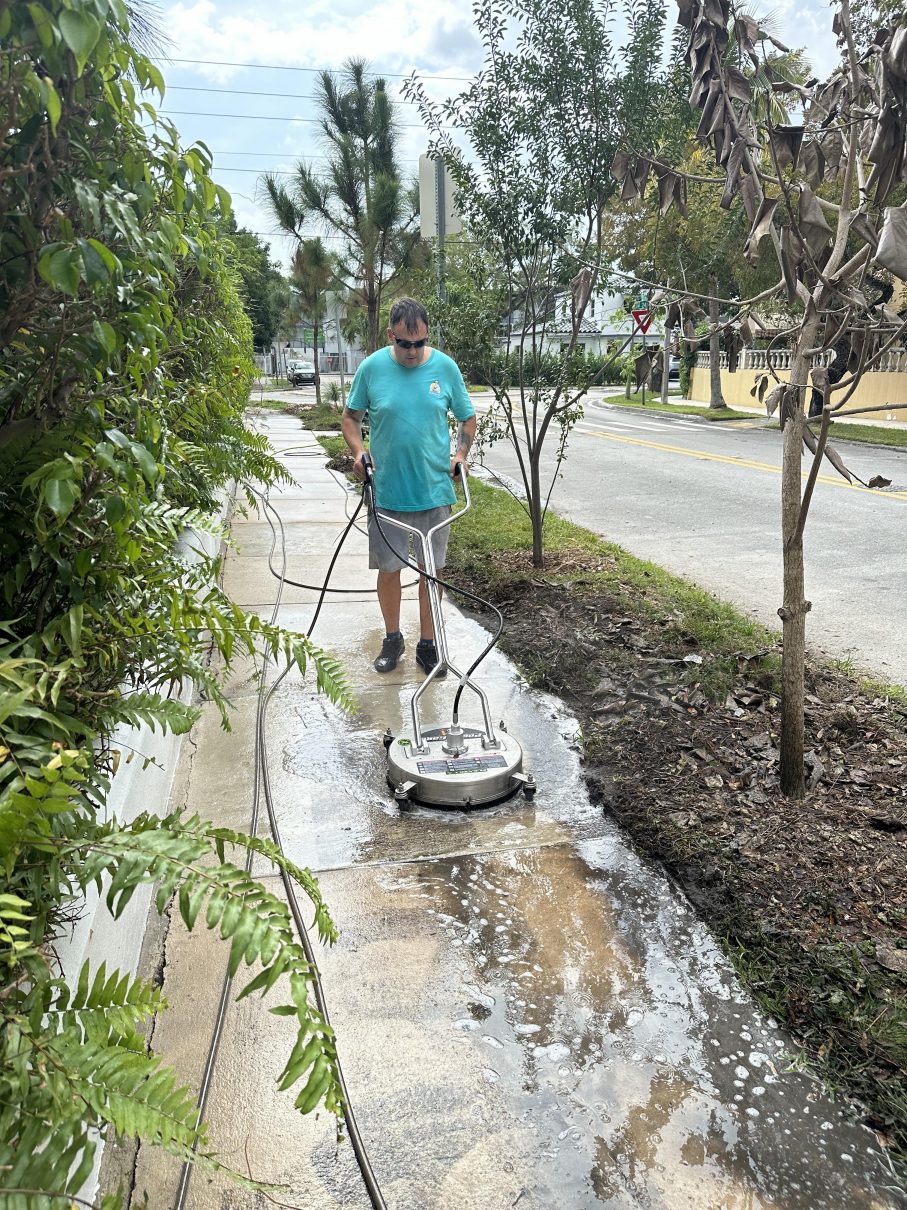
Midtown has become the epicenter of Miami's craft food and drink movement — breweries, bakeries, coffee roasters, taquerias and restaurants with big indoor-outdoor patios. That energy is great for the neighborhood and hard on exterior surfaces. Patio dining means grease aerosol drifting onto nearby stucco and glass, cooking-oil drips on the sidewalk, spilled beer and sticky soda residue on pavers, and a steady layer of coffee and food staining on the concrete right where customers line up. Ordinary pressure washing lifts dirt but smears grease. We degrease first with a surfactant that emulsifies the oil, then pressure rinse — otherwise you spread a thin film that re-attracts dirt within days. For active restaurant frontages we recommend a set recurring cadence rather than one-off cleans, because in this district the sidewalk in front of the door is the first thing a diner judges.
Glass towers, salt air, and how often is actually "often enough"
Midtown's towers are glass-heavy, and many units face east toward Biscayne Bay. Salt carried on the sea breeze settles on that glass and, left alone, etches it over time — coastal-facing panes near the water genuinely need attention every six to eight weeks to stay clear and avoid permanent clouding. Compounding it, Miami draws from the limestone Biscayne Aquifer and has the hardest tap water of any major Florida city, around 11 grains per gallon. When that water dries on glass or metal railings it leaves calcium and magnesium spotting that a squeegee cannot touch; it takes a proper acid treatment to dissolve. So the honest answer to "why does it spot again so fast" is that Midtown glass is fighting two mineral sources at once — salt from the air and hardness from the water. The fix is treating the deposits, not re-rinsing them, and setting a realistic interval.
Balcony turnover, move-outs and the runoff problem
With hundreds of stacked rental and condo units, Midtown sees constant tenant turnover, and balcony cleaning is a recurring turnover task most people underestimate. Salt-laced rain, bird mess, planter runoff, cigarette residue and general grime cake onto railings, glass panels and stucco balcony walls. The complication that makes DIY a bad idea here is vertical: whatever you rinse off one balcony runs straight onto the unit below. We manage that runoff, work stack by stack when a building wants a coordinated clean, and keep low pressure on the stucco walls so we do not etch them. For unit turnovers and pre-listing cleanups, a clean balcony is one of the cheapest ways to make a Midtown unit photograph and show better.
Rooftop amenity decks, pools and travertine
Midtown's newer towers compete on amenities — rooftop pools, sundecks, cabana lounges and green spaces. Many of those decks are finished in travertine or natural stone, which is soft and porous. High pressure pits and dulls travertine permanently, and the same efflorescence haze that shows on pavers shows here too, so it gets treated before any sealer goes down. Pool-deck cleaning around a working amenity floor also means controlling chemistry so nothing harmful reaches the water or the landscaping. We use plant-safe, low-pressure methods on these surfaces and coordinate with building management so an amenity floor is cleaned and back in service quickly.
Flat roofs, scuppers and hurricane-season drainage
The mixed-use buildings here mostly have flat and low-slope roofs with internal drains and scupper outlets rather than the sloped, gutter-and-downspout setup of a single-family home. Those drains clog with wind-blown debris, and in Midtown that includes plenty of tree and palm litter from the streetscape plantings. A clogged scupper on a flat roof does not overflow toward a lawn — it ponds water on the membrane and finds its way inside. This is why timing matters. Hurricane season runs June 1 through November 30, and the smart pre-storm window is April and May. Clearing roof drains, washing the roof surface so it sheds cleanly, and getting facades and sidewalks done in late spring means a Midtown building heads into the summer storms ready instead of scrambling.
Which Moppey services matter most in Midtown
Given the district's makeup, the work that comes up most here is: storefront and sidewalk pressure washing with real degreasing for the restaurant and retail frontages; soft washing for stucco facades and ground-floor bays, kept under 500 PSI with a hypochlorite solution so humidity-fed mold, mildew and algae come off without etching the finish; window and glass cleaning with hard-water and salt treatment for the towers and storefronts; balcony, railing and glass-panel cleaning for the residential stacks; parking-garage and podium cleaning; and awning, canopy and entryway cleaning for the mixed-use ground floors. On every one of these, the principle is the same — match the method to the material. Soft wash where pressure would do damage, calibrated pressure where the surface can take it, and the right treatment on glass and stone instead of a rinse that just re-spots.
Working with a dense, mixed-use, HOA-heavy district
Almost nothing in Midtown is a solo single-family job. You are dealing with HOAs, property managers, commercial landlords and their retail tenants, often on the same building. High-rise and podium work needs proper reach equipment and full liability and workers-comp coverage — not a two-person crew with a ladder — and we carry that and provide a certificate of insurance on request. We schedule storefront and sidewalk cleaning for early mornings and off-hours so it is done before doors open, we can quote a facade, common areas and private balconies as one project or in phases, and we back the work with a 48-hour re-wash guarantee, before-and-after photos and recurring maintenance plans that keep high-traffic frontages consistently presentable. We know this neighborhood and its neighbors — the Wynwood and Design District borders, the craft-food blocks, the tower stacks — and we clean them the way the surfaces require.
If you manage or own property in Midtown Miami, we will walk the site and put together a straightforward, no-pressure estimate. Call Moppey at +1 877-754-5614 for a free quote — most are answered the same day. Hablamos Español. No damage, no streaks, no shortcuts.