Local guide
Exterior cleaning in North Beach: the complete guide
The two North Beaches, and why they clean differently
Most crews treat North Beach as one thing. It isn't. There's the dense mid-century core along Collins Avenue, Ocean Terrace, and the 71st Street commercial strip — flat-roofed MiMo garden apartments, boutique condos, and the "Little Buenos Aires" storefronts that give the neighborhood its Argentine-café soul. Then you cross the 79th Street Causeway into the Normandy Isles and Normandy Shores side, where it turns into a quiet grid of single-family and duplex canal homes wrapped around the municipal golf course, most of them a short walk from a seawall on the Biscayne Bay side.
Those two halves ask for different work. The core is vertical, painted stucco, terrazzo, and shared surfaces where an HOA or a property manager signs off. The isles are horizontal — barrel-tile and flat roofs, paver driveways, pool decks, seawalls, and glass that faces open water. Moppey cleans both, but the plan is never copy-pasted from one to the other. That's the difference between a wash that lasts and a wash that greens back up in a month.
The MiMo core: flat roofs, terrazzo, and shared exteriors
The base of this page already covers soft washing painted MiMo stucco and the salt that hits North Beach from two directions. What gets missed is everything above and below that wall.
- Flat and low-slope MiMo roofs. The mid-century buildings here rarely have the barrel tile you see inland. They have flat, low-slope, and built-up roofs that hold water and shade, and they streak with Gloeocapsa magma — the same black-and-green algae that stains shingles — plus the mold that sea humidity feeds. These surfaces are cleaned with soft washing and a controlled biocide, never high pressure that drives water into seams and flashing.
- Terrazzo entries, catwalks, and stair landings. Original terrazzo is a North Beach signature and it's porous. It picks up grime, mildew, and the black foot-traffic film that collects in shaded breezeways. It cleans up beautifully, but only at the right pressure — blast it and you open the surface and it re-soils faster.
- Parking podiums and garage floors. A lot of these buildings sit on an open ground-floor garage. Oil drip, tire marks, and salt-and-mildew film build up on the concrete deck and the columns. Surface-cleaner passes at calibrated pressure lift it without spider-webbing the slab.
Because so much of the core is condo and rental stock, this is shared-surface work. That means before/after photos for the board, a COI on request, and — when a facade is past ladder height — the access equipment and liability plus workers-comp coverage that a responsible association asks for before anyone touches the building.
The 71st Street and Collins commercial strip
North Beach's commercial spine — the restaurants, panaderías, and shops around 71st Street and the Ocean Terrace district near the Bandshell — lives and dies on curb appeal. Sidewalks in front of a café collect gum, grease, coffee, and the black organic film that Miami humidity grows on concrete. Awnings streak. Storefront glass hazes with salt and hard-water spotting. Dumpster pads and back alleys build up grime that draws pests.
This is exactly the flat-concrete pressure washing that a surface cleaner handles fast and evenly, with hot-water and degreaser treatment where grease is the problem. For a restaurant or shop, the smart move is a recurring maintenance plan — sidewalks and storefronts on a set cycle so the frontage never gets to the "how did it get this bad" stage. We can work early mornings before the doors open so the business day isn't interrupted.
The Normandy Isles and Normandy Shores side: roofs, driveways, and the seawall
Across the causeway, the surfaces change completely. Normandy Isles and Normandy Shores homes bring the residential exterior lineup:
- Barrel-tile and shingle roofs. These streak with Gloeocapsa magma, and high pressure strips the granules and voids the shingle warranty — so they're soft washed under low pressure with a plant-safe chemistry that kills the algae at the root instead of just knocking the tops off. A properly soft-washed roof stays clean far longer than a blasted one.
- Paver and concrete driveways. Salt film, algae, and tire grime settle into the joints. We clean, and re-sand paver joints where needed, so the surface locks back down instead of washing loose.
- Pool decks and travertine. Covered in the base FAQs — soft coastal stone, calibrated pressure, efflorescence treated before any reseal.
- Seawalls, docks, and screen enclosures. The bay-facing edge of a Normandy Isles lot is the harshest spot on the property. Seawall caps and dock boards grow black mildew, and pool-cage screens and frames collect salt film and algae that block airflow and light. Screen enclosures get a gentle low-pressure wash that cleans the mesh without blowing out the spline.
Because these lots sit right at the water with no buffer, the salt and algae load is heavier than an inland home of the same age. A once-a-year wash usually isn't enough on the bay side; a maintenance cycle keeps it ahead of the growth instead of chasing it.
Gutters, palm fronds, and hurricane season
North Beach is lined with royal palms and coconut palms, and their fronds and seed pods are relentless on gutters and flat-roof drains. A clogged gutter or a blocked roof scupper doesn't just overflow — it sends water toward the foundation and the wall, and on a flat MiMo roof it can pond. Miami's hurricane season runs June 1 through November 30, and the smart pre-storm window is April and May, before the first system spins up.
That's the time to get gutters cleared, flat-roof drains flowing, and the roof itself washed so it sheds water cleanly. It's also the ideal window for the salt-and-algae reset on glass, stucco, and decks — you go into storm season with everything clean and everything draining. After a storm, we're a call away for the cleanup wash that clears the salt spray, debris film, and stripped-frond mess that a hurricane leaves on every exterior surface.
How often North Beach surfaces actually need it
Nothing on this island is more than a couple of blocks from open water, so the honest cadence runs shorter than inland:
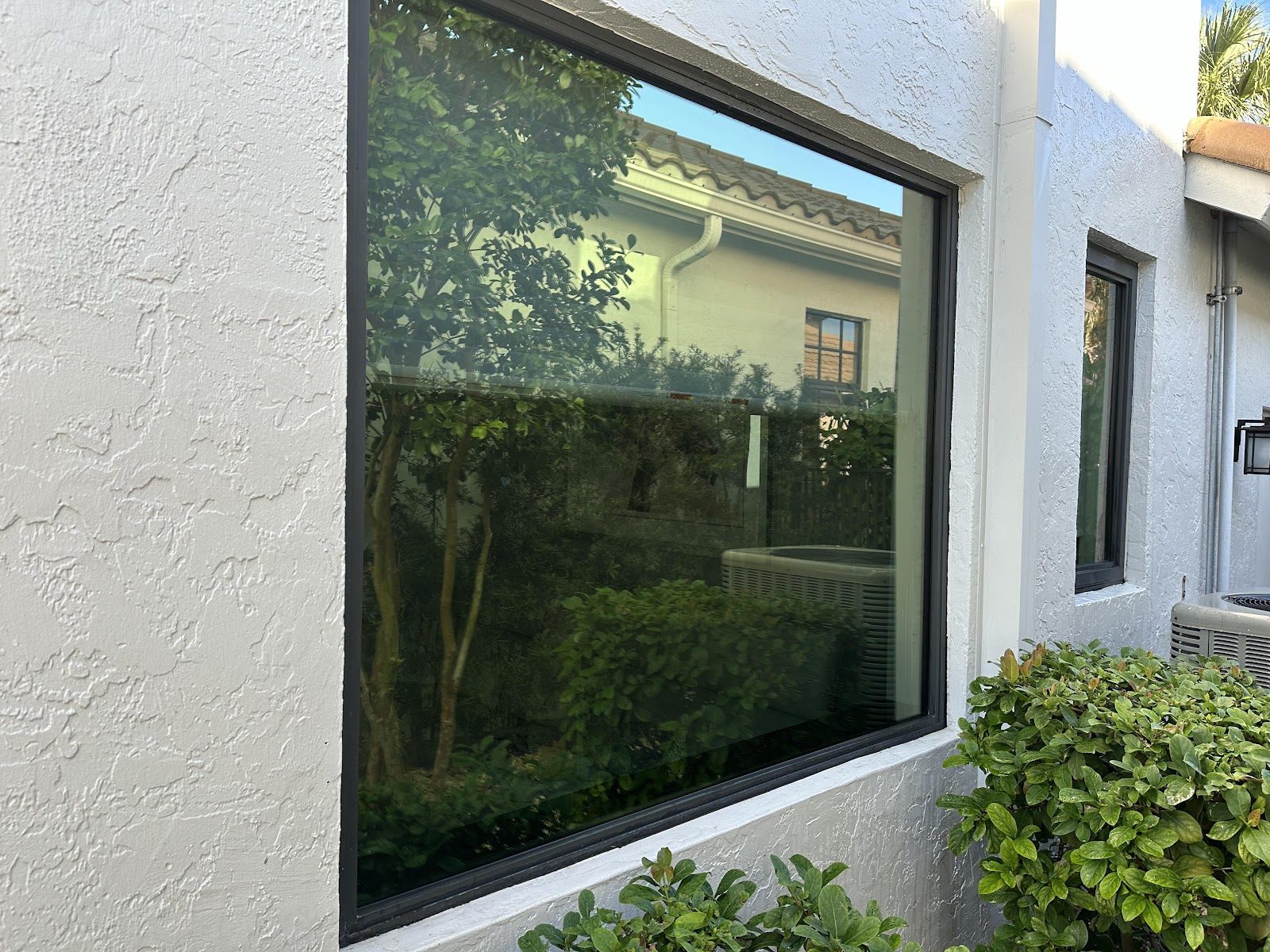
- Oceanfront and canal-front glass: every 6 to 8 weeks in the harshest exposures (this is effectively ISO C5-M coastal territory), longer for units set back from the water.
- Painted MiMo stucco and roofs: the shaded, slow-drying elevations green up first and set the schedule — typically an annual soft wash, more often on heavily shaded bay-facing walls.
- Commercial sidewalks and storefronts: a recurring cycle beats one-off rescue washes every time.
- Pool decks and travertine: clean as needed, reseal every 1 to 2 years because salt and sun break sealer down fast out here.
Every wash is backed by our 48-hour re-wash guarantee — if something didn't come clean, we come back. No damage, no streaks, no shortcuts.
Get a free quote for your North Beach property
Whether it's a single MiMo condo, a full building along Collins, a 71st Street storefront, or a Normandy Isles canal home, Moppey matches the method to the surface and carries the coverage this end of the island expects. Call +1 877-754-5614 for a free quote — most are answered the same day. Hablamos Español.