Local guide
Exterior cleaning in Virginia Key: the complete guide
Exterior cleaning on a barrier island: what makes Virginia Key different
Virginia Key is not a typical Miami neighborhood, and it does not get typical exterior cleaning. This is a barrier island sitting in the middle of Biscayne Bay, connected to the mainland by the Rickenbacker Causeway, and almost every structure here lives with full salt-air exposure on multiple sides. There is no inland buffer. The property stock leans heavily institutional, marine, and recreational rather than single-family residential: the University of Miami's Rosenstiel School of Marine, Atmospheric, and Earth Science; the Miami Seaquarium; the historic Miami Marine Stadium; Historic Virginia Key Beach Park with its pavilions and picnic shelters; the Rickenbacker Marina; NOAA and National Marine Fisheries facilities; and the long bayfront strip at Hobie Beach where windsurfers and sailors launch. That mix shapes what actually needs cleaning here, and how it has to be done.
If you own, manage, or maintain anything on Virginia Key — a marina building, a research or office structure, a waterfront pavilion, a boat storage or dry-stack facility, a concession or event venue, or one of the few residential parcels near the causeway — the cleaning problems you face are salt-driven first and biological second. That is the reverse of most inland Miami neighborhoods, and it changes the priority order of the work.
The salt problem is the whole story out here
Coastal Miami sits in an ISO C5-M corrosion category — the most aggressive salt-air rating short of fully submerged. On Virginia Key, with water on every side and near-constant onshore wind off the bay, you are living at the top of that range. Salt does three things to exterior surfaces, and all three are visible here:
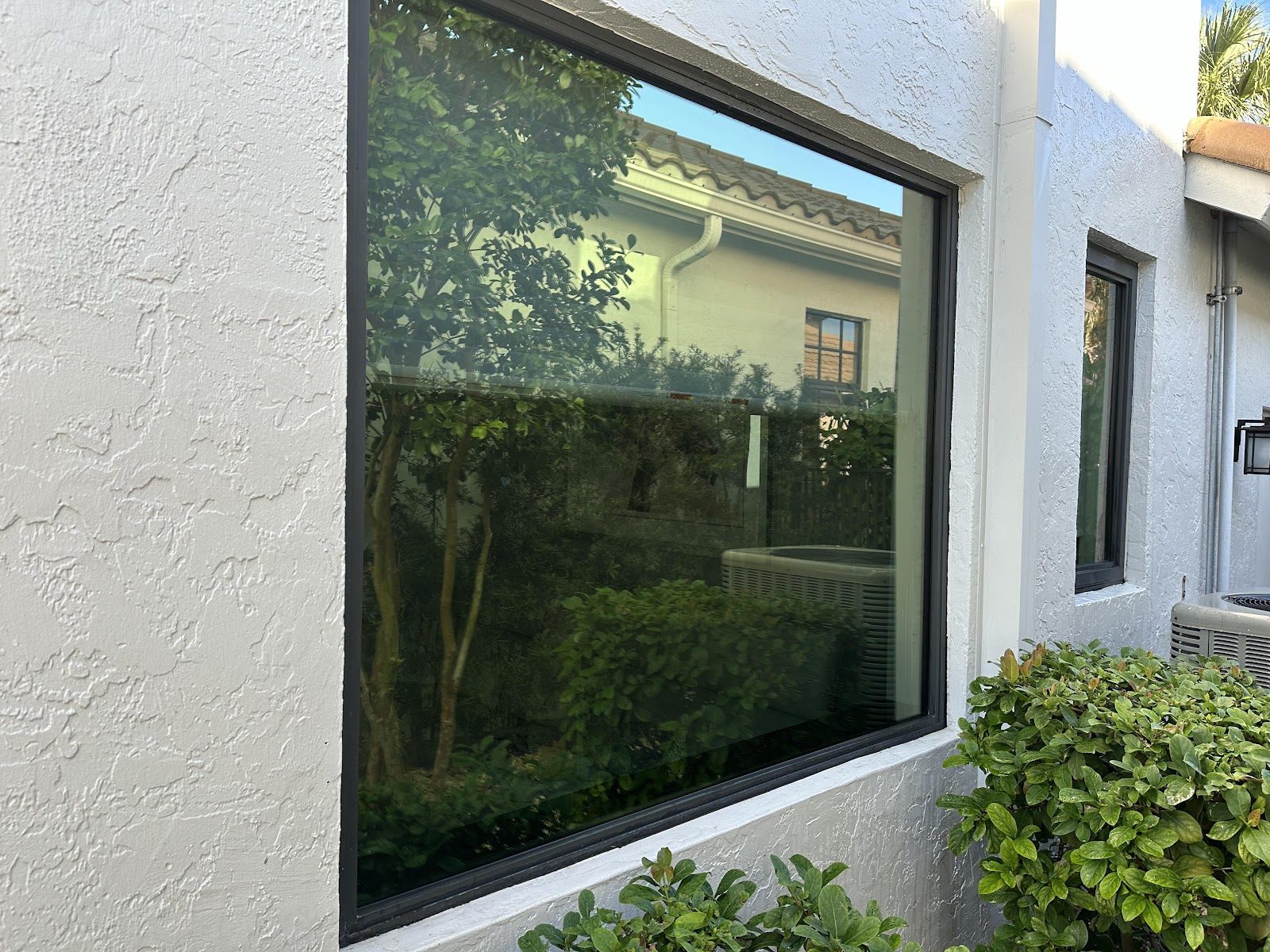
- It etches glass. Airborne salt film bakes onto windows, storefront glazing, and glass railings, then micro-pits the surface if it is left to sit. Waterfront glass on the island clouds far faster than glass a few miles inland. We recommend coastal-exposure glass on the bay side be cleaned every 6 to 8 weeks, not on a twice-a-year schedule.
- It rusts and streaks metal. Aluminum railings, steel fasteners, marina hardware, light poles, HVAC cabinets, and metal awnings all corrode faster here, and rust bleed runs down onto concrete and stucco below. Rinsing salt off metal on a routine cycle is genuinely protective maintenance, not cosmetics.
- It loads up on every horizontal surface. Pavilion roofs, boardwalks, boat-launch aprons, and pool or splash-deck areas collect a salt-and-grit crust that grinds underfoot and holds moisture against the surface.
The right response is frequent, gentle salt rinsing combined with proper soft washing — not brute-force pressure. Blasting salt-etched glass or corroding metal with high PSI accelerates the damage. The method has to match the surface, every time.
Then the biology: algae, mold, and roof streaking
Miami's heat, humidity, and daily summer rain grow mold and algae on almost any shaded exterior, and Virginia Key's tree canopy near the beach park and along the mangrove edges makes it worse in the low, damp spots. Two things show up constantly:
- Black roof streaks are Gloeocapsa magma, a hardy algae that feeds on the limestone filler in shingles and spreads across north- and shade-facing slopes. It is not dirt and it will not rinse off. It needs a soft-wash treatment that kills the organism at the root. High pressure on a shingle roof strips granules and voids most manufacturer warranties, so any roof here — pavilion, outbuilding, or residence — gets soft washed under low pressure, never power-blasted.
- Green and gray growth on stucco, concrete, and pavers takes hold on shaded walls, north elevations, and anything close to irrigation or standing water. Soft washing under 500 PSI with plant-safe chemistry lifts it without gouging the surface or harming the landscaping — which matters a lot on an island that is part working nature preserve and part active research campus.
Concrete, pavers, travertine, and the pool-deck reality
Hardscape takes a beating on Virginia Key. Salt crust, foot traffic from beachgoers and event crowds, tire marks from boat trailers, and constant moisture leave concrete aprons, paver walkways, and pool or splash decks looking tired fast. A few local specifics:
- Efflorescence — the chalky white haze that blooms on pavers, concrete, and block near the water — is salt migrating out of the masonry, driven hard by this environment. It has to be treated before any sealing; seal over efflorescence and you lock the haze in permanently. This is a common and expensive mistake out here.
- Travertine, popular on upscale pool decks and patios, is soft and porous. It cannot take aggressive pressure or the wrong chemistry without pitting and dulling. It needs a controlled, stone-appropriate clean.
- Paver and concrete flatwork benefits from a surface-cleaner pass at correct pressure to keep it even and streak-free, followed by re-sanding of joints where needed.
Hard water leaves its own mark
Miami draws from the Biscayne Aquifer and has the hardest tap water of any major Florida city — roughly 11 grains per gallon. On Virginia Key that means irrigation heads, hose bibs, and sprinklers throw mineral spray that dries into stubborn white spotting on glass, gutters, and painted surfaces. Combined with salt film, it is a double mineral load. Getting glass and light-colored surfaces truly clear here takes the right approach, not just more water.
Hurricane season and the pre-storm window
Hurricane season runs June 1 through November 30, and a fully exposed barrier island feels every storm. The smart maintenance window is April and May, before the season ramps up. Two reasons matter here specifically:
- Clean roofs shed water and wind-driven rain far better than roofs caked with algae and debris. Getting roofs, pavilions, and shelters cleaned pre-season is real storm prep.
- Clogged gutters overflow toward foundations. Virginia Key's palms and coastal trees drop fronds and litter that jam gutters and scuppers fast. Cleared drainage before the rains means water goes where it should instead of pooling against the structure.
Why Moppey is the right call for Virginia Key
We are a Miami exterior-cleaning specialist, and this island is exactly the kind of high-exposure, mixed-use waterfront environment our methods are built for. We handle pressure washing, soft washing, roof cleaning, driveway and paver and concrete cleaning, window cleaning, patio and pool-deck cleaning, gutter cleaning, fence and sidewalk cleaning, screen enclosures, awnings, and full storefront, HOA, and commercial exteriors. For the marina buildings, research and office facilities, pavilions, and event venues that define this island, we bring the proper equipment for larger and higher-access work, we carry insurance with a certificate of insurance available on request, and we send before-and-after photos so remote owners and property managers can see the result. Every job is backed by a 48-hour re-wash guarantee, we offer recurring maintenance plans that keep salt and algae from ever getting ahead of you, and hablamos espanol. No damage, no streaks, no shortcuts — the right method for the surface, every time.
To get a specific plan and a free quote for your Virginia Key property, call Moppey at +1 877-754-5614. We will walk the exposure, the surfaces, and the schedule that actually fits an island this close to the water.