In-depth guide
Dumpster Pad & Trash Area Cleaning in Miami: the complete guide
What Dumpster Pad and Trash Area Cleaning Actually Involves
Dumpster pad and trash area cleaning is a specialized corner of exterior cleaning that has almost nothing in common with washing a driveway or a patio. The concrete pad under and around your dumpster is a magnet for rotting food liquid, grease, "juice" leaking from bags, spilled cooking oil, and the biofilm that all of it feeds. In Miami's heat and humidity, that mix turns anaerobic fast, which is exactly why a neglected pad smells the way it does. The goal of a proper cleaning is not just to make the concrete look lighter. It is to break down and remove the organic load, kill the bacteria producing the odor, flush the area, and leave a surface that dries clean instead of staying tacky.
The correct method is a degrease-first, hot-water, controlled-runoff process:
- Pre-clear and dry sweep. Loose trash, cardboard, and debris get removed before any water touches the pad, so you are not just pushing garbage into a slurry.
- Degreaser application and dwell. A commercial-grade emulsifying degreaser is applied and given time to break the bond between grease and concrete. Skipping the dwell is the single most common reason a pad "still looks dirty" after washing.
- Hot-water pressure washing. Heat is what actually lifts grease. Hot water at controlled pressure emulsifies fats and oils that cold water simply smears around.
- Sanitize and deodorize. A hypochlorite-based sanitizing rinse kills odor-causing bacteria and knocks back the mold and algae that thrive on a wet, food-soiled slab in South Florida.
- Rinse and, where required, capture. The area is flushed and the wastewater is directed responsibly, which matters a great deal in Miami.
The Miami and South Florida Problems It Solves
Miami stacks several problems on top of each other that make dumpster areas dirtier and riskier than they would be in a dry climate. Year-round heat means organic waste decomposes and ferments continuously, not just in summer. Afternoon rain keeps the pad perpetually damp, and a damp, food-soiled slab is a breeding ground for mold, algae, and the same bacteria that cause the sour, sulfurous "dumpster smell." That standing biofilm is also what draws roaches, rodents, and flies, so a filthy pad is not a cosmetic issue for a Miami restaurant or HOA. It is a pest and health-code issue.
There is also a groundwater dimension that most property owners never think about. Miami sits on the shallow, porous limestone of the Biscayne Aquifer, the region's primary drinking-water source, and much of the ground is fed by rapid infiltration. Blasting grease, food waste, and bacteria straight into a storm drain or letting it sheet across a parking lot toward a swale is not just sloppy. It is a wastewater discharge problem that the county and the EPA treat seriously. A careful contractor keeps that in mind and manages where the dirty water goes rather than treating the whole thing as a hose-down.
What the Process Looks Like Step by Step
- Assessment. We look at the surface type, the level of grease and organic buildup, drainage direction, and access. A restaurant grease pit behind a strip mall gets a very different plan than a residential HOA trash corral.
- Coordination around collection day. The best result comes when the dumpster is empty or freshly serviced, so we can reach the whole pad, including the footprint the bin normally covers.
- Debris removal. Everything loose comes out first.
- Degrease. Emulsifier goes down on the pad, the apron, the wheel tracks, and the wall base, then dwells.
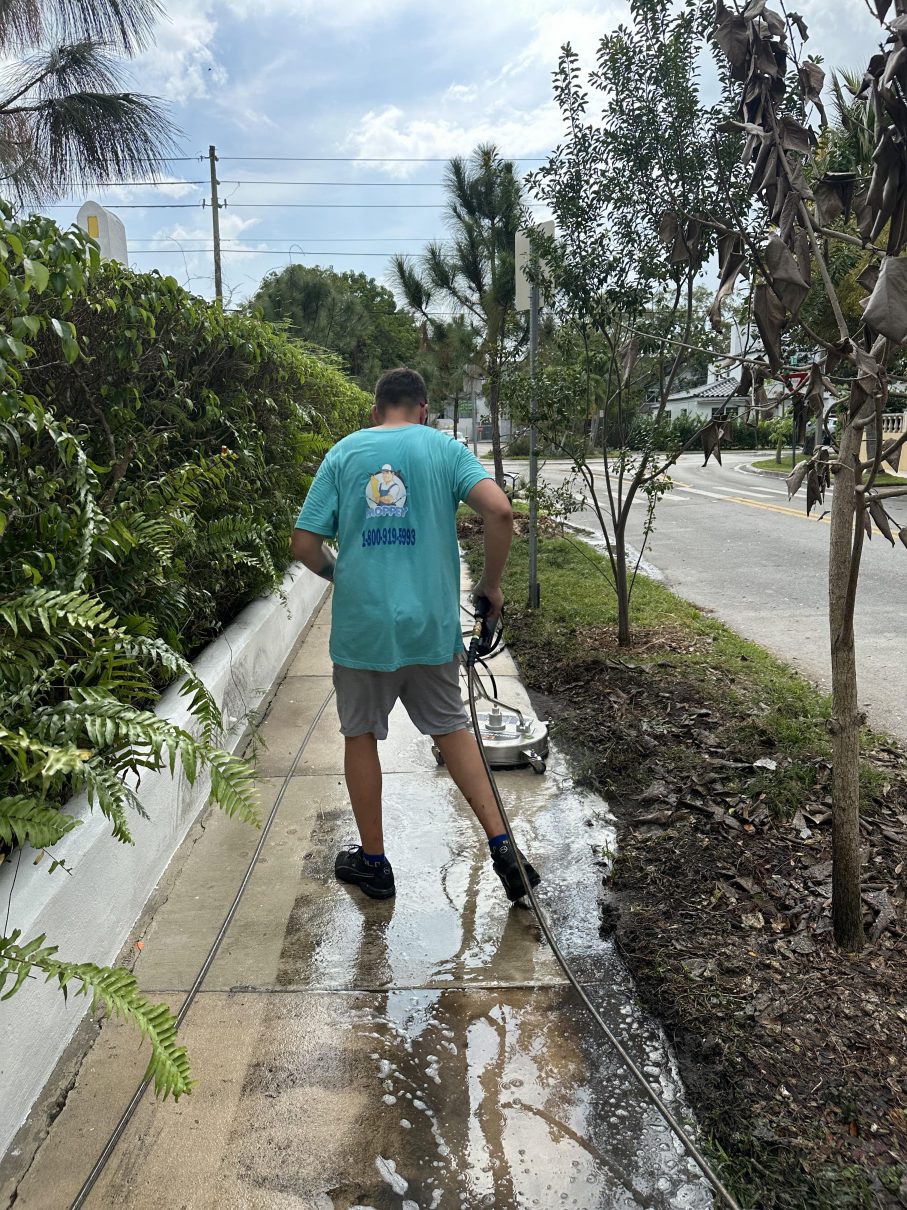
- Agitate and hot-wash. Surface cleaners and hot water lift the emulsified grease. Stubborn corners and seams get spot attention.
- Sanitize and deodorize. The whole zone is treated to neutralize bacteria and smell, not masked with fragrance.
- Controlled rinse and cleanup. The area is flushed, wastewater is managed, and the site is left ready to use.
Surfaces and Materials We Handle
Most dumpster enclosures in Miami combine several surfaces, and each one needs the right touch:
- Concrete pads. The workhorse surface. Handles hot water and firm pressure well, but old, spalling, or unsealed concrete has porous pits that trap grease and need degreaser dwell time rather than brute force.
- Asphalt aprons. Common where the pad transitions to a parking lot. Asphalt softens with excessive heat and pressure, so it is washed at lower pressure with the emulsifier doing the heavy lifting.
- Enclosure walls (stucco, block, CMU). Splatter climbs the walls behind and beside the bin. Stucco is soft-washed under low pressure so the cleaning solution kills algae and staining without gouging the finish.
- Metal gates, posts, and bollards. Coastal salt air (Miami's environment rates near ISO C5-M for corrosivity) rusts steel fast, so we clean rather than blast, and avoid driving water into rust joints.
- Drains and grease traps in the immediate area. These get cleared and rinsed so the pad actually drains after cleaning instead of pooling.
What Drives the Cost
We never quote a flat number sight unseen because honest pricing depends on what is actually in front of us. The real cost factors are:
- Size and number of pads. A single residential corral is nothing like a multi-bin commercial compactor area.
- Condition and buildup. Years of baked-on grease and a thick biofilm take more degreaser, more dwell, and more passes than a lightly soiled pad.
- Surface type and porosity. Rough, unsealed, or spalling concrete holds grease and takes longer.
- Access. Tight enclosures, locked gates, high-rise chute rooms, or pads you can only reach around parked cars all add labor.
- Water and wastewater management. Jobs that require water reclamation or careful runoff control are more involved than an open lot with a proper drain.
- Frequency. A pad on a recurring plan stays cheaper per visit than a once-a-year emergency deep clean.
How Often to Schedule It in Miami
Miami's climate pushes dumpster areas toward more frequent service than cooler regions. As a general guide:
- Restaurants, food service, and grocery: monthly is the realistic baseline, and high-volume kitchens often go every two weeks. Grease and food waste in this heat do not wait.
- Retail, office, and mixed-use: monthly to quarterly depending on tenant mix and how much organic waste hits the bin.
- HOAs and residential communities: quarterly is a sensible starting point, tightened up if a corral sits in full sun or near units.
- Pre-inspection or pre-event: an as-needed deep clean before a health inspection, a property tour, or hurricane season.
Between professional cleanings, the area stays better if bags are tied, the dumpster lid stays closed, and obvious spills get hosed promptly. A recurring maintenance plan is genuinely the best value here, because it prevents the grease from ever reaching the baked-on stage that requires an expensive rescue clean.
How It Compares to DIY and a Rental Machine
A hardware-store rental pressure washer is the wrong tool for this job, and the reasons are specific:
- No heat. Almost all rental units are cold-water only, and cold water cannot emulsify grease. You end up polishing the slab wet without removing the actual problem, and the smell returns in days.
- No real degreaser or sanitizer. A pad that is not chemically treated and deodorized still harbors the bacteria that cause odor and attract pests.
- Runoff you are now responsible for. Sheeting grease-and-bacteria water toward a Miami storm drain is a discharge you would not want your name on. Professionals plan for it.
- Exposure. Rotting food waste, sharps, and biohazards in a trash area are not something to handle without the right gear and precautions.
The difference between a proper job and a rental hose-down is the difference between a pad that is genuinely clean and deodorized versus one that looks briefly wet and smells worse a week later.
Signs You Need Dumpster Pad Cleaning
- A persistent sour, sweet-rotten, or sulfur smell near the enclosure, even when the bin is empty.
- Dark grease staining spreading out from under the dumpster.
- A sticky or tacky film on the concrete that never seems to dry.
- Roaches, rodents, or clouds of flies around the corral.
- Green or black algae streaking on the enclosure walls.
- A pending health inspection, tenant complaints, or an HOA board that has had enough.
Why a Careful Professional Wins Here
Dumpster area cleaning rewards method over muscle. It takes the right degreaser, real heat, a sanitizing step, the discipline to let chemistry do its work, and the judgment to protect Miami's groundwater while doing it. Moppey does exterior cleaning only, we bring plant-safe and surface-appropriate chemistry, we can provide a certificate of insurance on request, and we build recurring maintenance plans that keep these areas from ever getting out of hand. No damage, no shortcuts, and a pad that is actually clean, not just wet.
Ready for a genuinely clean, deodorized trash area? Call Moppey Spottless Clean Pros for a free quote at +1 877-754-5614.