Moppey Spottless Clean Pros
Garage floor and driveway pressure washing in Miami

Rated 5★ · 43 reviews

Garage Floor Cleaning Miami, FL

Degrease the oil map, scrub off the tire marks, and get back a garage floor you would not mind walking across barefoot.

Serving Miami & surrounding South Florida

Rated 5★ · 43 reviewsFully InsuredResidential & CommercialSoft Wash SafeHablamos Español

The Miami problem

Why garage floor cleaning matters in Miami

Your garage floor takes a beating no other surface in the house does. Hot tires pull up rubber and lay down black scuff lines. A car that leaks even a little turns one drip into an oil map you learn to park around. Road salt and coastal grime rinse off the underbody and dry into pale rings, and because the garage is covered, none of it ever gets washed away by the rain. It just layers up, year after year, until the concrete looks permanently gray.\n\nMoppey cleans garage floors the way the buildup actually needs, and it is almost never a pressure problem first. Oil and grease are a chemistry problem, so we degrease the stains and let the solution break the oil down before any water touches them. Then a surface cleaner evens out the whole slab so you get one consistent shade instead of a clean patch here and a dark patch there.\n\nThe enclosed part is the real trick. We are working inside your garage, not out in the open, so we manage where the water goes, contain the runoff, and mind the threshold and anything you have stored along the walls. You end up with a floor that looks reset, not a garage that now needs mopping out.

What’s included

What our garage floor cleaning covers

  • Full garage floor cleaned corner to corner, including the tire tracks, the center oil zone, and the dark strip along the door threshold
  • Oil and grease spot treatment with a degreaser worked into each stain and given time to break down the oil before rinsing
  • Tire mark and hot-tire rubber scuff removal from the parking path
  • Surface-cleaner pass on the concrete for an even finish with no wand stripes or missed lanes
  • Salt residue, road film, and underbody drip rings washed off the parking area
  • Rust and battery-acid stain treatment where present, treated rather than blasted
  • Efflorescence check for the chalky white haze that pushes up through a Miami slab
  • Runoff managed and directed toward the door or floor drain so water does not sit in the garage
  • Threshold, apron, and any stored items along the walls kept in mind and worked around
  • Final rinse, a squeegee-out where needed, and a walk-through of the results before we pack up

Our method

How we clean it safely

We start with the stains, not the pressure. Oil, grease, transmission fluid, and hot-tire rubber are the reason a garage floor looks bad, and none of them come off with water alone. We work a degreaser into each spot, give it real time to break the oil down, and lift it out instead of trying to muscle it off with raw PSI that would only push it around. Once the stains are treated, a flat surface cleaner, a spinning-bar attachment that holds an even distance off the slab, runs the whole floor so it comes out one consistent shade instead of the streaky look you get from waving a wand by hand.\n\nThe enclosed space changes how we work. In an open driveway water just runs to the street; inside a garage it has nowhere to go unless we send it there, so we plan the runoff toward the door or an existing floor drain and keep it moving out rather than pooling. We watch for efflorescence, the chalky white haze that surfaces on Miami slabs as moisture wicks up through the concrete, because it needs to be handled before any coating goes down. If your floor is already sealed or epoxy-coated we adjust the pressure so we clean it without chewing up the finish, and if you are thinking about sealing or coating a bare floor afterward, that is a separate step we can talk through, not something we rush on top of a still-damp slab.

Soft wash vs pressure wash

Bare broom-finish concrete handles real pressure well, and a surface cleaner is the right tool for an even result. Sealed, painted, or epoxy-coated garage floors need lower pressure so we lift the grime without cutting into the coating, and set-in oil should always be degreased and treated first, because on a garage floor the stain is the whole job and no amount of raw pressure gets it out on its own.

Best for

Who this service is for

  • Garage floors gone gray and grimy from years of parking, with no rain to ever rinse them
  • Concrete with a set-in oil, grease, or transmission-fluid stain from a car that leaks
  • Floors marked up with black tire scuffs and hot-tire rubber pickup
  • Homeowners prepping to sell, where an open garage door shows a clean floor to buyers
  • Parking pads and carports that catch salt-air drip and road film off the underbody
  • Bare floors being prepped before an epoxy coating or sealer goes down
  • HOA, condo, and property-manager parking areas that need a consistent, clean look

Miami surface insight

Miami's coastal air works against a garage floor even with the door shut. Salt drips off the car underbody and dries into pale rings, and because the space is covered, nothing ever rinses it away the way rain clears an open driveway, so it builds up unnoticed for years. The region's humidity drives the other problem from below: moisture wicks up through the slab and surfaces as efflorescence, that chalky white bloom on the concrete, which is why so many Miami garage floors haze over and why a coating fails if it goes down over an untreated slab. And with Miami running the hardest tap water of any major Florida city, roughly 11 grains per gallon from the limestone Biscayne Aquifer, any water left to sit and evaporate leaves its own mineral film behind. The floor is not just dirty, the climate is loading it up from both sides.

Insured — COI on request
Plant-safe soft washing
Before & after photos
Satisfaction guarantee

In-depth guide

Garage Floor Cleaning in Miami: the complete guide

Garage floor cleaning is a different job than "garage cleaning"

Search "garage cleaning Miami" and most of what comes back is organizing and junk removal — crews that box up your clutter, install shelving, and give the floor a quick sweep and mop on the way out. That is a useful service, but it is not what happens to the concrete. A broom and a household mop move the loose dirt around. They do nothing about the oil that has soaked into the pores of the slab, the rubber baked onto the parking path, or the mineral film Miami's water leaves behind. Those are the things that make a garage floor look permanently gray, and they only come out with degreasing chemistry and a proper surface-cleaner pass.

Moppey does the floor itself — the concrete slab, corner to corner — as an exterior cleaning job, not a tidy-up. If you also need the space cleared and organized, that is worth doing, but understand it is a separate trade. What we deliver is the reset on the concrete: the stains treated at the source, the whole slab brought to one even shade, and the runoff managed so you are not left with a wet garage. When those two services are confused, homeowners end up paying for organizing and wondering why the floor still looks dingy. The floor was never the organizer's job.

What is actually staining your Miami garage floor

Concrete is porous, so a garage floor is not so much dirty on top as it is loaded up from within. Knowing which contaminant you are dealing with is what tells us how to treat it, because they do not all respond to the same thing:

  • Petroleum oil and grease — engine drips, transmission fluid, gear oil. These sink into the pores and are a chemistry problem first. Water alone, at any pressure, just spreads them. A penetrating degreaser has to break the oil down and float it out before rinsing.
  • Hot-tire rubber and scuff — tires heat up while driving, soften slightly, and deposit rubber onto the parking path along with the black marks from turning the wheel. This is a physical film that needs the right cleaner and agitation, not raw PSI that would scour the concrete.
  • Rust staining — from a rolling toolbox, a floor jack left in one spot, patio furniture, or rebar too close to the surface. Rust is iron oxide and needs a mild acid or oxalic treatment, never a wire wheel that grinds it deeper.
  • Battery acid and brake fluid — these etch and discolor. They are treated and neutralized, not blasted, because the damage is chemical, not just cosmetic.
  • Efflorescence — the chalky white bloom that pushes up through the slab as moisture wicks through the concrete and evaporates on the surface. Extremely common on Miami floors and, critically, a sign of vapor moving through the slab.
  • Hard-water mineral film — anything wet that sits and evaporates on the floor leaves minerals behind, and Miami's tap water is the hardest of any major Florida city.

A good clean identifies each of these before touching the floor, because the treatment for oil actively works against the treatment for rust, and blasting efflorescence with pressure accomplishes nothing while missing the moisture problem underneath.

The slab-moisture problem competitors never mention

Here is the piece that generic garage-cleaning listings leave out entirely, and it is the single most important thing about a Miami garage floor: the concrete is sitting on ground that is rarely far from water.

Miami sits on the Biscayne Aquifer, the water table is shallow, and the humidity is relentless. That means moisture is constantly moving up through a slab-on-grade garage floor from below — a process called vapor drive. On the surface it shows up as efflorescence and that persistent hazy gray look that comes right back after a quick mop. More importantly, it is the reason garage floor coatings fail in this region. If someone lays epoxy over a slab that is actively pushing moisture up, the vapor pressure eventually lifts the coating off in sheets, no matter how well the epoxy was mixed. This is not a product defect. It is a moisture-management failure that started before the coating went down.

That is why the honest sequence for a Miami floor is: clean and degrease first, deal with any efflorescence, and only then evaluate whether the slab is a good candidate for sealing or coating — ideally with a moisture check. A clean, sound, dry slab is the whole point of the cleaning; what you put on top of it afterward is a decision made from a position of knowing what the slab is doing, not a rushed add-on over a still-damp floor.

How a professional garage-floor clean actually runs

The order of operations matters more than the horsepower. A rushed crew that leads with pressure ends up pushing oil around and leaving wand stripes. Here is what a proper job looks like:

  1. Walk and assess. Identify each stain type — oil zones, tire path, rust points, efflorescence, any coating already on the floor — and confirm where water can exit (door threshold, apron, or an existing floor drain).
  2. Clear and protect. The car comes out and the floor gets cleared as much as possible. Items along the walls are worked around, and the threshold and anything stored is kept in mind.
  3. Spot-treat the stains. Degreaser worked into each oil and grease stain and given real dwell time to break the oil down. Rust and battery-acid points treated separately with the appropriate chemistry.
  4. Surface-clean the whole slab. A flat surface cleaner — a spinning-bar attachment that holds an even distance off the concrete — runs the entire floor so it comes out one consistent shade instead of a patchwork of clean spots and wand lanes.
  5. Manage the runoff. In an open driveway water runs to the street on its own. Inside a garage it goes nowhere unless it is directed, so the runoff is kept moving toward the door or drain rather than pooling, and low spots are squeegeed out.
  6. Final rinse and walk-through. A last rinse, a squeegee where needed, and a look at the result together before packing up.

On a bare broom-finish slab that surface-cleaner pass can run at real pressure. On a sealed, painted, or epoxy-coated floor the pressure comes down and the cleaning solution does more of the work, so the grime and tire marks lift without cutting into the finish.

What drives the cost of a garage floor cleaning

There are no flat prices worth quoting sight unseen, because two garages the same size can be very different jobs. The factors that actually move the number:

  • Square footage — a single-bay, a two-car, or a three-car floor is the baseline, but it is only the starting point.
  • Stain load and age — a floor with one fresh drip is quick; a floor that has been feeding oil into bare concrete for a decade needs more dwell time and passes.
  • Surface type — bare concrete, sealed, painted, or epoxy-coated each changes the method and the care required.
  • Access and drainage — whether there is a floor drain, how the threshold sits, and how easily runoff can be sent out.
  • How much has to move — a floor cleared to the slab cleans faster and more evenly than one we have to work around.
  • Add-ons — treating rust or efflorescence, or prepping specifically for a coating, is more involved than a straight wash.

A photo of the floor and any specific stains lets us give a real number fast, which is why the quote is free and most are answered the same day.

How this compares to doing it yourself

A weekend with a rented pressure washer and a jug of degreaser can absolutely improve a garage floor, and for a lightly used slab it may be enough. Where the rental route falls down is on the two things that make a Miami garage floor look bad:

  • Even results. Waving a wand by hand leaves stripes and clean patches — the "zebra" look. A flat surface cleaner is what produces one consistent shade, and it is not something most rentals include.
  • Set-in stains and runoff. Consumer degreasers and short dwell times barely touch oil that has soaked in for years, and a rental gives you no plan for where the water goes inside an enclosed space, so people flood the garage and push grime into stored items.

A careful professional is not just renting you more horsepower. It is the right chemistry with the right dwell time, the surface-cleaner finish, and — the part that matters most indoors — a runoff plan so you get a reset floor instead of a wet, streaky one. On a coated floor, the case is even stronger: too much pressure from an unfamiliar rental can chew straight through epoxy in seconds.

When to schedule it, and keeping the floor clean

Because a garage is covered, rain never rinses it, so buildup is entirely a function of how often the floor gets cleaned. For most Miami homes once a year keeps it looking sharp. Clean more often if a car leaks, if you track in salt and road film, or if the garage doubles as a workshop. A few habits stretch the result between cleanings:

  • Wipe fresh oil and fluid drips as soon as you see them — a fresh spot comes up far easier than a soaked-in one.
  • Put a mat or a drip tray under a car you know leaks.
  • Keep water from sitting and evaporating on the floor, since that is what leaves mineral film.
  • If you are considering a coating, get the slab professionally cleaned and its moisture behavior understood first — that decision is far cheaper to get right before the epoxy than after it peels.

The best window to book, like most Miami exterior work, is spring before hurricane season, when you may already be having the driveway, roof, and gutters handled and can fold the garage floor into the same visit.

Moppey cleans garage floors, driveways, and concrete across Miami and South Florida — residential and commercial, with runoff managed, no wand stripes, and an honest read on what your slab will and will not do. For a free quote, call +1 877-754-5614 or send a photo of your floor through the quote form. Most quotes are answered the same day, and hablamos espanol.
Recent work

Real Moppey results

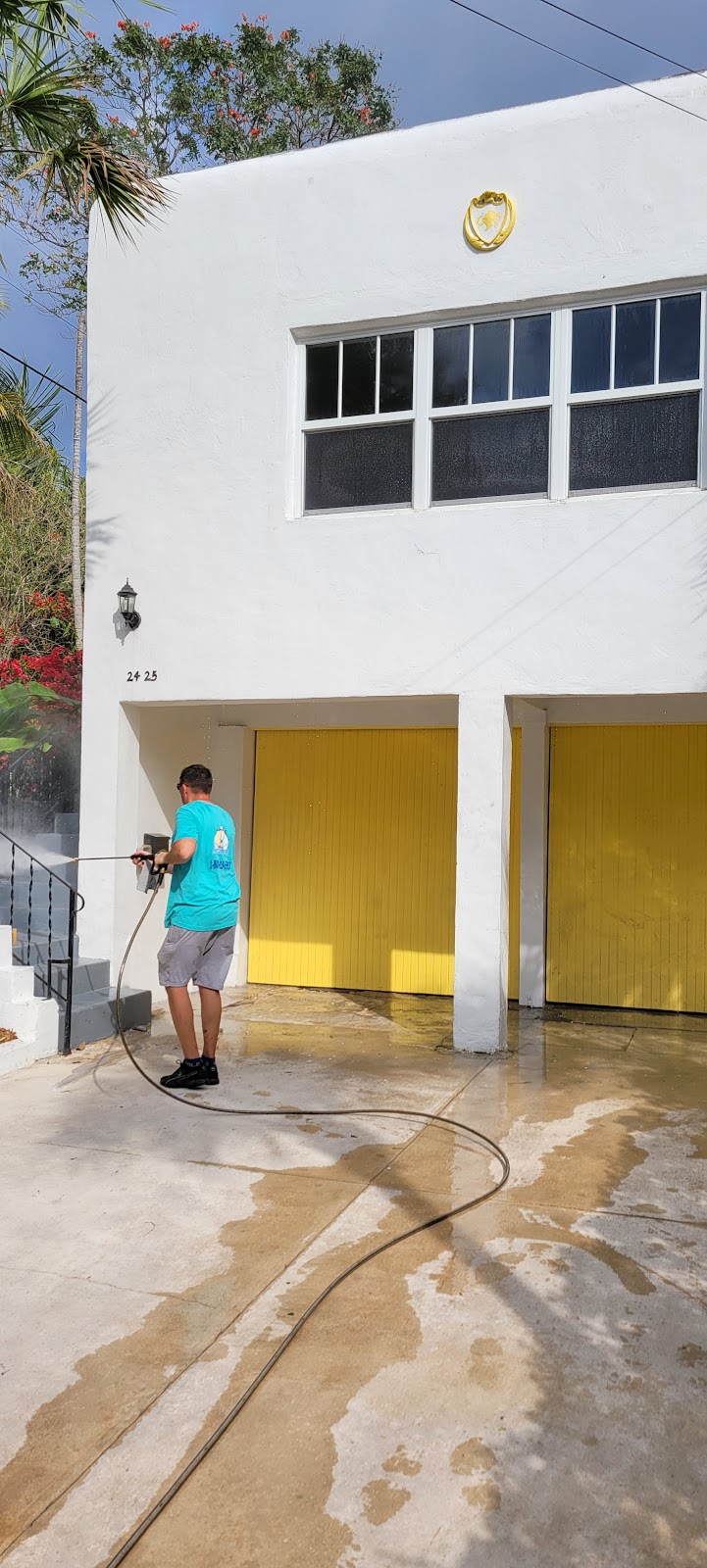
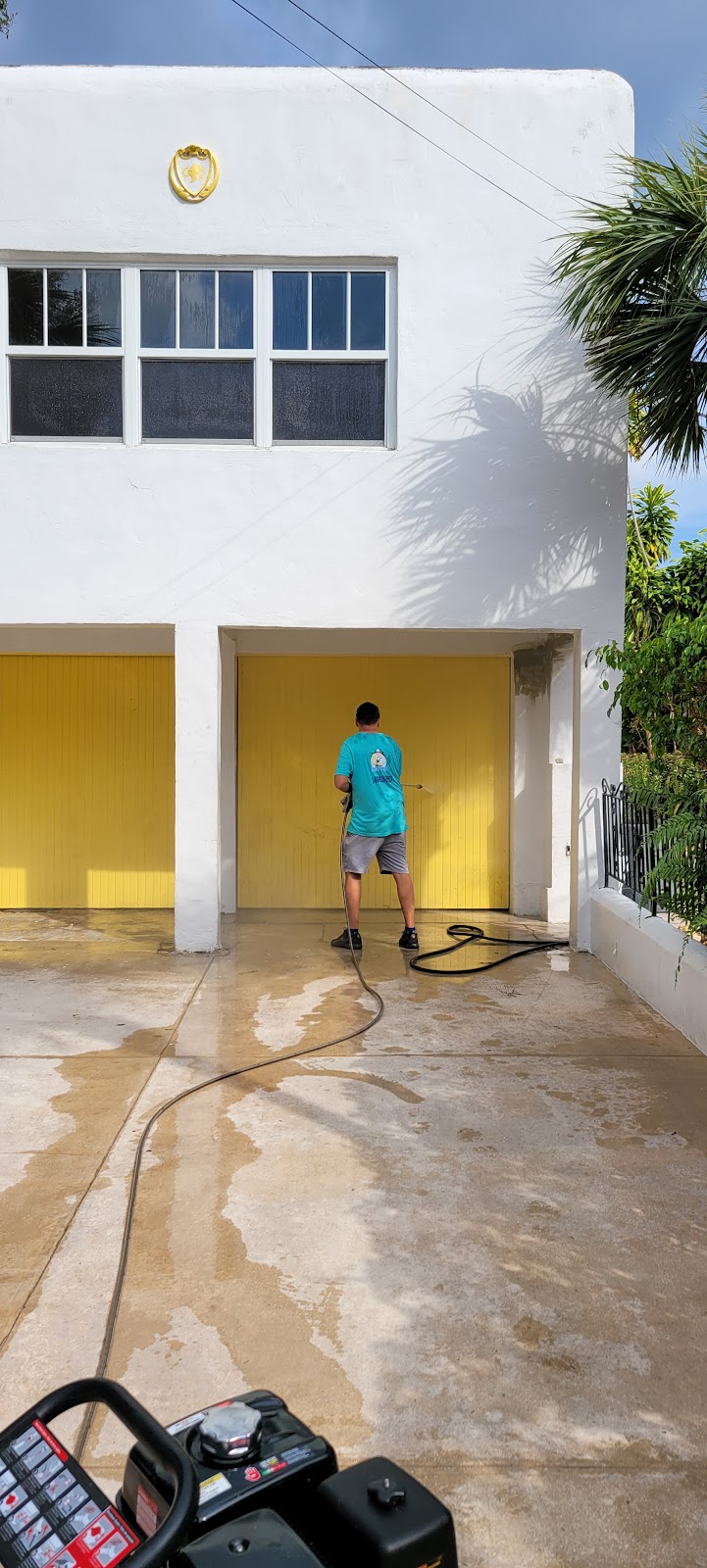
Garage floor and driveway pressure washing in Miami
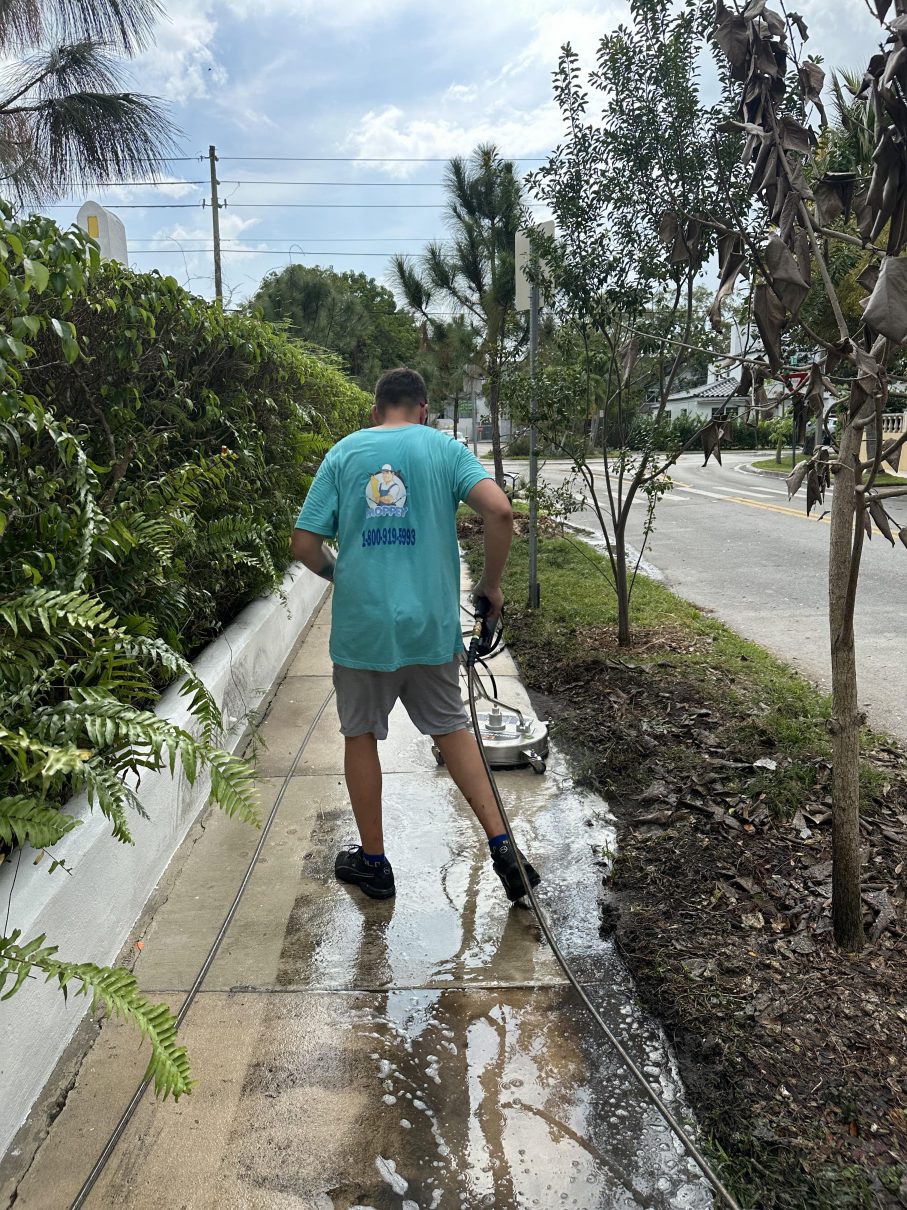
Moppey technician pressure washing a Miami walkway with a surface cleaner
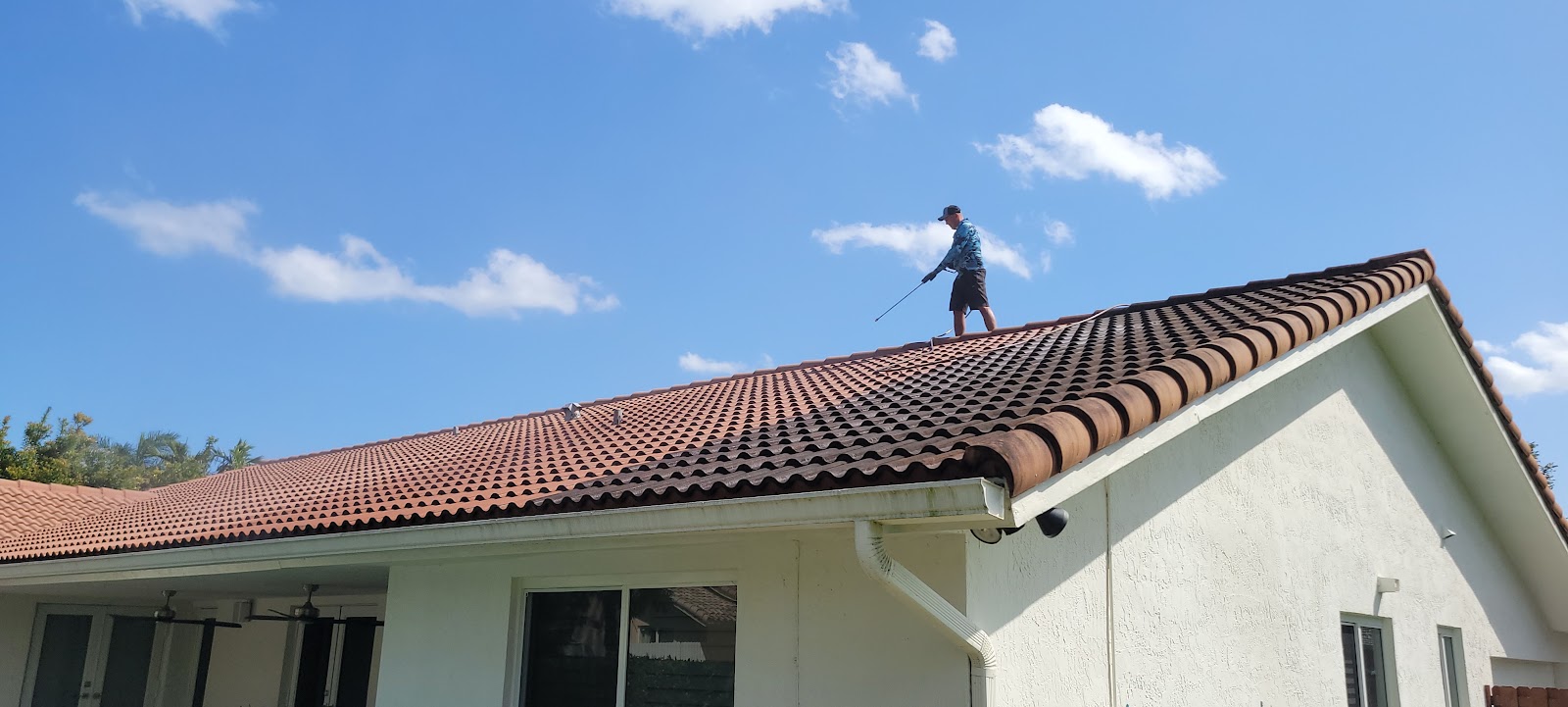
Soft washing a Miami barrel-tile roof
Freshly cleaned Miami driveway

Social proof

What customers say

I had a very last-minute request to clean my roof that I thought needed to be changed, but I was amazed with the work quality the Moppey team provided. It appears our roof only needed a good cleaning — it looks like new! Excellent customer service. I definitely recommend Moppey.
Audrius G.Roof Cleaning Verified Google review
100% recommend! I was only going to have my windows cleaned but they did such a good job I also included my patio and the driveway. They are very precise with every detail.
Jaime L.Windows • Patio • Driveway Verified Google review
Wonderful experience dealing with Moppey Spotless Clean Pros. Very professional and their pricing was extremely competitive. Will definitely use them again and recommend to my family and friends!
Melissa SanchezExterior Cleaning Verified Google review

Good to know

Garage Floor Cleaning FAQs

Most of the time we can lift them a lot, and often completely, but it depends on how long they have soaked in. We work a degreaser into the stain, give it time to break the oil down, then clean it out rather than just pressure washing over it. Fresh spots come up cleaner than ones that have been feeding into bare concrete for years, and very old, deep stains may lighten dramatically rather than disappear entirely. We will look at yours and tell you honestly what to expect.

That is the part we plan for. Unlike an open driveway where water just runs to the street, a garage floor needs the runoff directed, so we send it toward the door or an existing floor drain and keep it moving out instead of pooling. We squeegee out low spots where needed so you are not left with water sitting in the garage.

Yes. On a sealed, painted, or epoxy-coated floor we drop the pressure and lean on the cleaning solution so we lift grime and tire marks without cutting into the finish. Bare concrete can take a surface cleaner at real pressure; a coated floor cannot, and we adjust to whichever you have.

That is usually efflorescence, a mineral bloom that surfaces as moisture wicks up through the slab, which is common on Miami floors because of the humidity. It needs to be treated, and it matters most if you are planning to seal or coat the floor, since a coating will not bond well over untreated efflorescence. We check for it and handle it as part of the clean.

Cleaning and degreasing is exactly the prep an epoxy or sealer needs. We pull the oil, grease, and tire residue out and address any efflorescence so the coating has clean, sound concrete to bond to. We do not apply the coating ourselves, but we get the floor ready for it, and we will not rush that step on top of a still-damp slab.

Ideally clear the floor itself so we can clean the whole slab, and pull your car out. Things stored along the walls are usually fine to leave, and we work around them and mind the runoff, but the more of the actual floor we can reach, the more even the result. We can talk through what needs to move when we quote it.

For most homes once a year keeps it looking sharp, and more often if a car leaks, if you track in a lot of salt and road film, or if you use the garage as a workshop. Because the space is covered, nothing rinses it off on its own, so buildup is entirely up to how often it gets cleaned.

Get a free quote by phone at +1 877-754-5614 or through the quote form, and a photo of the floor and any specific stains helps a lot. Quotes are free, most are answered same day, and hablamos espanol if that is easier for you.

We clean the concrete floor itself — degreasing the stains, running a surface cleaner across the whole slab, and managing the runoff. Organizing, shelving, and junk removal are a different trade that a lot of "garage cleaning" companies bundle together. We focus on the floor because that is the pressure-washing job: the oil, tire marks, and mineral film that a broom and mop can't touch. If you need the space cleared first, that is worth doing separately, and the more of the actual slab we can reach, the more even the result.

That is almost always a mix of ground-in film in the porous concrete and efflorescence — minerals wicking up through the slab from below. A household mop just moves surface dirt around; it doesn't reach into the pores or address the moisture pushing up from underneath, which is very common on Miami slabs sitting over a shallow water table. Degreasing and a proper surface-cleaner pass reach the film a mop can't, and we check for efflorescence as part of the job so you know what's actually driving the haze.

Yes, and these have their own considerations. Parking structures have engineered drainage and often sit above occupied space, so runoff has to be managed carefully and coordinated with the building. Elevated decks and shared garages also usually need proof of liability and workers' comp on file with the HOA or property manager, which we can provide. Send us the layout and the management contact and we'll scope it properly rather than treating it like an open driveway.

In Miami it's usually not the epoxy itself — it's moisture. Our slabs sit over the shallow Biscayne Aquifer in constant humidity, so vapor drives up through the concrete, and when a coating goes down over a slab that's actively pushing moisture, that vapor pressure eventually lifts the coating off in sheets. It's a moisture-management failure, not a bad product. Cleaning and degreasing gets you back to sound concrete; whether it should be recoated depends on getting the slab's moisture behavior checked first, which we'll be honest with you about.

No — if anything a proper clean improves grip on bare concrete by clearing off the oily film and any algae that had made it slick. The thing to watch is a coated or sealed floor, which can be slippery when wet regardless of cleaning; if that's a concern, a non-slip additive is something to consider at coating time, which is a separate step we can point you toward. Bare broom-finish concrete comes back with its natural texture and traction intact.

Rust and battery-acid marks are treatable — they need the right chemistry rather than a wire brush or raw pressure, so rust gets a mild acid or oxalic treatment and acid marks get neutralized. Dried paint and very deep, old chemical stains sometimes lighten a lot rather than vanish completely, since concrete absorbs them. We'll look at what you've got and tell you honestly what will come out clean versus what will improve but not disappear entirely, before we start.

Before, always — cleaning and degreasing is the prep a coating needs to bond, not something you do over the top of it. We pull the oil, grease, and tire residue out and address any efflorescence so a coating has clean, sound concrete to grip. We don't apply the coating ourselves, and we won't rush that prep on a still-damp slab. In Miami it's also worth having the slab's moisture checked before you commit to epoxy, since that's the number-one reason coatings fail here.

Get your free garage floor cleaning quote

Tell us what needs cleaning and we’ll help you choose the right service — from roof stains and driveway grime to windows, patios, balconies and commercial walkways.

Fast free quotes — most answered same day · Hablamos Español

Call NowGet QuoteDirections