Moppey Spottless Clean Pros
Cleaning a Miami exterior wall — graffiti removal

Rated 5★ · 43 reviews

Graffiti Removal Miami, FL

Fast, damage-free graffiti and paint removal for Miami walls, fences, and storefronts — matched to the surface so nothing gets etched, ghosted, or shadowed.

Serving Miami & surrounding South Florida

Rated 5★ · 43 reviewsFully InsuredResidential & CommercialSoft Wash SafeHablamos Español

The Miami problem

Why graffiti removal matters in Miami

Graffiti is a problem with a clock on it. The longer a tag sits on a Miami wall, the deeper the paint cures into the pores, the more UV bakes it in, and the faster it invites a second one next to it. What could have lifted clean in one visit turns into a shadow that fights you. Speed is the whole game, which is why most graffiti calls get a same-day free quote.\n\nBut speed without the right method just trades one problem for another. Blast a spray-paint tag off soft stucco or limestone with a turbo nozzle and you win the paint back and lose the surface — you get a bright, etched halo exactly the shape of the tag, so now the building is marked in a different way. Solvent that eats paint can also strip a coating, dull a sealer, or ghost into porous brick. Graffiti removal is really a surface problem wearing a paint problem's clothes.\n\nMoppey removes graffiti by reading what it's on before we touch what's on it. Stucco, concrete, brick, painted block, metal, glass, and vinyl each take a different approach — the correct solvent or the correct pressure, never a one-size blast. The goal is a wall that reads clean, not a wall that trades a tag for a scar. No damage, no ghosting, no shortcuts.

What’s included

What our graffiti removal covers

  • Surface assessment first — identifying the substrate (stucco, concrete, brick, painted block, metal, glass, vinyl) and the paint type before any product touches it
  • Spray-paint tags, marker, and stencil work lifted from walls, fences, and commercial facades
  • Biodegradable, surface-matched graffiti removers applied and dwelled rather than blasted on raw
  • Soft washing on porous and coated surfaces where high pressure would etch or leave a halo
  • Controlled higher-pressure removal on durable bare concrete and masonry where the surface can take it
  • Shadow and ghost-stain reduction on porous stucco and brick where old tags have soaked in
  • Paint removal from metal roll-up doors, gates, dumpster enclosures, and electrical boxes
  • Glass and storefront window tag and etch-tag removal handled as a hand-detail, not a pressure job
  • Rapid-response scheduling for fresh tags, plus recurring cover for HOAs and commercial property managers
  • Runoff containment and a full rinse-down so no product, paint chips, or residue are left behind

Our method

How we clean it safely

We start by identifying two things: the surface and the paint. A fresh solvent-based spray tag on sealed concrete is a completely different job than aged marker soaked into raw stucco, and the product and pressure change accordingly. We test our remover on a small, low-visibility spot first, then apply a biodegradable graffiti remover matched to the substrate, give it real dwell time to break the paint's bond, and lift it — often at low pressure — rather than trying to grind it off dry. On porous stucco and brick we work in stages and stay patient, because forcing it is exactly how you end up with a permanent shadow.\n\nPressure is chosen to protect the wall, not to save time. Bare, durable concrete and hard masonry can take a controlled higher-pressure pass; soft stucco, coated block, limestone, painted surfaces, metal, and glass cannot, so those get soft washing and hand work. Where a tag has ghosted into a porous surface and won't fully release, we're straight about it up front and can talk through the honest options — a further treatment or, on painted walls, a color-matched recoat of that section — instead of chasing it with pressure until the wall is damaged. We contain runoff, protect nearby glass, landscaping, and painted trim, and rinse the whole area clean before we leave. Insured technicians throughout, which matters when the work is on a commercial facade or shared HOA wall.

Soft wash vs pressure wash

This is mostly a chemistry-and-soft-wash job, not a high-pressure one — on stucco, coated block, brick, metal, painted walls, and glass, blasting the paint off just etches a bright halo the shape of the tag and swaps graffiti for permanent surface damage. We save controlled higher pressure for bare, durable concrete and hard masonry that can genuinely take it, and let a surface-matched remover do the lifting everywhere else.

Best for

Who this service is for

  • Storefronts, roll-up doors, and commercial facades hit overnight and needing a fast turnaround
  • HOAs and property managers dealing with tagged perimeter walls, gates, and signage
  • Stucco and painted-block walls where a wrong-method removal would leave an etched shadow
  • Fences, dumpster enclosures, and utility boxes marked with spray paint or marker
  • Glass storefronts and windows with paint tags or etch tags that need careful hand removal
  • Warehouses, loading docks, and alley-facing walls that are repeat targets
  • Property owners who want a fresh tag gone before it invites a second one

Miami surface insight

Miami's climate works against graffiti removal in a specific way. Intense UV cures spray paint into the surface fast, so a tag that's a week old is already harder to lift than one caught the same day, and our humidity keeps porous stucco and brick damp enough that pigment wicks deeper into the pores. The city is also built on soft, porous materials — stucco over block, limestone, coral-stone accents — that halo and etch the instant someone over-pressures them, which is why the wrong crew often leaves a wall looking worse than the tag did. And because a visible tag statistically draws more tags, fast removal is genuinely the cheapest way to keep a Miami property from becoming a recurring canvas. Getting it off quickly, with the method the surface can survive, is the whole point.

Insured — COI on request
Plant-safe soft washing
Before & after photos
Satisfaction guarantee

In-depth guide

Graffiti Removal in Miami: the complete guide

Graffiti removal is a race between the paint and the surface

Every tag on a Miami wall starts a clock, and two things are racing. The paint is trying to cure — solvent flashing off, pigment binding to the substrate, UV crosslinking the resin into something permanent. The surface is trying to survive whatever gets used to fight the paint. Professional graffiti removal is the art of winning the first race without losing the second. Get it right and the wall reads clean. Get it wrong and you swap a spray-paint tag for an etched halo, a bleached shadow, or a stripped coating that costs far more to fix than the original vandalism.

That trade-off is the whole reason this is a specialist job and not a rental-machine job. The base method matters, but the deeper decisions — which solvent chemistry, how much dwell, whether the surface can even take pressure, whether to remove or recoat, and whether to protect the wall afterward so the next tag wipes off — are what separate a genuinely restored facade from one that just looks like a different kind of damage. This guide covers those decisions, the Miami-specific factors that make them trickier here than almost anywhere else in the country, and the parts of graffiti work most quotes never mention.

Not all "paint" behaves the same — reading the tag before you touch it

To a passerby, all graffiti looks like spray paint. To someone removing it, the medium underneath the color changes everything about the approach:

  • Solvent-based aerosol (the most common tag). Fast-drying, resin-heavy, and it grips hard once it flashes off. It responds well to a matched gel or solvent remover with proper dwell time, and it usually lifts cleanly if caught early.
  • Latex or water-based paint (rollers, buckets, "buff-overs"). Common when someone paints a large area or covers an old tag. It behaves differently from aerosol and can actually resist some solvents that dissolve spray paint instantly.
  • Permanent marker and paint pens. The pigment is tiny and dye-based, so it wicks deep into porous stucco and brick and leaves the worst ghost shadows of anything. Speed matters most here.
  • Two-part / industrial coatings and "etch tags." Some vandals use acid, glass-etching cream, or epoxy-based paint. Acid etching on glass is physical damage, not a stain — it can't be washed off and needs polishing or pane replacement, which is an honest conversation to have up front.

Identifying the medium is step one, before any product touches the wall, because the wrong remover can set a stain, drive it deeper, or waste the narrow window when a fresh tag would have lifted easily.

The removal-method decision, in plain terms

There is no single "graffiti method." The correct approach is a short decision tree built around the substrate, because the surface decides what the paint is allowed to survive:

  • Bare, durable concrete or hard masonry can genuinely take a controlled higher-pressure pass, sometimes with heat, after a remover has done the chemical lifting. These are the few surfaces where pressure earns its place.
  • Stucco, coated block, painted walls, and limestone or coral-stone accents cannot. Blast paint off soft stucco with a turbo nozzle and you win the paint and lose the surface — a bright, etched halo exactly the shape of the tag. These get a surface-matched remover, real dwell time, and low-pressure or soft-wash lifting.
  • Metal roll-up doors, gates, dumpster enclosures, and utility boxes need a remover that pulls the spray paint without stripping the factory coating underneath, plus low pressure so nothing dents or gets forced behind panels.
  • Glass and storefront windows are a hand-detail job — razor and solvent work, never a pressure job — and etch tags are handled honestly because a physically abraded pane is a repair, not a clean.

The pattern is consistent: chemistry does most of the work, patience does the rest, and pressure is chosen to protect the wall rather than to save the crew time. Working in stages on porous surfaces is not slowness — it is the only way to avoid a permanent shadow.

The part most quotes skip: anti-graffiti coatings and prevention

Removal is reactive. For any wall that gets hit more than once — an alley-facing warehouse flank, a highway-visible parapet, a transformer enclosure — the smarter conversation is about making the next tag cheap to erase. This is where two coating families come in:

  • Sacrificial coatings are a clear, wax-based or polymer layer that sits on top of the surface. When a tag lands, the coating (and the paint with it) washes off with low pressure or hot water, leaving the wall untouched. The coating is reapplied after each cleaning — it "sacrifices" itself instead of the substrate. Ideal for masonry, brick, and murals you want to protect.
  • Permanent (non-sacrificial) coatings bond into the surface and let repeated tags be wiped off with solvent without reapplying the barrier each time. Better for smooth, non-porous surfaces and high-frequency targets.

Beyond coatings, the cheapest prevention is speed itself. A visible tag statistically draws more tags — the "broken windows" effect is real on commercial corridors — so removing a fresh one within days is genuinely the least expensive way to keep a property from becoming a recurring canvas. Simple environmental fixes help too: lighting a dark wall, trimming vegetation that hides someone at work, and choosing textured or dark surfaces for repeat-target areas all reduce how attractive a wall is in the first place.

Recurring abatement: why property managers put graffiti on a plan

For HOAs, commercial landlords, and property managers, one-off removal is the expensive way to handle a wall that gets tagged on a cycle. A recurring graffiti abatement arrangement changes the economics: fast-response coverage means a tag is documented and gone before it invites a second one, before UV bakes it in, and before tenants or residents start complaining. It also keeps the property's insurance and lease-standard obligations clean, and gives the manager before/after photos for their own records.

The workflow around a tag matters for owners too. If vandalism is severe or tied to a break-in, a police report and photos before removal preserve the insurance claim — so documenting first, then cleaning, is the right order. Insured technicians are non-negotiable on commercial facades and shared HOA walls, because the work happens on property the owner is liable for. A certificate of insurance is available on request precisely for those situations.

The Miami factors that make removal harder here

South Florida stacks the deck against easy graffiti removal in ways an inland market doesn't:

  • Intense UV cures paint fast. A tag a week old is measurably harder to lift than one caught the same day, because the sun crosslinks the resin into the surface. The removal window is shorter in Miami than almost anywhere.
  • Humidity keeps porous surfaces damp, so pigment from markers and thin aerosol wicks deeper into stucco and brick, worsening ghost shadows.
  • The city is built on soft, porous materials — stucco over block, limestone, coral-stone — that halo and etch the instant they're over-pressured. This is exactly why the wrong crew leaves a wall looking worse than the tag did.
  • Coastal salt air already weathers metal doors and painted surfaces, so an aggressive removal on an aging coating can expose or accelerate corrosion that was waiting under the paint.

None of these is a reason to wait. Each one is a reason to remove correctly and quickly, with the method the specific surface can actually survive.

DIY and rental machines: where they go wrong

The instinct to grab a pressure washer and blast a fresh tag is understandable and almost always backfires on Miami surfaces. A rental machine gives you pressure and nothing else — no matched chemistry, no dwell control, no ability to read the substrate. On stucco, block, or painted walls the result is predictable: the paint comes off and takes a halo of surface texture with it, so the tag's outline is now permanently visible as damage. Hardware-store "graffiti remover" is often a single generic solvent that can strip the wall's own coating or drive marker dye deeper. And runoff from paint and solvent isn't something to sheet into a storm drain — over the limestone Biscayne Aquifer that feeds Miami's water, containment and proper cleanup are part of doing the job responsibly, not an afterthought.

A careful professional brings the one thing a rental can't: judgment about what the surface will tolerate before a single drop of product goes on. That judgment is the difference between a wall that reads clean and a wall that trades a tag for a scar.

What drives the cost of a removal

There are no flat prices for graffiti work because no two tags sit on the same surface in the same condition. What moves a quote up or down includes the substrate (porous stucco and brick are more labor than bare durable concrete), the paint medium (marker and cured aerosol take more stages than fresh spray), the size and height of the tag, access and safety needs for elevated or facade work, how long it has sat, whether a ghost shadow will need a color-matched recoat, and whether you want an anti-graffiti coating applied afterward for repeat protection. Sending a photo of the tag and the surface it's on lets the size, paint, and substrate all be gauged before anyone arrives — which is why a photo with your free quote request gets you the most accurate number, with no invented figures or hidden fees.

If a fresh tag just landed on your storefront, wall, or gate, the best move is to get it assessed today — Moppey answers most graffiti quotes the same day and can schedule removal fast, before the Miami sun bakes it in. Call +1 877-754-5614 for a free, no-pressure quote. Hablamos Español.
Recent work

Real Moppey results

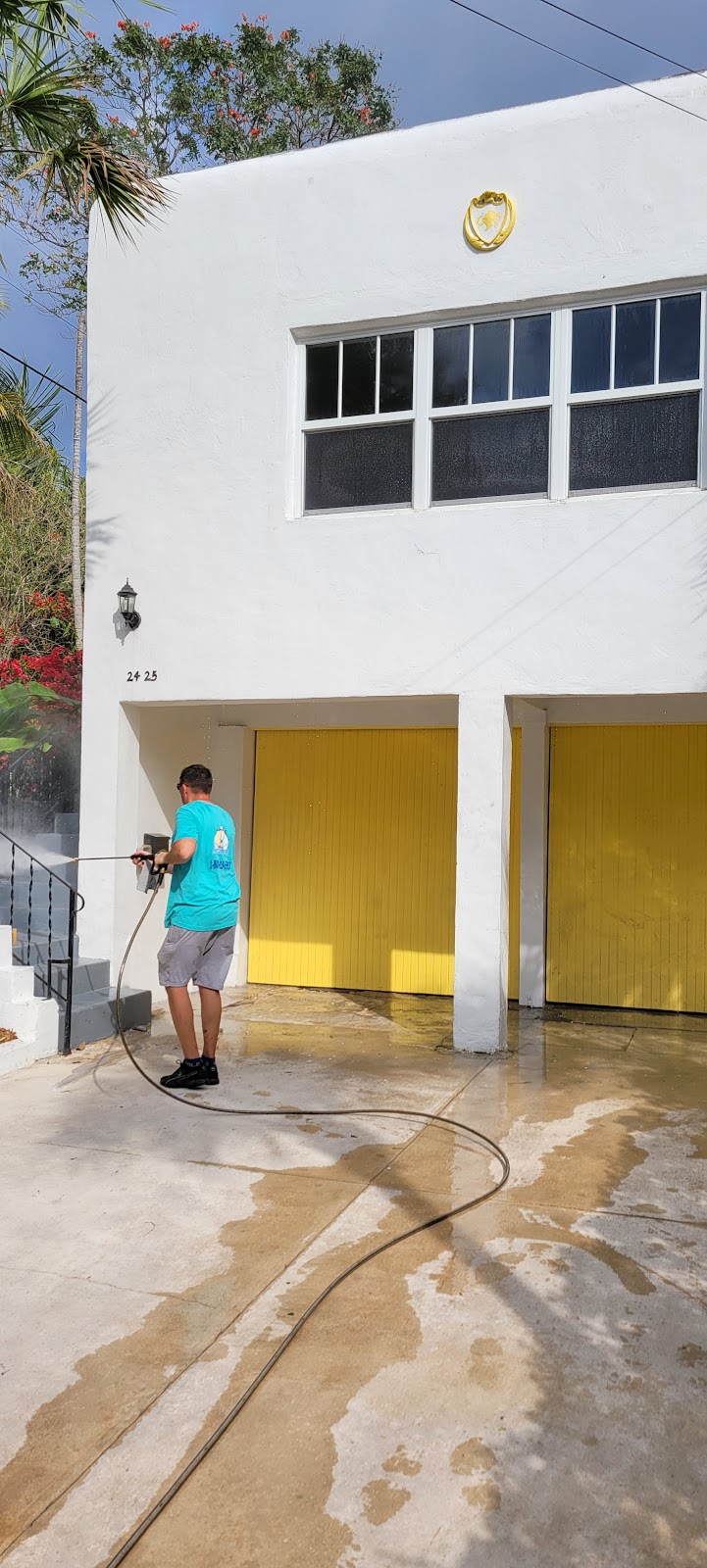
Cleaning a Miami exterior wall — graffiti removal
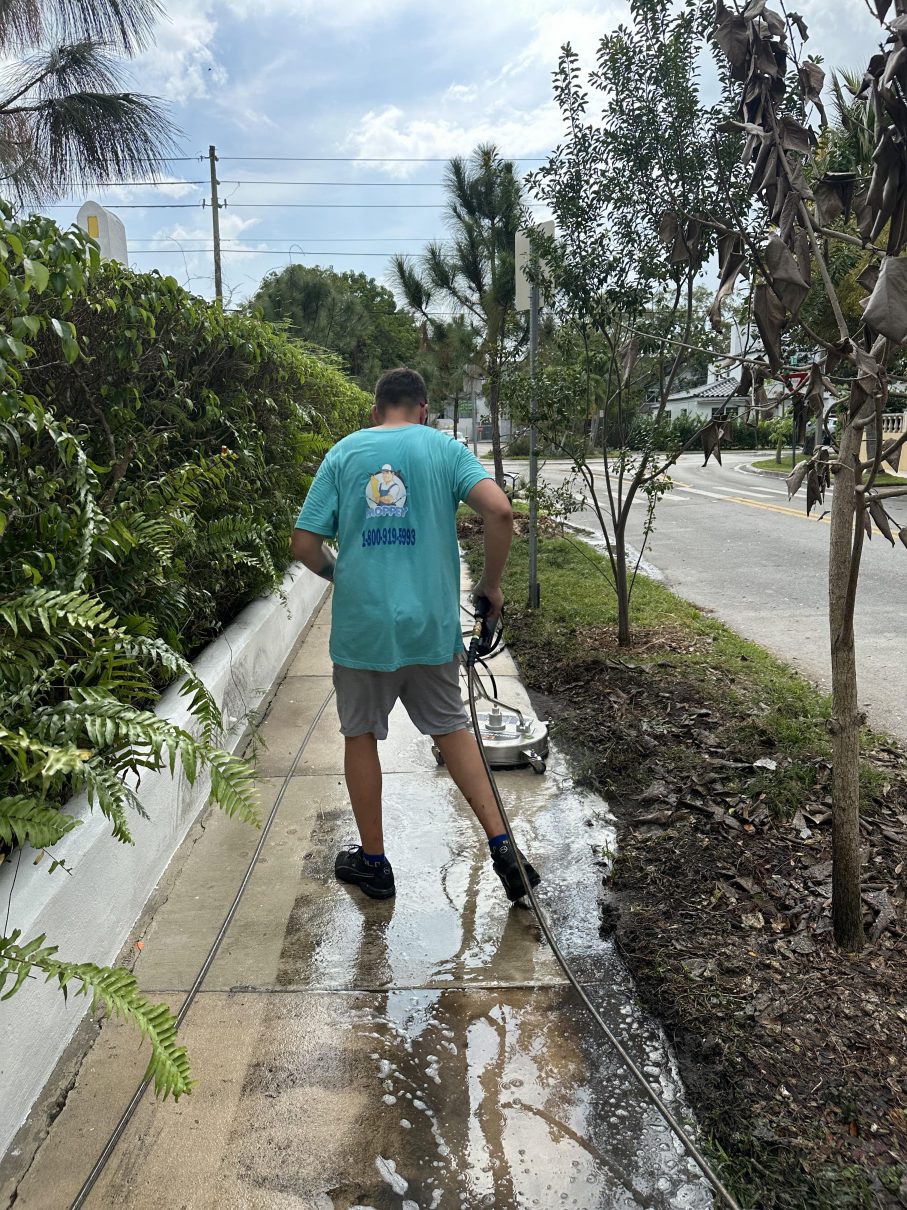
Moppey technician pressure washing a Miami walkway with a surface cleaner
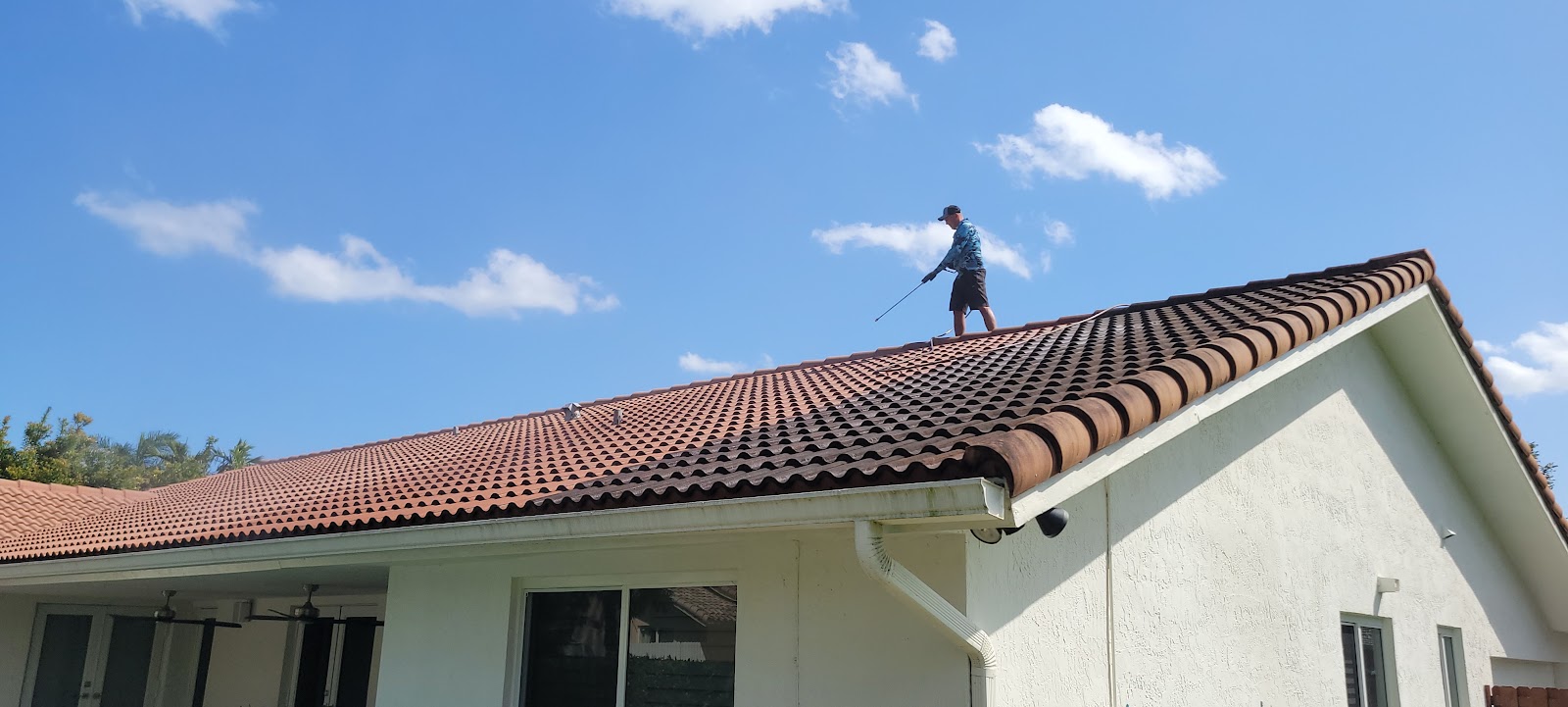
Soft washing a Miami barrel-tile roof
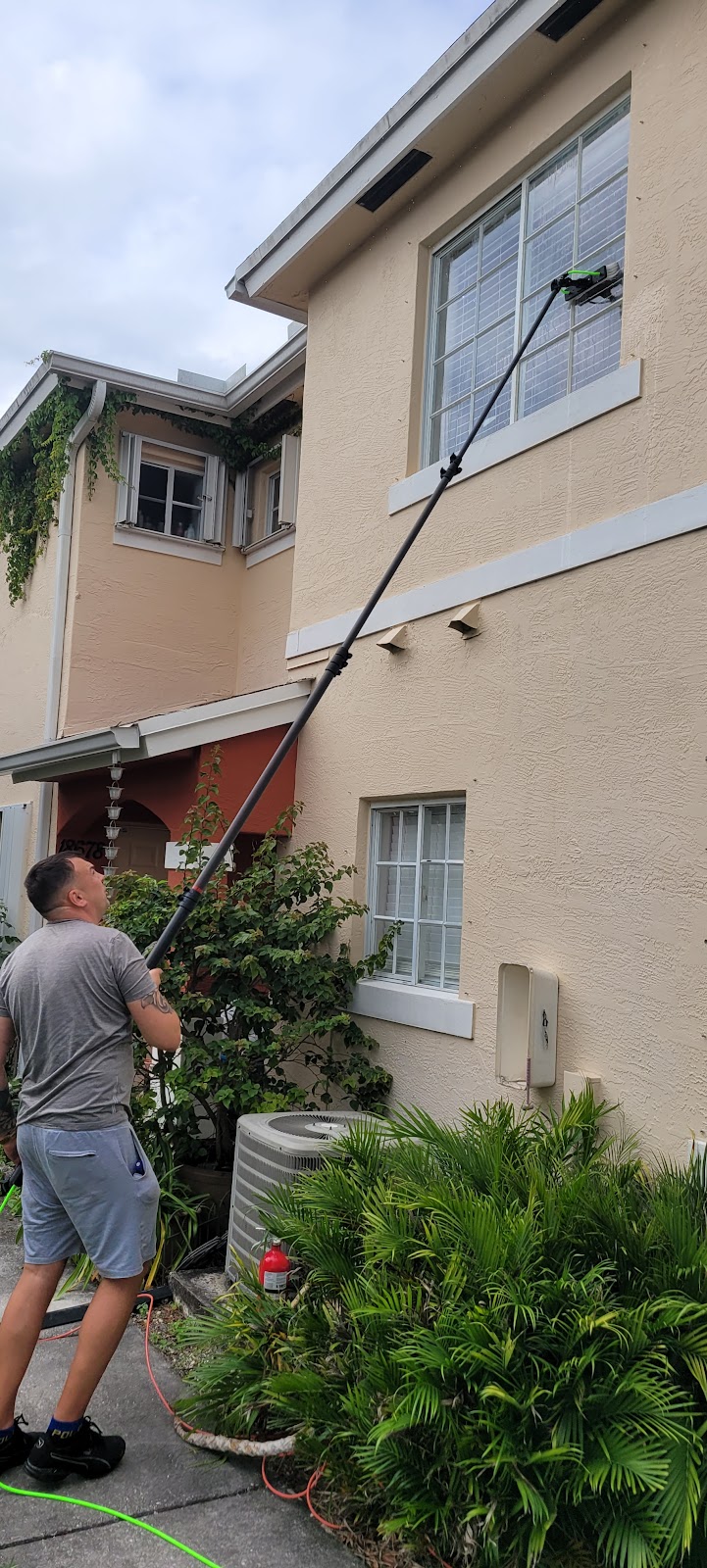
Freshly cleaned Miami driveway

Social proof

What customers say

I had a very last-minute request to clean my roof that I thought needed to be changed, but I was amazed with the work quality the Moppey team provided. It appears our roof only needed a good cleaning — it looks like new! Excellent customer service. I definitely recommend Moppey.
Audrius G.Roof Cleaning Verified Google review
100% recommend! I was only going to have my windows cleaned but they did such a good job I also included my patio and the driveway. They are very precise with every detail.
Jaime L.Windows • Patio • Driveway Verified Google review
Wonderful experience dealing with Moppey Spotless Clean Pros. Very professional and their pricing was extremely competitive. Will definitely use them again and recommend to my family and friends!
Melissa SanchezExterior Cleaning Verified Google review

Good to know

Graffiti Removal FAQs

Fast turnaround is the point with graffiti, so we prioritize it. Request a free quote by phone or through the form and most are answered the same day, with removal scheduled quickly after. The sooner we get to a fresh tag, the more cleanly it lifts — spray paint cures harder into the surface with every day of Miami sun, so a same-week call almost always comes out better than one that's sat for a month.

Not the way we work. The classic mistake is blasting paint off soft stucco or masonry with high pressure, which etches a bright halo exactly the shape of the tag — trading graffiti for permanent damage. We identify the surface first, use a remover matched to it, and lift the paint at the lowest effective pressure. On durable bare concrete we can use more pressure; on stucco, brick, metal, and glass we don't.

Usually, and it comes down to method and speed. Stucco is porous, so pigment soaks in, and on older tags a faint shadow can remain after the paint itself is gone. We work in stages with a surface-safe remover and dwell time rather than grinding it, which gives the best shot at a clean result. If a ghost shadow won't fully release, we'll tell you honestly and can talk through a color-matched recoat of that section instead of damaging the wall chasing it.

Stucco, concrete, brick and block, painted walls, metal roll-up doors and gates, dumpster enclosures, utility and electrical boxes, fences, vinyl, and glass storefronts. Each one takes a different remover and a different pressure, which is exactly why we assess the surface before we start rather than treating every tag the same.

Yes — storefronts, warehouses, roll-up doors, perimeter walls, and shared HOA surfaces are a core part of graffiti work. We're insured, which matters for commercial and shared-property jobs, and we can set up recurring, fast-response coverage for properties that get tagged repeatedly so a fresh tag is gone before it draws another.

Yes. Metal is common for graffiti — roll-up doors, gates, dumpster enclosures, electrical boxes. We use a remover that lifts the spray paint without stripping the door's own factory coating or paint, and we keep pressure low so we don't dent or force water behind panels. If the surface underneath was already worn, we'll flag what to expect before we start.

Often, yes, though it depends on what's underneath. If a wall has been repainted over previous graffiti, sometimes the cleanest fix is a fresh color-matched recoat of the affected area rather than pulling up layers of old paint. We'll look at it, tell you whether removal or recoating gives the better-looking result, and be straight about which is worth doing.

Send a free quote request with a photo of the tag and the surface it's on — that lets us gauge the paint, the substrate, and the size before we arrive. Quotes are free, most are answered the same day, and there are no hidden fees or invented numbers. Hablamos Español if that's easier for you.

Yes. For walls that get hit repeatedly — alley-facing warehouses, perimeter walls, utility enclosures — a sacrificial or permanent anti-graffiti coating is often worth it. A sacrificial coating washes off with the paint at low pressure and gets reapplied after each cleaning; a permanent one lets future tags be wiped off with solvent without redoing the barrier. We'll tell you which suits your surface and whether it's worth the cost for how often you're getting tagged.

If the vandalism is significant or connected to a break-in, yes — take photos and file a report before removal so your insurance claim and any records are preserved. Removal is quick once you're ready, so documenting first costs you nothing. For routine tags on a commercial property, most owners skip the report and just want it gone fast; we're happy to provide before/after photos either way for your own records.

That's a careful, case-by-case job. If a tag lands on an intact mural, the removal has to be gentler than the mural's own paint or you'll lift both. Sometimes a matched solvent and hand work can save it; sometimes the honest answer is a spot recoat by the muralist. If a mural is a repeat target, a clear sacrificial coating applied over it is the best long-term protection — tags wipe off without touching the art underneath.

Sometimes. On porous stucco, brick, and especially marker tags, pigment soaks deep and a faint ghost can remain after the paint itself is gone. We work in stages with a surface-safe remover to give the best shot at pulling it, but we won't chase a shadow with pressure until the wall is damaged. If it won't fully release, the cleaner-looking fix is usually a color-matched recoat of that section, and we'll be straight about which is worth doing.

Handled properly, yes — and that's the point of using a professional. We use biodegradable, surface-matched removers, protect nearby plants and painted trim, and contain the runoff so paint chips and product don't sheet into a storm drain. That matters more in Miami than most places because the water sits over the porous limestone Biscayne Aquifer, so a full rinse-down and proper cleanup are part of the job, not optional.

Regular pressure washing removes dirt, mold, and algae that sit on the surface. Graffiti is bonded paint that has cured into the surface, so it's mostly a chemistry job — matched solvents and dwell time — with pressure playing a small, careful role only where the substrate can take it. Using pressure-washing tactics on a tag is exactly how walls get etched. It's a different skill set, which is why we assess the paint and the surface separately before starting.

Get your free graffiti removal quote

Tell us what needs cleaning and we’ll help you choose the right service — from roof stains and driveway grime to windows, patios, balconies and commercial walkways.

Fast free quotes — most answered same day · Hablamos Español

Call NowGet QuoteDirections