
Moppey Spottless Clean Pros
Rust stain removal from concrete in Miami

Rated 5★ · 43 reviews

Rust & Stain Removal Miami, FL

Targeted stain chemistry that lifts rust, irrigation, fertilizer, and hard-water stains out of concrete, pavers, and walls — not just blasted at with water.

Serving Miami & surrounding South Florida

Rated 5★ · 43 reviewsFully InsuredResidential & CommercialSoft Wash SafeHablamos Español

The Miami problem

Why rust & stain removal matters in Miami

That orange stain on your driveway is not dirt, and no amount of pressure will move it. It is rust — usually iron carried in by sprinkler water, fertilizer, or a metal object that sat too long — and it has chemically bonded into the surface. Rinse it, scrub it, hit it with a pressure washer, and it stays exactly where it is. The only thing that lifts it is the right stain remover, applied the right way.\n\nRust and stain removal is its own discipline, separate from a general wash. Each type of staining calls for different chemistry: rust needs an acid-based treatment, fertilizer burn and irrigation halos need something else, and hard-water calcium needs another approach entirely. Reach for the wrong product, or the right one at the wrong strength, and you swap one stain for a bleached patch or an etched shadow. This is precise work, not a blast-and-hope job.\n\nMoppey treats the stain for what it actually is. We identify the source, match the treatment to the surface, and dwell-and-rinse rather than force it, so the concrete, paver, or wall underneath comes back clean instead of damaged. The right method for the surface, every time. No etching, no bleach halos, no shortcuts.

What’s included

What our rust & stain removal covers

  • Irrigation and sprinkler rust — the orange fan-shaped stains where sprinkler heads throw iron-rich water onto concrete, pavers, and stucco
  • Fertilizer and lawn-treatment stains, including the orange-brown burn where spreader granules land on hardscape
  • Battery-acid, metal-furniture, and rebar rust bleed from objects left standing on the surface
  • Well-water and iron stains on driveways, pool decks, and the lower splash zone of exterior walls
  • Hard-water calcium and efflorescence deposits — the white chalky haze pushed up through pavers and stucco
  • Rust runoff streaks down walls from screws, brackets, railings, and light fixtures
  • Spot-treatment of a single stubborn stain, or full-surface treatment before a driveway or deck reseal
  • Surface-safe stain products matched to concrete, pavers, travertine, or painted stucco
  • Neutralizing rinse and plant protection so no acid or product residue is left behind

Our method

How we clean it safely

We start by reading the stain, because the source dictates the treatment. Rust from irrigation or metal gets an acid-based rust remover; fertilizer and organic staining get a different chemistry; hard-water calcium and efflorescence need their own approach. Guessing wastes product and risks the surface, so we identify what we are looking at first, then test on a small area to confirm the treatment and dwell time before we commit to the whole stain. We apply, let the chemistry do the lifting, agitate where it helps, and rinse — repeating on deep stains rather than cranking up strength and burning the surface.\n\nProtecting everything around the work is built into the process. Acid-based rust removers are aggressive, so before anything goes down we saturate nearby plants, grass, and landscaping with water, mask metal and painted trim that could react, and keep runoff controlled and neutralized rather than pooling into a bed. On travertine, colored pavers, and painted stucco we step the strength down and work in stages, because those surfaces show damage fast. When the stain is out, we neutralize and rinse the full area so nothing is left to keep etching or to flash back to white as it dries.

Soft wash vs pressure wash

Rust and stain removal is a chemistry job, not a pressure job — high PSI cannot break the chemical bond a rust or fertilizer stain forms with the surface, and cranking up the pressure only etches the concrete around the stain while leaving the stain itself. We lift the stain with the correct treatment first, then use pressure only as needed to rinse. On soft surfaces like travertine and painted stucco we drop the strength further and never let aggressive pressure near them.

Best for

Who this service is for

  • Homeowners with orange sprinkler-rust fans spreading across a concrete or paver driveway
  • Pool decks and patios stained by irrigation overspray, fertilizer, or metal furniture legs
  • Stucco and painted walls showing rust bleed from screws, brackets, railings, or downspouts
  • Anyone prepping a driveway, paver, or pool deck for sealing who needs stains gone before the sealer locks them in
  • Well-water properties on the edges of Miami-Dade fighting recurring iron staining
  • Real estate agents and sellers who need an orange-stained driveway looking clean before listing photos
  • HOAs and property managers dealing with rust and hard-water staining on shared walkways and entrances

Miami surface insight

Miami hands you two stain problems most cities do not. First, our tap water is the hardest of any major Florida city — around 11 grains per gallon of dissolved limestone from the Biscayne Aquifer — so every sprinkler cycle and every rain splash leaves behind calcium and, where the water carries iron, rust. That is why the orange fans always line up with your sprinkler heads and the white haze keeps returning on pavers and stucco. Second, our humidity and constant moisture push efflorescence — mineral salts — up through pavers and stucco from the inside, leaving a chalky white bloom that plain washing spreads around instead of removing. Both need targeted treatment, and the efflorescence in particular has to be dealt with before any sealer goes down, or it clouds the finish within months. We treat the stain at its chemistry, then help you cut off the source so it does not simply come back with the next watering.

Insured — COI on request
Plant-safe soft washing
Before & after photos
Satisfaction guarantee

In-depth guide

Rust & Stain Removal in Miami: the complete guide

Rust and stain removal is a chemistry problem, not a cleaning problem

Most exterior cleaning is about lifting dirt that sits on top of a surface. Rust and deep staining are different: the discoloration has moved into the pores of the concrete, paver, or stucco and chemically bonded there. That single distinction changes everything about how the work is done. A driveway wash and a stain treatment are two different trades that happen to use some of the same equipment, and treating one like the other is how homeowners end up with a bleached patch, an etched shadow, or a stain that comes back darker.

This guide goes past the basics on the main service page and into the parts that actually decide whether a stain comes out clean: identifying the stain by its true source, matching the exact chemistry to both the stain and the surface, understanding why store-bought fixes usually make things worse, and knowing how staining, sealing, and Miami's water supply all feed into each other.

Every stain has a source — and the source dictates the treatment

The single most common mistake in stain removal is treating the color instead of the cause. Two orange stains can look identical and need completely opposite chemistry. Before any product touches the surface, the stain has to be read correctly:

  • Irrigation and iron rust — orange fan-shaped patterns that line up with sprinkler heads, or bleed marks under metal furniture, rebar, railings, and brackets. This is oxidized iron and it needs an acid-based rust remover. Water pressure does nothing to it.
  • Fertilizer and lawn-treatment burns — orange-brown blotches where spreader granules landed on the driveway or walkway. Iron in the fertilizer is the culprit, so these respond to rust chemistry, but the residue pattern is different and often milder.
  • Organic staining — leaf tannins, ficus and oak berry drop, mulch bleed, and algae shadow. These are dark brown, red-brown, or green-black and call for an entirely different oxidizing or sodium-hypochlorite-based approach, not acid.
  • Hard-water calcium and efflorescence — the chalky white haze on pavers and stucco. Mineral, not organic, and it needs its own specialty treatment; acid can help but too much etches the surface.
  • Oil, transmission fluid, and hydraulic stains — dark grease shadows on driveways and garage aprons that need a degreaser and poultice, not rust remover.
  • Battery acid and pool-chemical spills — these can etch and discolor concrete permanently; the honest answer is sometimes containment and blending rather than full removal.

Reach for an acid rust remover on an organic tannin stain and nothing happens except you've spent product and put a strong acid on a surface it can't help. That is why the first step is always diagnosis, and why a few photos speed up an accurate quote.

The professional chemistry ladder — and why it matters

Homeowners searching this topic usually run into product names like oxalic acid, muriatic acid, and specialized rust removers. Here is how a careful professional actually thinks about them, from gentlest to most aggressive:

  • Oxalic acid — the workhorse for light-to-moderate iron and rust stains on concrete and pavers. Effective, controllable, and far safer for the surface than the harsher options.
  • Specialized commercial rust removers — purpose-built formulations that lift heavy irrigation rust and set-in iron without the collateral etching of raw strong acid. These are the go-to for the deep orange fans Miami sprinklers produce.
  • Muriatic acid — powerful but blunt. It removes rust, but it also etches concrete, dulls pavers, burns skin and lungs, kills plants, and off-gasses fumes. Professionals use it rarely, diluted, and never as a default. Most homeowner disasters trace back to muriatic acid poured straight from the jug.

The skill is not knowing which chemical is "strongest." It's knowing the weakest treatment that will actually lift the stain, then dialing strength and dwell time to the surface. A test spot on an inconspicuous area confirms the treatment before it goes anywhere visible. Deep stains get repeat passes at controlled strength rather than one aggressive hit that burns a halo into the concrete.

Why DIY rust removal usually backfires in Miami

There's no shortage of blog advice — vinegar, lemon juice, baking soda, a jug of hardware-store acid. For a fresh, shallow stain, a mild household acid occasionally helps. For the set-in irrigation rust that Miami's water produces, it almost never does, and the attempt often creates a second problem:

  • Etching and haloing — pouring acid on and scrubbing lightens the concrete around the stain, leaving a permanent pale ghost even after the rust is gone.
  • Plant and lawn kill — acid runoff into St. Augustine turf and landscape beds burns them fast; without pre-saturating and neutralizing, the collateral damage outlasts the stain.
  • Personal risk — muriatic acid fumes and splashes cause real chemical burns and respiratory injury. This is genuinely dangerous product to handle without protection.
  • Sealing the stain in — homeowners who wash, don't fully remove the stain, and then seal have now locked the discoloration under a clear coat where nothing can reach it.

A careful professional isn't just applying stronger chemistry — they're controlling runoff, protecting your landscaping, neutralizing afterward, and staging strength so the surface underneath comes back untouched. That control is the actual product you're paying for.

Stains and sealing are one connected problem

This is the piece most quick answers miss. On pavers, travertine, and decorative concrete, staining and sealing are tightly linked, and the order of operations matters enormously.

If you seal over an existing rust stain, efflorescence bloom, or organic shadow, the sealer traps it — sometimes cloudy, sometimes amber, always harder to fix. Efflorescence is the worst offender: those mineral salts keep migrating up from inside the paver, and a sealer applied over active efflorescence clouds from underneath within months. The sequence has to be: identify the stain, treat and remove it, let the surface fully dry and neutralize, then seal. In Miami's humidity, decorative surfaces and wood decks generally want resealing every one to two years, so stain treatment is a natural companion to any reseal job. Getting the stains out first is what makes the new sealer look right and last.

What actually drives the cost of stain removal

Stain work is priced on difficulty, not square footage alone, which is why a straight quote needs eyes (or photos) on the actual staining. The honest cost factors are:

  • Stain type and depth — a fresh sprinkler halo lifts in one pass; iron that's soaked through years of cured concrete needs multiple treatments and more product.
  • Surface material — plain broom-finish concrete tolerates aggressive treatment; travertine, colored pavers, stamped concrete, and painted stucco demand slower, gentler, staged work that takes longer.
  • Total affected area — a single furniture-leg bleed versus a whole driveway's worth of irrigation fans are very different jobs.
  • Access and protection needs — dense landscaping, tight beds, and surfaces right against the house require more masking, pre-wetting, and runoff control.
  • Whether it's spot-treatment or reseal prep — treating one stain is quicker than clearing an entire surface to bare, stain-free condition before a sealer goes down.

No honest company quotes a flat rust-removal price sight unseen, because the same-looking orange stain can be a ten-minute lift or a three-pass project. What you can expect from Moppey is a straight number with no hidden fees, and realistic expectations set before the work starts.

How it compares to a standard pressure wash

People often assume their annual driveway wash will handle the rust too. It won't, and understanding why saves disappointment:

  • Standard pressure washing removes the film — dirt, algae, surface grime — that sits on top of concrete. It makes the slab uniformly cleaner but leaves bonded stains behind, sometimes making them more visible against the freshly cleaned background.
  • Soft washing handles organic growth on delicate surfaces at low pressure but is a cleaning process, not a stain-lifting one.
  • Rust and stain removal is targeted chemistry applied to a specific stain, dwelled, agitated, and rinsed — a surgical process, not a broad clean.

The right sequence on a stained driveway is often a wash first to clear the surface, then targeted stain treatment on what remains. They're complementary, not interchangeable.

Signs you need professional stain removal

  • Orange fans or streaks on concrete or pavers that don't budge no matter how hard you rinse or scrub.
  • White chalky haze on pavers or stucco that keeps returning after washing.
  • Rust bleed running down a wall from screws, brackets, railings, or a downspout.
  • Dark grease or oil shadows on the driveway or garage floor that soap won't touch.
  • A driveway, pool deck, or paver patio you're about to seal that still has visible staining.
  • A previous DIY attempt that left a pale etched patch or spread the stain instead of removing it.

Keeping stains from coming back

Removal is only half the win in Miami; the other half is cutting off the source so you're not re-treating the same spot every year. That means adjusting or repositioning sprinkler heads so iron-rich water stops hitting the hardscape, keeping metal furniture and planters off bare concrete, sweeping fertilizer granules off driveways before they sit in the rain, and staying on a sensible reseal cycle for decorative surfaces. Because Miami's tap water runs about 11 grains per gallon of dissolved limestone off the Biscayne Aquifer — the hardest of any major Florida city — the mineral and iron staining will always want to return; the goal is to slow it down, not pretend it's gone forever. A recurring maintenance visit catches new staining while it's shallow and easy, which is far cheaper than letting it cure in for years.

Rust and stain removal is precise, chemistry-driven work that rewards patience and the right method for the surface — no etching, no bleach halos, no shortcuts. If you've got orange sprinkler fans, a white efflorescence bloom, or a stain a pressure washer just won't touch, send a few photos and get a straight answer. Call Moppey Spottless Clean Pros at +1 877-754-5614 for a free quote — most answered the same day, and yes, hablamos español.
Recent work

Real Moppey results

Rust stain removal from concrete in Miami
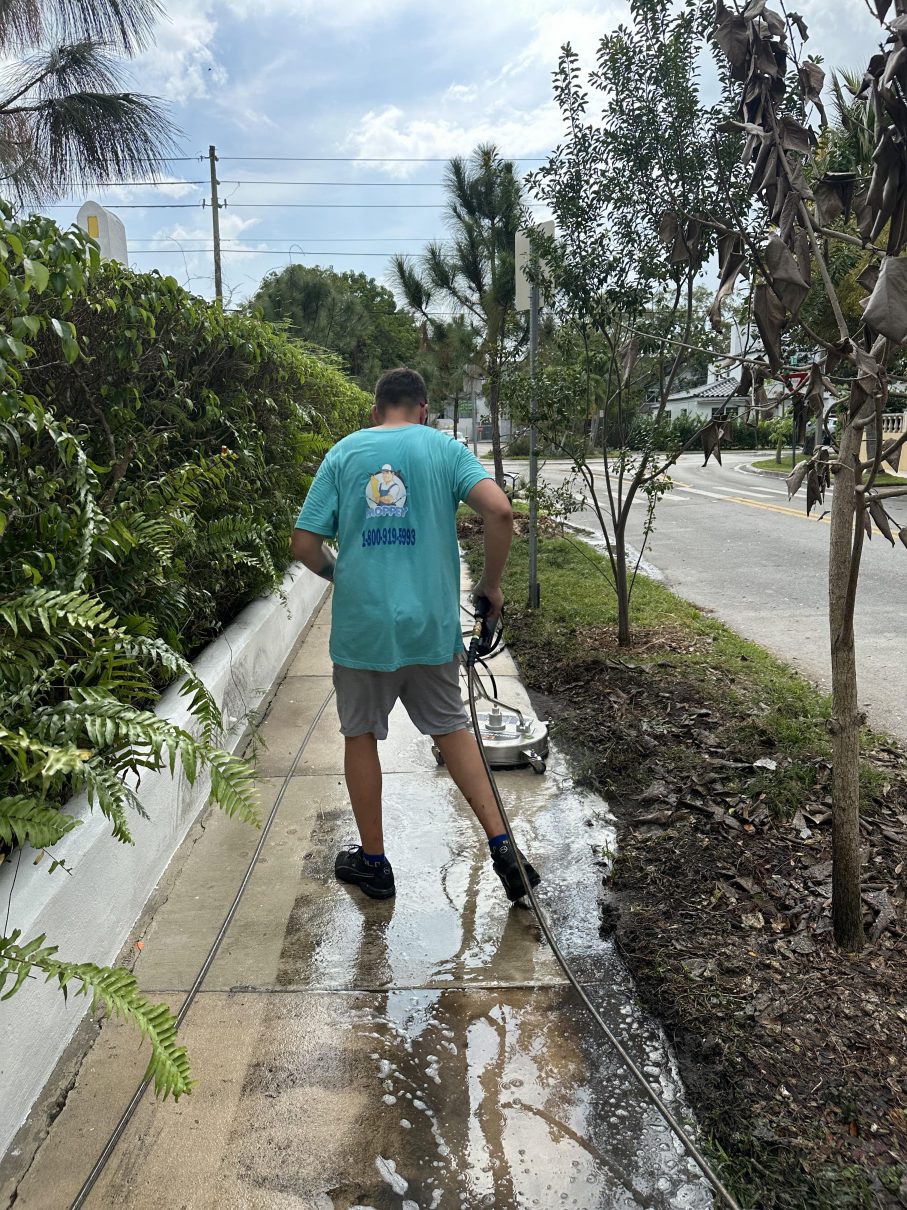
Moppey technician pressure washing a Miami walkway with a surface cleaner
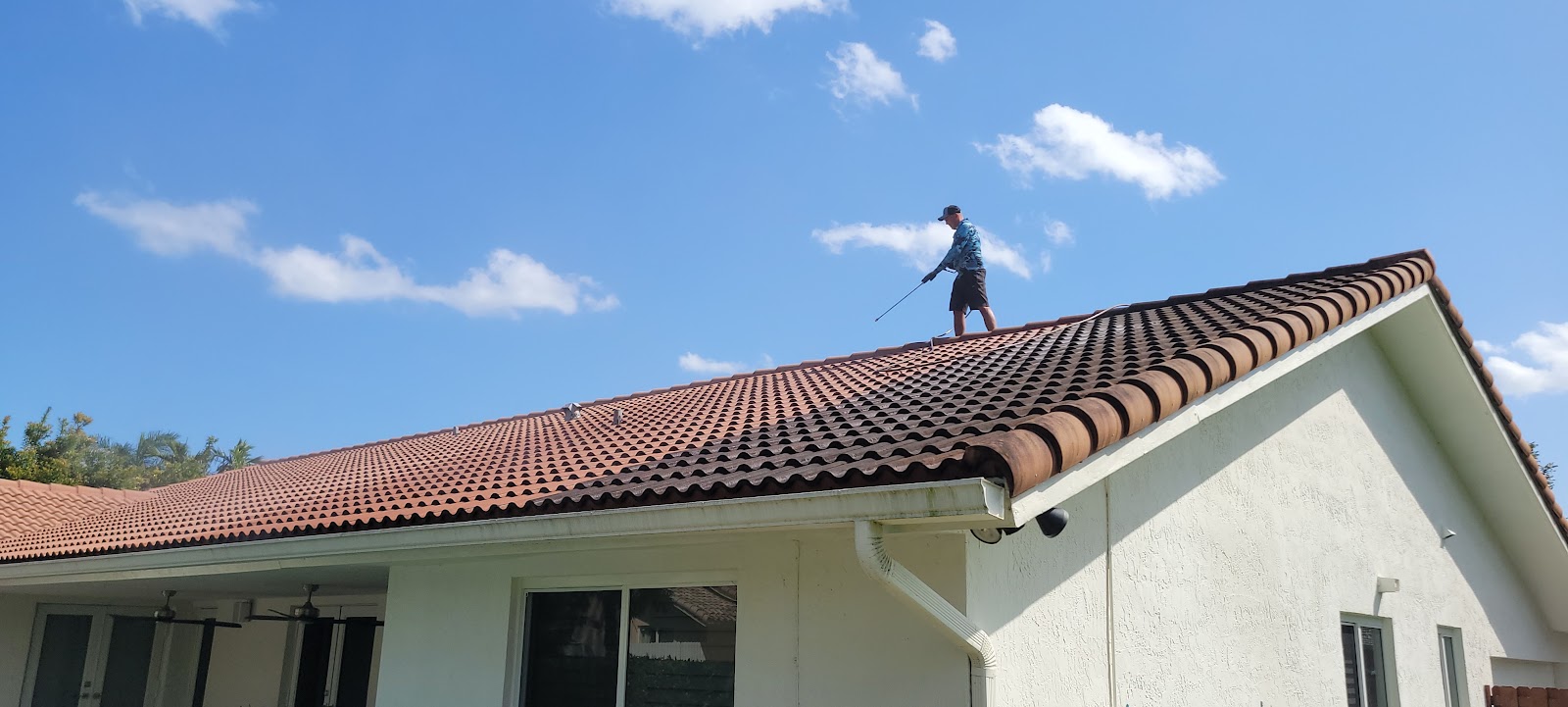
Soft washing a Miami barrel-tile roof
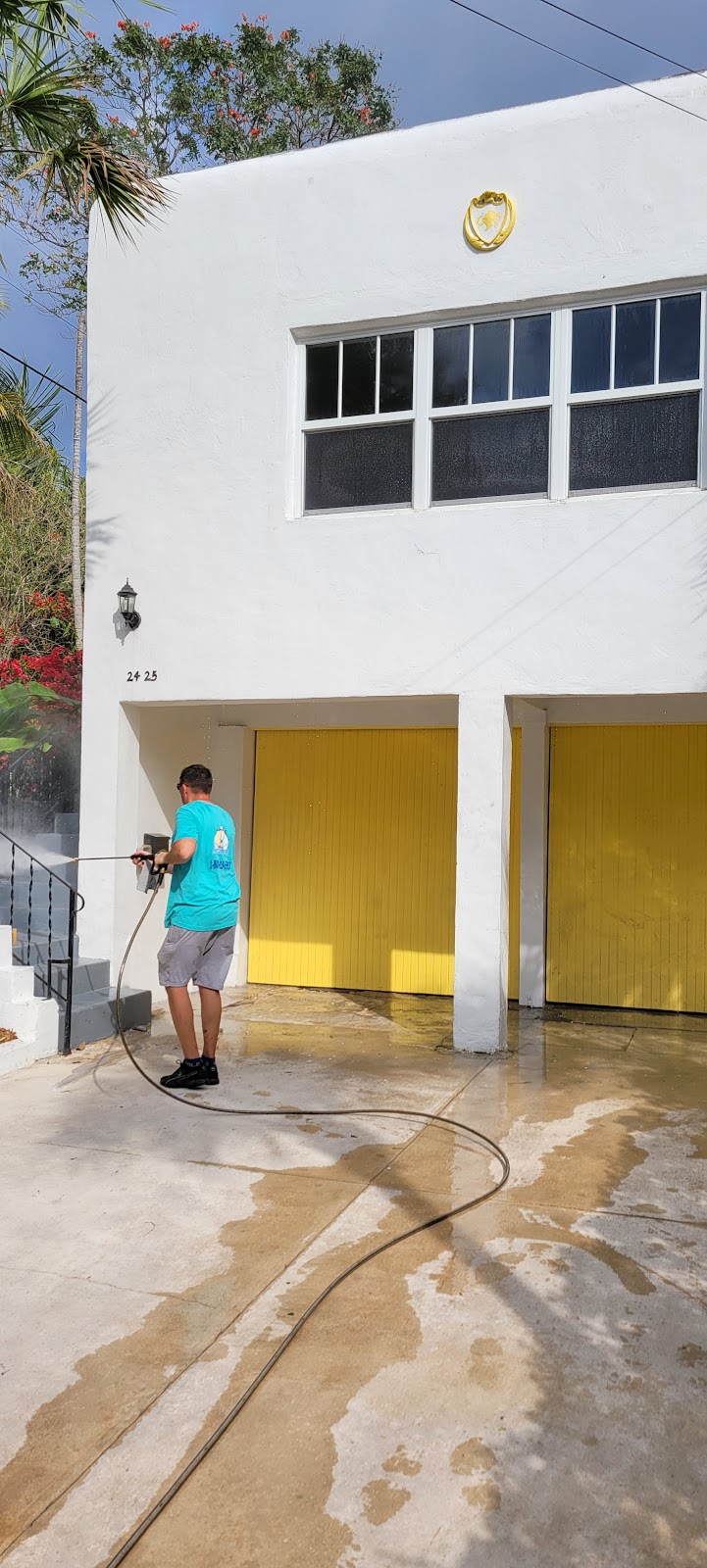
Freshly cleaned Miami driveway

Social proof

What customers say

I had a very last-minute request to clean my roof that I thought needed to be changed, but I was amazed with the work quality the Moppey team provided. It appears our roof only needed a good cleaning — it looks like new! Excellent customer service. I definitely recommend Moppey.
Audrius G.Roof Cleaning Verified Google review
100% recommend! I was only going to have my windows cleaned but they did such a good job I also included my patio and the driveway. They are very precise with every detail.
Jaime L.Windows • Patio • Driveway Verified Google review
Wonderful experience dealing with Moppey Spotless Clean Pros. Very professional and their pricing was extremely competitive. Will definitely use them again and recommend to my family and friends!
Melissa SanchezExterior Cleaning Verified Google review

Good to know

Rust & Stain Removal FAQs

Because rust is a chemical stain, not surface dirt. Iron from sprinkler water, fertilizer, or a metal object has bonded into the concrete, and water pressure cannot break that bond — it only removes what is sitting on top. Crank the pressure up to force it and you etch the concrete around the stain while the stain stays put. It takes an acid-based rust remover to actually lift it out.

In Miami it is almost always irrigation. Sprinkler water carries iron, and every cycle throws it onto the hardscape, so the stains show up as orange fans lined up exactly with your sprinkler heads. Fertilizer granules that land on concrete cause similar orange-brown burns, and metal furniture, rebar, or brackets can bleed rust where they sit. We identify which source you're dealing with because the treatment differs.

Yes — that is efflorescence, mineral salts pushed up through the surface by moisture, and it is common in humid Miami. It needs a specific treatment, not just washing, which only spreads it around. Important: if you're planning to seal the surface, the efflorescence has to be removed first, or it clouds the sealer within a few months. We treat it before any sealing step.

Not the way we do it. Acid-based rust removers are aggressive, so we test on a small area first, match the strength to the surface, and step it down for softer materials like travertine, colored pavers, and painted stucco. We apply in stages and neutralize afterward rather than overloading the surface. The goal is the stain gone with the material untouched.

Most can be dramatically improved or fully removed, but we'll be honest with you before we start. A fresh irrigation stain lifts cleanly; a deep, old stain that has soaked through years of cured concrete may leave a faint shadow even after treatment. We tell you what to realistically expect during the quote rather than promising a miracle and hoping.

Yes. Before any product goes down we saturate the surrounding plants, grass, and beds with water, mask metal and painted trim that could react, and keep the runoff controlled and neutralized so it doesn't pool into your landscaping. Protecting the area around the work is a standard part of the job, not an add-on.

Cut off the source. Most Miami rust comes from sprinkler water, so repositioning or adjusting the heads to keep iron-rich water off the concrete makes the biggest difference, along with keeping metal objects off the surface and cleaning fertilizer granules off hardscape before they sit. We'll point out the source we find while we're there, since removing the stain and leaving the sprinkler aimed at it just resets the clock.

Request a free quote by phone or through the form, and a few photos of the staining help a lot — they let us identify the source and gauge how deep it has set. We give you a straight price with no hidden fees. Fast free quotes, most answered the same day, and yes, hablamos español.
For most rust stains, oxalic acid or a purpose-built commercial rust remover is the better choice — they lift iron effectively while being far safer for the concrete and for you. Muriatic acid is stronger but blunt: it etches concrete, dulls pavers, burns skin and lungs, and kills plants, so it's a last resort used diluted and carefully, not a default. The right answer depends on how deep the stain is and what surface it's on, which is exactly why we test a spot first.

Yes, and it's a common Miami request under heavy tree cover. Tannin and berry-drop stains are organic, so they need an oxidizing or hypochlorite-based treatment rather than the acid used on rust — using the wrong one does nothing. We identify whether you're dealing with iron staining, organic tannin, or both, because a driveway under a ficus canopy often has a mix, and each part gets the chemistry it actually needs.

Always before. Sealing over a rust stain, efflorescence bloom, or organic shadow traps it under the clear coat where nothing can reach it, and active efflorescence will cloud a fresh sealer from underneath within months. The correct order is treat and remove the staining, let the surface dry and neutralize, then seal. Because Miami's humidity means decorative surfaces usually reseal every one to two years, stain treatment pairs naturally with a reseal job.

The stain itself can be removed, but in Miami the source usually keeps producing new ones. Most rust comes from iron in sprinkler water, and our tap water is the hardest of any major Florida city, so unless the sprinkler heads are adjusted to keep that water off the concrete, fresh orange fans return with the next watering cycle. We remove what's there and point out the source so you can cut it off — that's the difference between a one-time fix and re-treating the same spot every year.

It can, and we'll tell you honestly during the quote. A fresh irrigation stain lifts cleanly with no trace, but iron that has soaked through years of cured concrete may leave a faint shadow even after full treatment, and aggressive DIY attempts sometimes bleach the surrounding concrete, creating a pale ghost around where the stain was. We work at controlled strength in stages specifically to avoid haloing, and we set realistic expectations before we start rather than promising a miracle.

Yes. Oil, transmission fluid, and hydraulic stains are grease shadows soaked into porous concrete, and they need a degreaser and sometimes a poultice to draw the oil back out — not the acid used on rust. Fresh spills lift more completely than years-old ones that have penetrated deep, but most improve dramatically. It's a separate treatment from rust, which is why we identify each stain type on your surface before quoting.

Get your free rust & stain removal quote

Tell us what needs cleaning and we’ll help you choose the right service — from roof stains and driveway grime to windows, patios, balconies and commercial walkways.

Fast free quotes — most answered same day · Hablamos Español

Call NowGet QuoteDirections