You clean the glass. It looks great for a day. Then the haze creeps back, dulling the view and catching the afternoon light in a way that clear glass never should.
If that sounds like your windows, you are not doing anything wrong. In Miami, cloudy glass is a chemistry problem, not a cleaning problem. Two forces are working against you at the same time: salt air off the ocean and some of the hardest tap water in Florida. Understanding both is the difference between wiping the same window every week and actually getting it clear.
Salt Air Is Slowly Etching Your Glass
Miami sits in one of the most corrosive outdoor environments in the country. Coastal air here is classified ISO C5-M, the same corrosion category used for marine and industrial settings. That rating exists because salt-laden humidity does real damage to materials over time.
On metal, salt air shows up as rust on hinges, tracks, and window frames. On glass, it is subtler but just as stubborn. Airborne salt settles on the surface, absorbs moisture from Miami's humidity, and forms a thin corrosive film. Left alone, that film begins to etch the glass at a microscopic level.
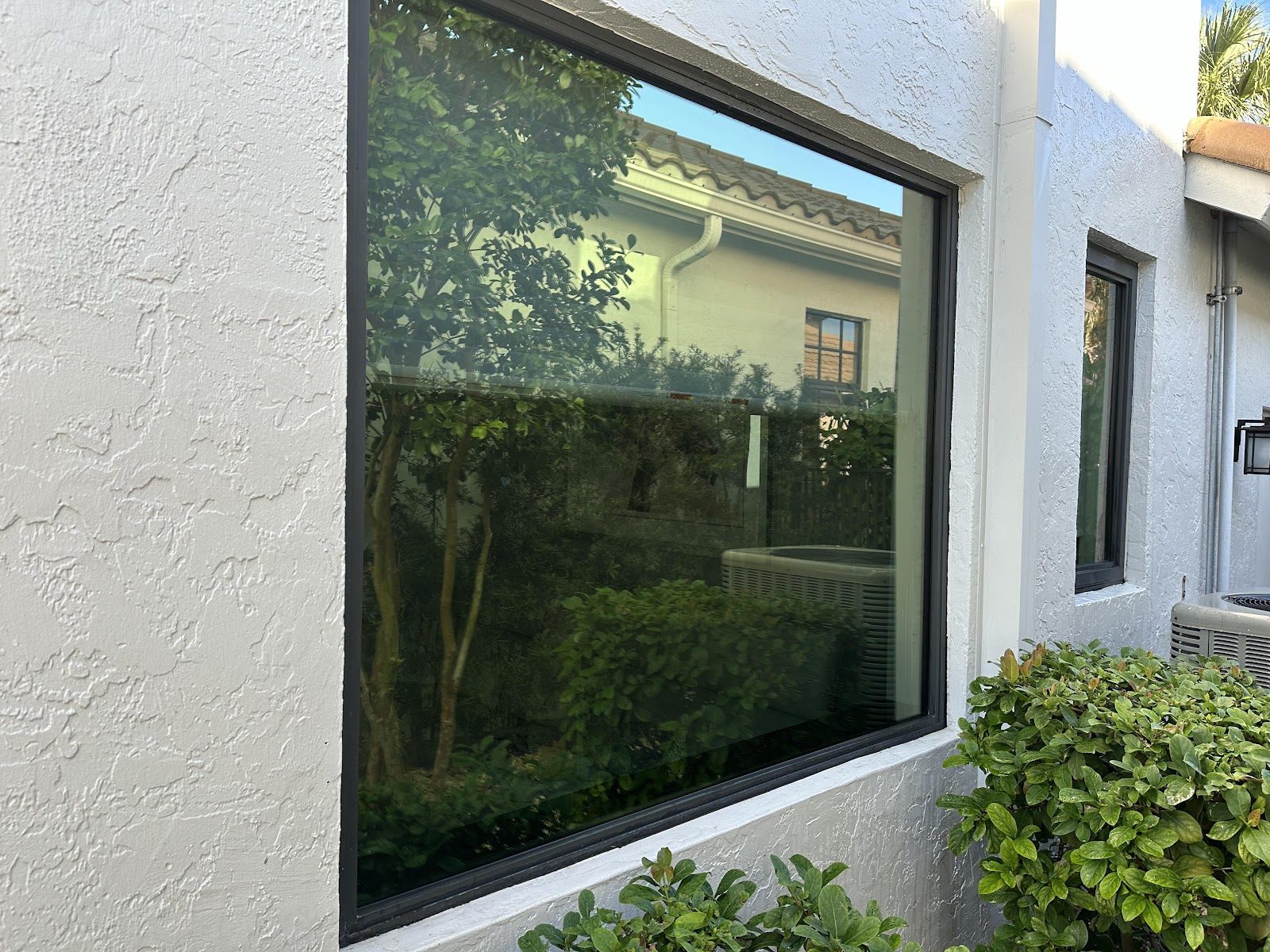
Etched glass does not just look dirty. It scatters light. That is the frosted, cloudy quality you see when the sun hits it at an angle, and no amount of paper towels and spray will bring it back, because the haze is now part of the surface, not sitting on top of it.
This is why coastal homes and buildings need windows cleaned far more often than most people expect. In Miami, exterior glass near the water often needs attention every 6 to 8 weeks. Cleaning on that rhythm removes the salt film before it has time to bond and etch. Wait too long, and you are no longer cleaning glass, you are trying to repair it.
Miami Has the Hardest Water of Any Major Florida City
The second half of the problem comes straight out of your own hose. Miami's drinking water is drawn from the Biscayne Aquifer, a shallow limestone formation. As water moves through limestone, it dissolves calcium and magnesium, and those minerals come out of the tap dissolved in your water.
Miami's water measures around 11 grains per gallon, which makes it the hardest municipal water among Florida's major cities. That number matters the moment water lands on glass and dries.
Here is what happens:
- Sprinklers, rain runoff, or a garden hose leave droplets on the window.
- The Miami sun evaporates the water fast.
- The dissolved calcium and magnesium do not evaporate. They stay behind as a white, crusty mineral deposit.
- Each cycle layers more mineral on top of the last.
Those are hard-water spots, and they are the chalky white flecks and cloudy patches you see clustered near sprinkler zones, along the bottom edge of the glass, and wherever water tends to sit. Because the deposit is mineral, ordinary glass cleaner slides right over it. Soap dissolves grease and grime. It does not dissolve limestone.
Why Regular Cleaning Does Not Fix It
This is the frustrating part for most Miami homeowners. You can squeegee a window to a perfect shine and still see haze, because two of the most common causes of cloudy glass here simply do not respond to normal cleaning:
- Salt etching has physically changed the glass surface.
- Hard-water mineral spots are a limestone-based crust that soap cannot break down.
Both require the right chemistry, not more elbow grease. Mineral deposits need a controlled acid treatment to dissolve the calcium and magnesium and lift them off the glass without scratching it. Salt film needs to be removed on a schedule before it etches. Guess wrong on the product or the technique and you can scratch the glass, streak it, or leave the deposit half-dissolved and looking worse than when you started.
How Cloudy Miami Glass Actually Gets Clear
The good news is that most cloudy windows are recoverable, especially if the etching has not gone too deep. The fix is about matching the method to what is actually on the glass:
- Identify the culprit first. Salt film, hard-water minerals, and simple dirt each look different and each need a different approach. Treating all three the same is why so many DIY attempts fail.
- Dissolve minerals with the correct acid treatment. A properly diluted, glass-safe solution breaks down the calcium and magnesium so it rinses away instead of smearing.
- Rinse with clean water, not more hard water. Rinsing with the same mineral-heavy tap water just reseeds the problem. Purified or filtered water leaves the glass spot-free as it dries.
- Set a maintenance rhythm. Once glass is clear, cleaning every 6 to 8 weeks near the coast keeps salt from re-etching and stops minerals from rebuilding.
There is also a real safety and access side to this in Miami. Second-story windows, high-rises, and HOA-governed buildings need proper equipment and the liability and workers-comp coverage to work at height. That is not a corner to cut on a ladder over a pool deck.
The Miami Reality: Maintenance, Not Miracles
Cloudy windows in Miami are not a sign of a bad house or lazy cleaning. They are the predictable result of living between the ocean and a limestone aquifer. Salt etches from the outside, hard water spots from the runoff, and the sun bakes both onto the glass faster than anywhere inland.
The homes and buildings with genuinely clear glass are not using a magic product. They are on a schedule, and they are using the right method for the surface, so the film never gets the chance to bond in the first place. No damage, no streaks, no shortcuts.
If your windows have that stubborn haze that keeps coming back no matter how many times you wipe them, that is exactly the problem we solve. Moppey handles Miami and South Florida exterior glass, including coastal salt film and hard-water spotting, with the right treatment for what is actually on your windows. Hablamos Espanol.
Call Moppey at +1 877-754-5614 for a free quote. Fast, no pressure, most answered the same day.