
Local guide
Exterior cleaning in Buena Vista: the complete guide
Cleaning surfaces that predate the rest of Miami
Most of Miami got built in the last forty years. Buena Vista did not. The Buena Vista East and Buena Vista Heights historic districts hold some of the oldest intact housing stock in the city — bungalows, Mediterranean Revival villas, Mission-style cottages, and Frame Vernacular houses laid out during the 1920s land boom, back when this was the Biltmore and Shadowlawn subdivisions. A hundred years later those same walls, roofs, and porches are still standing, still on their oversized lots under a canopy of live oak and royal poinciana. That age is exactly what makes exterior cleaning here a different job than it is three miles east on the water.
Old buildings do not shrug off a mistake the way a new one does. A stucco wall poured in the 2010s can take a bad pressure-washing pass and look fine. A hand-troweled 1920s stucco finish that has already been repainted a dozen times will chalk, powder, and lift the first time someone hits it with a turbo nozzle — and the repair is a plaster specialist, not a paint can. That is the governing rule for every service we bring to Buena Vista: match the method to the material, and when the material is a century old, err toward gentle every single time.
The materials under the paint
What sits behind a Buena Vista facade is often not what it looks like from the sidewalk. Beyond the painted stucco you'll find genuine oolitic limestone — the local "Miami rock" quarried straight out of the ground — and coquina, that soft shell-and-sand stone, used as foundation courses, porch piers, chimney faces, and decorative accents. Both are porous and comparatively soft. High pressure erodes them, opening the surface so it holds even more moisture and grows back faster. These get low-pressure soft washing and a plant-safe biocide that kills the organic growth at the root, then time to dwell, then a gentle rinse. No wand, no cutting into the stone.
Then there's the decorative work these homes are known for: glazed clay tile risers on porch steps, patterned cement floor tile, wrought iron, and original wood. Barrel-tile and clay-tile roofs are common on the Mediterranean Revival houses, and they are their own hazard — walking them wrong cracks tile, and pressure strips the glaze. We treat those roofs from the ground and edges with low-pressure application, never by dragging a lance across them.
Why a shaded historic lot greens up faster
Buena Vista sits inland, tucked between the Design District and Little Haiti, so it isn't fighting the same relentless oceanfront salt load that Morningside or Belle Meade deal with. The enemy here is shade plus humidity. That beautiful mature canopy — the oaks, the poincianas, the mango and avocado trees on the deeper lots — keeps north-facing walls, roof planes, pavers, and sidewalks from ever fully drying out. Damp shade is a greenhouse for algae, mildew, and the gray-green biofilm that dulls a whole facade. On an open, sun-baked lot the sun sterilizes surfaces daily; under a Buena Vista canopy that never happens, so growth takes hold weeks sooner and comes back sooner too.
That has a direct consequence for how often you should clean:
- Shaded stucco and masonry walls: expect a soft-wash roughly every 12 to 18 months on the shaded elevations; the sunny sides can often go two years.
- Roofs (Gloeocapsa magma streaking): the black streaking is a cyanobacteria feeding on the limestone filler in the tiles and shingles, and canopy humidity feeds it. A soft-wash roof treatment every 2 to 4 years keeps it off; ignore it and it eats into curb appeal and, on shingle, into the shingle itself.
- Pavers, sidewalks, and porch floors: annual is realistic on shaded walkways because biofilm makes them genuinely slick — a safety issue on a 1920s porch step, not just a looks issue.
- Screen enclosures and patio cages: the pool-deck screens on these lots trap organic film in every channel; a periodic soft rinse keeps them from staining and clogging.
Efflorescence — the white haze on old masonry
Older Buena Vista masonry throws a specific problem that newer homes rarely show: efflorescence, the chalky white bloom that surfaces on brick, block, and stone as moisture wicks mineral salts out of the wall. On a century-old porch pier or foundation course it's common, and it is not dirt — scrubbing or blasting it just drives water in and brings more back. It needs the correct treatment, and critically it has to be dealt with before any sealing, or you seal the salts under the surface and trap the problem. If you're restoring a Buena Vista home and planning to seal stone or a paver driveway, get the efflorescence handled first.
The commercial edge: Design District and Wynwood spillover
Cross west toward NE 2nd Avenue and North Miami Avenue and Buena Vista flips commercial fast — showrooms, boutiques, cafes, and painted storefronts riding the retail energy that spills out of the Miami Design District and up from Wynwood. Different building, different clock. Here the surfaces are storefront glass, light-painted facades, awnings, and entryway pavers, and they get judged by foot traffic every single day. Fingerprints and haze on the glass, gum and coffee and black traffic lines on the sidewalk, algae creeping up a facade — customers read all of it before they read your sign.
The recurring headache is glass that spots even after it's cleaned. That's Miami's hard water at work: roughly 11 grains per gallon off the limestone Biscayne Aquifer, the hardest of any major Florida city. When that water dries on glass it leaves calcium and magnesium spotting that a squeegee will never touch — it takes a proper acid treatment to actually clear. For a design-forward storefront where the glass is the display, that difference is everything. We schedule commercial cleans around your hours, early morning or off-peak, so everything is sharp before you open, and recurring maintenance plans keep it that way instead of letting six weeks of buildup accumulate.
What Moppey actually does across a Buena Vista property
A full exterior scope on a historic Buena Vista lot usually touches more than the front wall:
- Soft washing for stucco, painted siding, limestone and coquina accents, and clay/barrel-tile roofs — under 500 PSI, plant-safe chemistry that won't burn the canopy or the mature landscaping.
- Wood porch, clapboard, and decorative-tile cleaning on the Frame Vernacular and Mission-style houses, low-pressure and by hand where the surface demands it.
- Driveway, paver, and concrete cleaning with calibrated pressure that lifts biofilm without pitting concrete or blowing out sand joints.
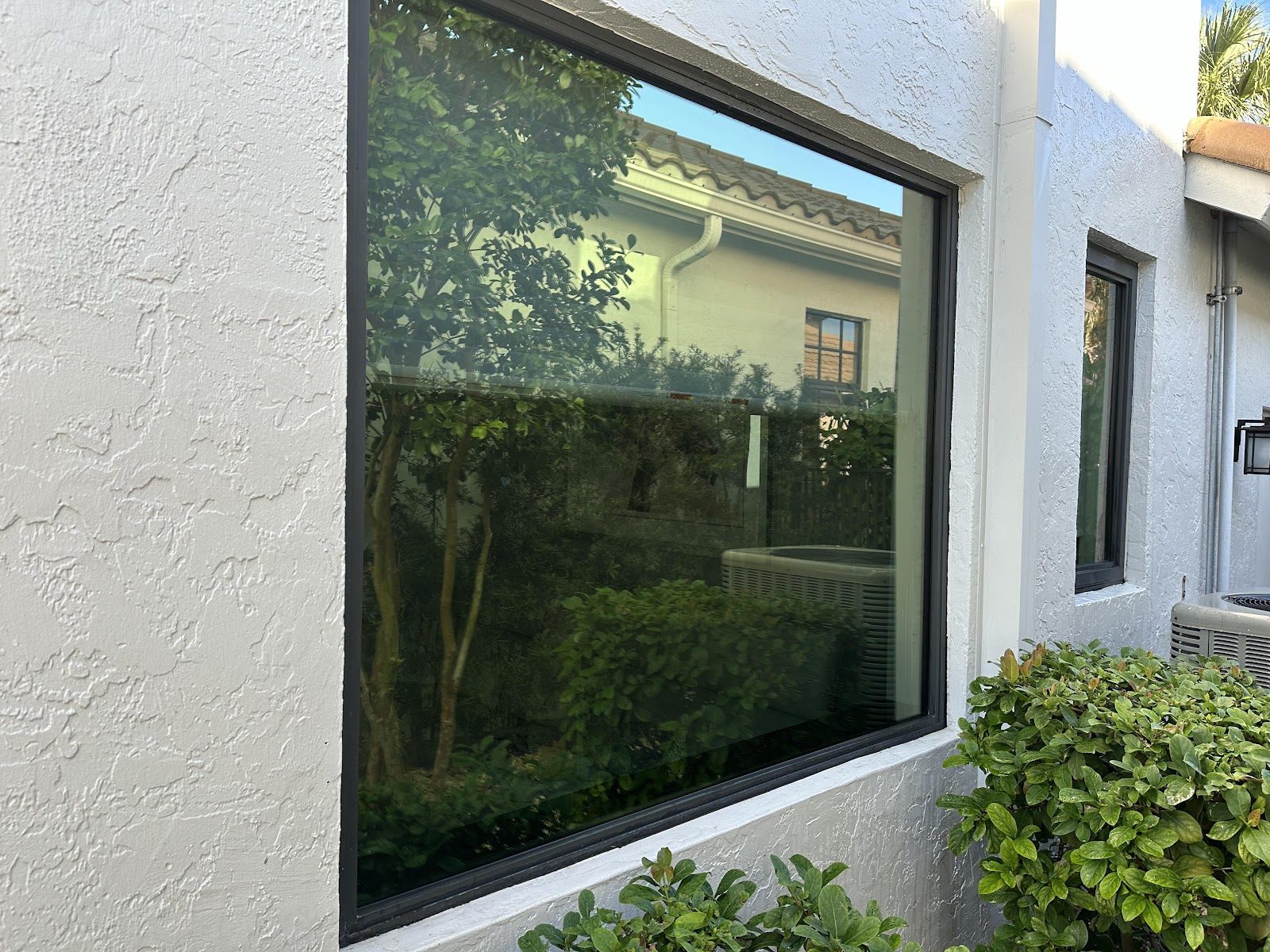
- Window and storefront glass with hard-water spot treatment for both homes and the commercial corridor.
- Patio, pool-deck, and screen-enclosure cleaning for the deeper lots.
- Gutter clearing and roof cleaning timed for storm season — palm fronds, oak litter, and poinciana debris pack these gutters, and a blocked gutter on a tree-heavy lot overflows straight toward a 1920s foundation. The pre-storm window is April to May, ahead of the June 1 start.
Every job is backed by real before/after photos, a 48-hour re-wash guarantee, insurance with a COI available on request, and the honest promise that we won't put a nozzle on anything that can't take it. That matters more here than almost anywhere in Miami, because in Buena Vista the surface you're cleaning is frequently irreplaceable.
If you own a historic home east of the Design District or run a storefront along the commercial edge, we'll walk it, tell you exactly which method each surface needs, and put a number in front of you — no invented prices, no upsell. Call Moppey at +1 877-754-5614 for a free quote. We answer most the same day, and hablamos español. No damage, no streaks, no shortcuts.